
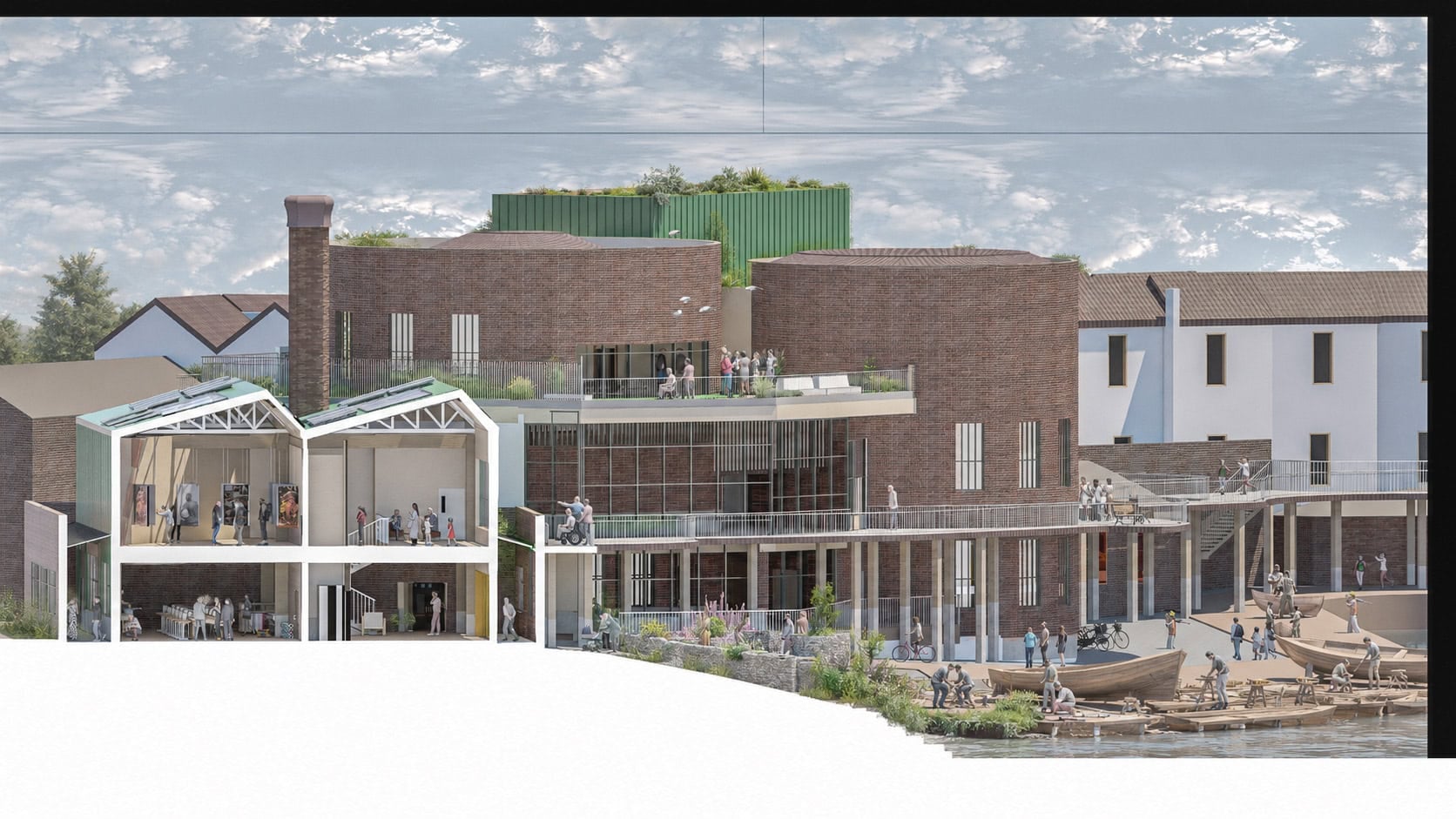
Repair, Memory and Working Water, Benita Onuoha’s Continuum at Underfall Yard
Benita Onuoha is a Year 5 Master of Architecture student at Cardiff University, approaching the end of her Part II studies with a body of work that already shows a clear social and civic direction. Her academic record is strong, including a Dean’s Award for best graduating student during her undergraduate degree, but what gives her thesis project weight is not academic polish alone. It is her understanding that architecture around heritage sites cannot stop at conservation language or visitor economy logic. It has to deal with labour, access, loss, maintenance, and who gets to remain part of a place as it changes.
That position comes through clearly in Continuum, her thesis proposal for Underfall Yard in Bristol. The project addresses a live and difficult question. How do you secure the future of a historic working waterfront without turning it into a cleaned up heritage set piece? Underfall Yard is not just an artefact. It is Bristol’s last active boat repair yard, a place where maritime craft, industrial fabric, and public memory still overlap. Onuoha treats it as a site of production as much as remembrance, and that makes the proposal relevant well beyond the academic studio.
A waterfront under pressure
Underfall Yard sits within one of Bristol’s most layered dockside settings. Its value is not only architectural, although the listed fabric matters. It also lies in its continued use, its connection to boat repair, and its role in the wider civic reading of Bristol’s maritime past. That past is neither simple nor comfortable. The city’s docklands were shaped by engineering, trade, and labour, but also by wealth derived from the transatlantic slave trade. Onuoha’s proposal does not try to smooth over that tension. It argues that any serious intervention on this site must hold both histories in view.
The brief is sharpened by present threats. Climate pressures are increasing across UK waterfronts, and historic dock infrastructure is especially exposed to flooding, material decay, and long term maintenance risk. The 2023 fire at one of the site’s sheds brought a different kind of fragility into focus. Although adjacent listed buildings survived, the incident exposed how quickly physical heritage can be damaged, and how vulnerable active industrial sites become when investment, repair, and public support are uneven. Continuum responds to that moment with a proposal that is neither museum nor generic regeneration scheme. It keeps work at the centre of the site.
Using grief as an organising tool
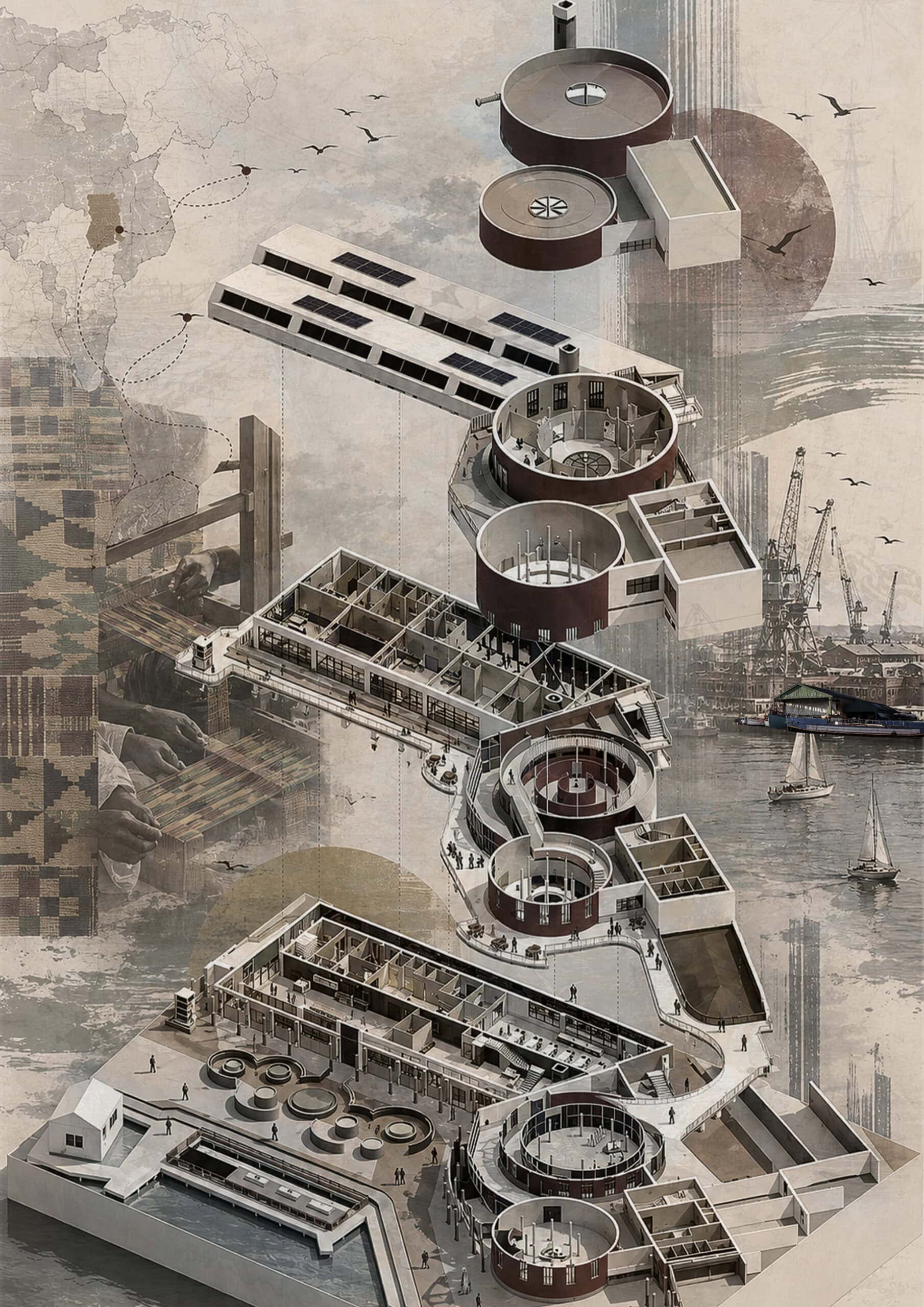
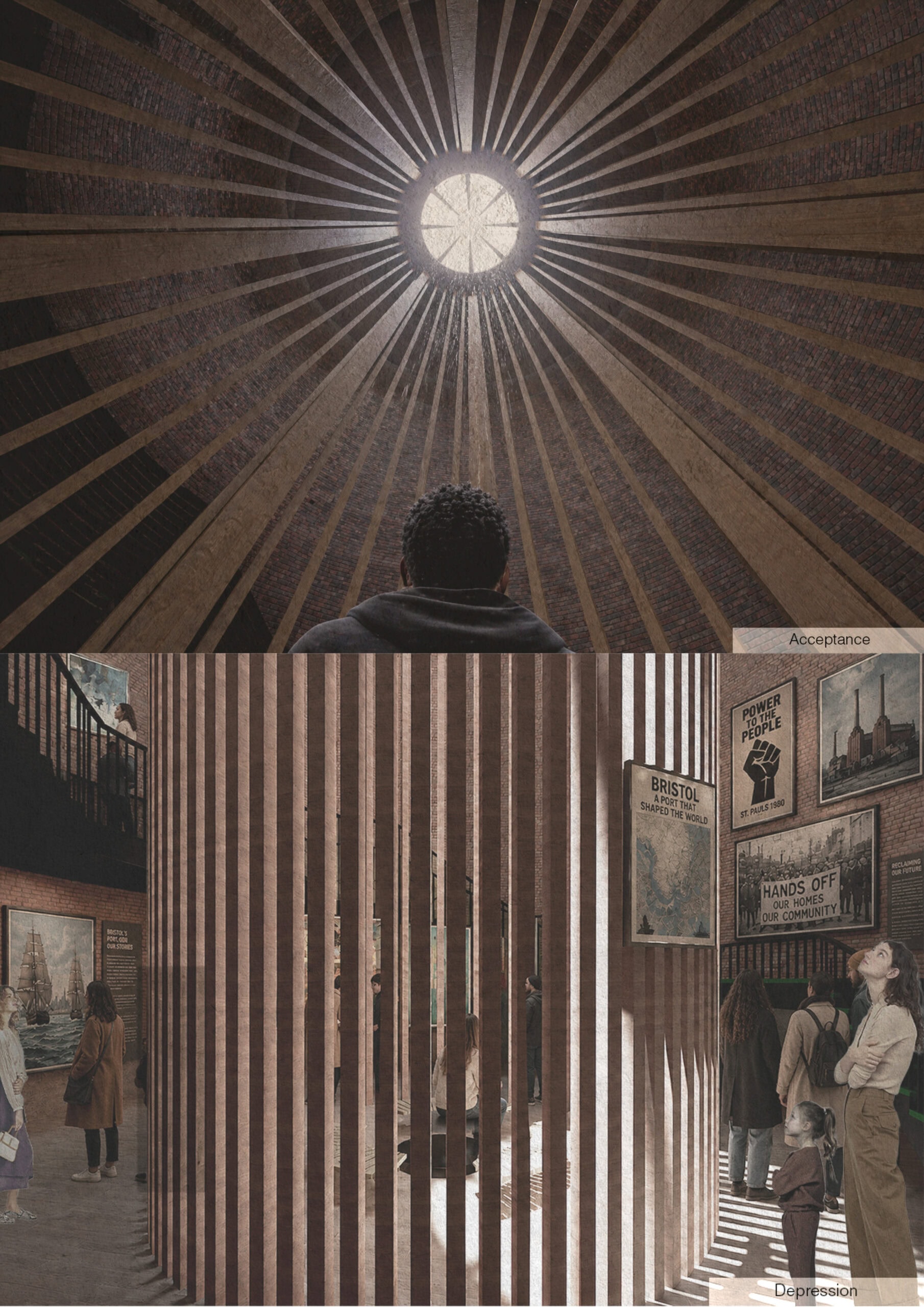
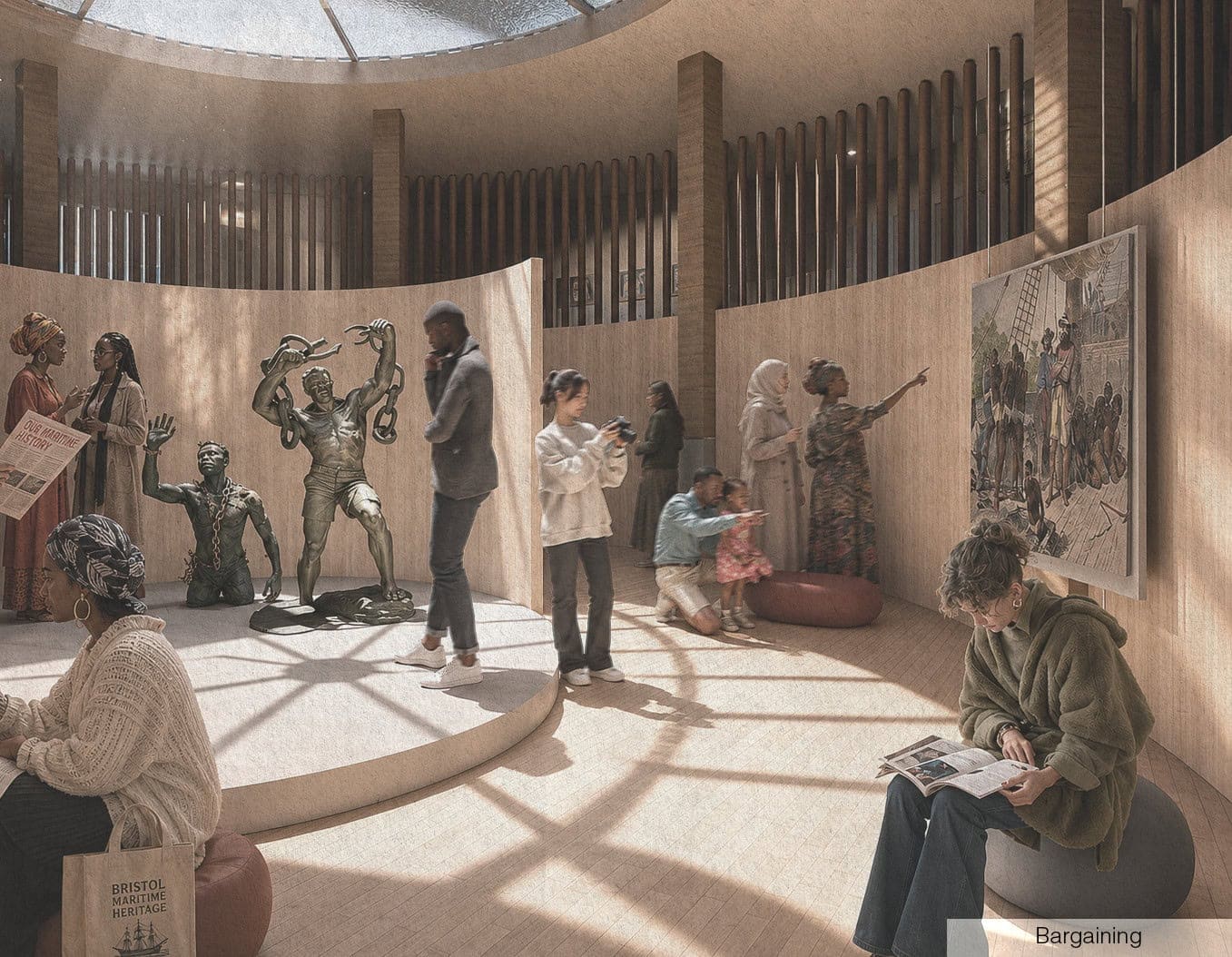
One of the more ambitious moves in the project is its use of the five stages of grief as a spatial framework. That could easily have tipped into abstraction, but Onuoha uses it with restraint. The concept is less about symbolism for its own sake and more about sequencing how people encounter the site. Memory, erasure, damage, and repair are given spatial form through transitions between workshop spaces, public interpretation areas, and community facilities.
This matters because Underfall Yard is not being treated as a frozen object. The proposal recognises that heritage sites often carry unresolved social histories and recent trauma alongside their formal significance. By organising the scheme around processes of acknowledgement and renewal, the project creates a route through the site that supports reflection without compromising practical use. That is a difficult balance, especially on a working waterfront where circulation, servicing, and access all have to function properly.
The inclusion of spaces for remembrance alongside making and repair is one of the project’s strongest decisions. Onuoha does not separate heritage interpretation from the life of the yard. Instead, she places them in relationship. Visitors are not asked to consume history as display material detached from current use. They encounter craft, maintenance, and training as living parts of the site’s identity.
Timber craft, retained fabric and environmental response
Technically, the project shows a serious engagement with construction rather than a broad material mood board. Onuoha’s research into traditional timber joints, including lashing, pegged connections, and mortise and tenon assemblies, informs the proposed junctions between new work and retained fabric. This is where the scheme gains credibility. The material strategy is not just about visual warmth or heritage compatibility. It is tied to how intervention meets existing structure, how repair can remain legible, and how a new insertion can respect the logic of the yard’s industrial history.
Timber is also doing more than one job here. It supports a lower carbon construction approach, but just as importantly it links the architecture to the craft culture of the site. That connection could have been handled too literally. In this case, it appears grounded in tectonic research and assembly thinking. The project understands that if you are proposing a future for a place shaped by making, the building itself needs to communicate something about how it is made.
Environmental response is framed through regeneration rather than simple resilience language. For waterfront projects, that shift matters. Resilience can often mean holding the line and protecting assets. Regeneration asks what ecological and social systems need to be repaired at the same time. In Continuum, that means supporting traditional maritime practice, improving community use, and preparing the site to adapt to climate pressures without stripping out its working identity.
Training, access and a more useful heritage offer
A particularly relevant part of the proposal is its emphasis on intergenerational learning. Workshops, training spaces, and apprenticeship routes for young people are not treated as add ons. They are central to the scheme’s future use. In UK practice, heritage projects often struggle when they rely too heavily on tourism, events, or interpretive programming without a clear day to day use pattern. Onuoha avoids that trap by tying the value of the project to skills transmission and public participation.
Her experience beyond university helps here. Through her placement with Ty Banc Canal Group, she worked in community engagement, stakeholder communication, fundraising support, and proposal writing. That kind of experience often gives students a more realistic sense of what keeps civic projects alive after planning drawings are pinned up. It shows in the way Continuum thinks about community facilities as operational infrastructure, not just social goodwill.
The use of Adinkra symbols such as Sankofa, Gye Nyame, and Eban adds another layer to the project’s reading of memory, resilience, and protection. What is important is that these references are tied to the project’s wider argument about cultural continuity and historical acknowledgement, not applied as surface motif. The result is a proposal with a clear ethical position and enough technical substance to support it.
Why this matters now, and how to connect with Benita
For practices working across adaptive reuse, heritage, cultural projects, and public sector work, Onuoha’s approach is worth attention because it links conservation to social use and climate responsibility without losing sight of craft and construction. She is not proposing heritage as nostalgia. She is proposing it as an active civic resource.
Benita Onuoha is currently completing her final year at Cardiff University and is also part of the POC Architecture Mentorship Programme, with a focus on portfolio development and career progression. Hiring directors, studio leads, and collaborators interested in adaptive reuse, community centred design, and regenerative thinking can connect with her on LinkedIn, follow her on Instagram at @cbo_designs, for more of her work and project updates.
What this project shows
Continuum is useful because it shows Benita Onuoha’s ability to connect a clear design idea with context, users and delivery constraints. It links adaptive reuse, maritime heritage, climate pressure and community learning without reducing the project to a simple conservation exercise.
For employers reviewing student and graduate portfolios, the lesson is simple. Look past a single hero image and ask how clearly the candidate explains the brief, the site, the decisions and the technical consequences of the proposal.



Add a comment