
Forgeworks and the case for a more legible technical workplace
Kimberly Yong has recently completed her Master of Architecture at the Welsh School of Architecture, Cardiff University, and is due to graduate in July. Already holding a First Class Honours degree in BSc Architecture, she has also built experience as a Part I Architectural Assistant across research, planning, feasibility, spatial strategy and visual communication. She is now seeking a Part II Architectural Assistant role. Her final MArch thesis, Forgeworks, sets itself a difficult architectural question. How can the highly controlled worlds of semiconductor production, fabrication and satellite integration be designed as places that are not only technically competent, but also readable, humane and accountable to the city around them?
That question matters because these building types are usually treated as sealed infrastructure. They are often reduced to anonymous envelopes, with technical value concentrated inside and little architectural attention given to how workers move, recover, collaborate or understand the environmental burden of what happens there. Forgeworks argues for another model. It treats advanced industry as an architectural and civic issue, not simply an engineering one.
Reframing Cardiff’s hidden industrial interiors
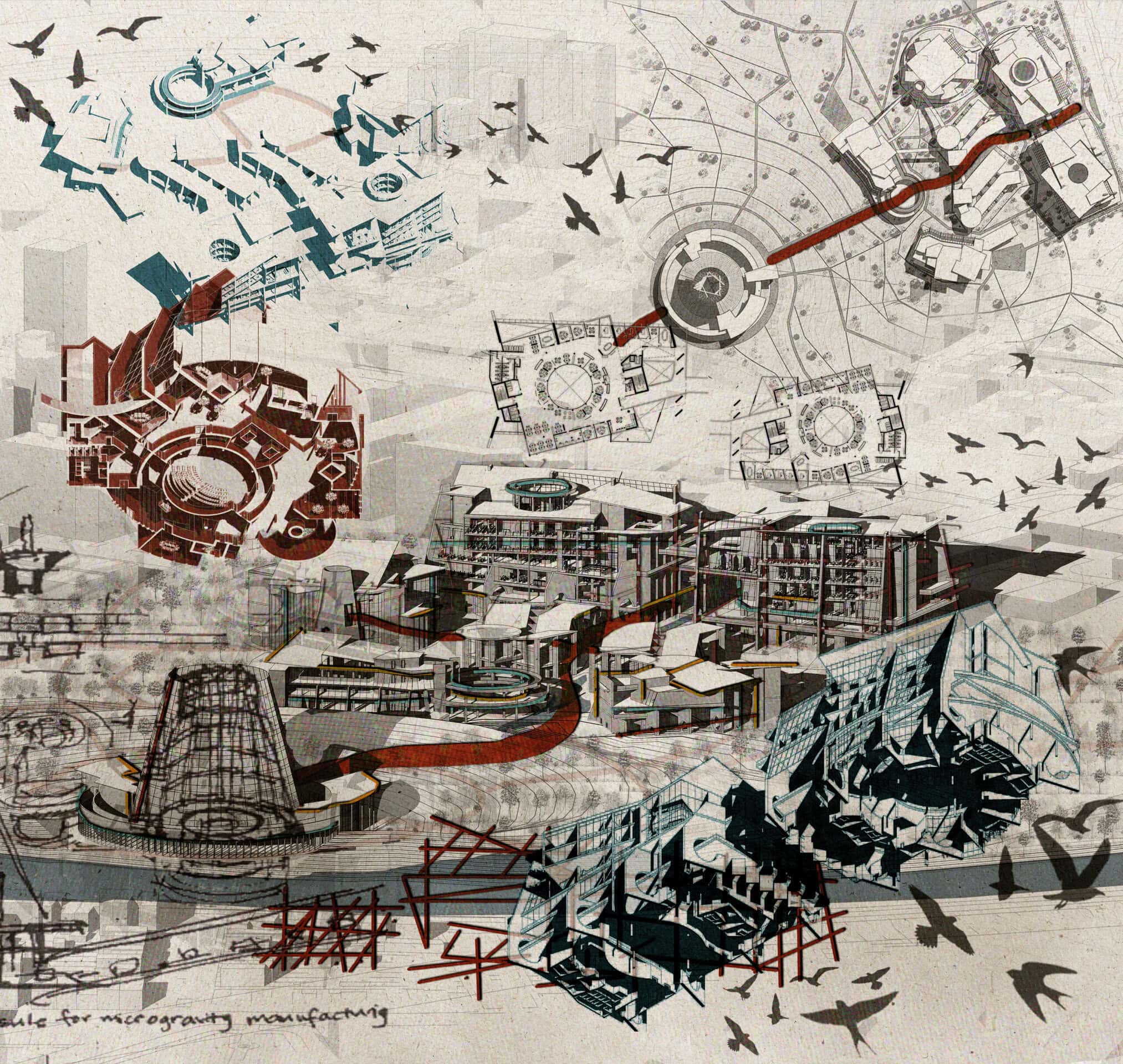
Set in Cardiff, the project proposes a new workplace for fabrication, semiconductor processes and satellite integration. The city is an apt setting for this kind of speculation. It carries a mix of post industrial ground, strategic infrastructure and civic growth, which makes it a useful testing point for projects that sit between employment, logistics and public life. Kimberly’s proposal does not present technical production as something that must withdraw from public view. Instead, it asks how specialist work can remain protected while still becoming more intelligible to the wider public.
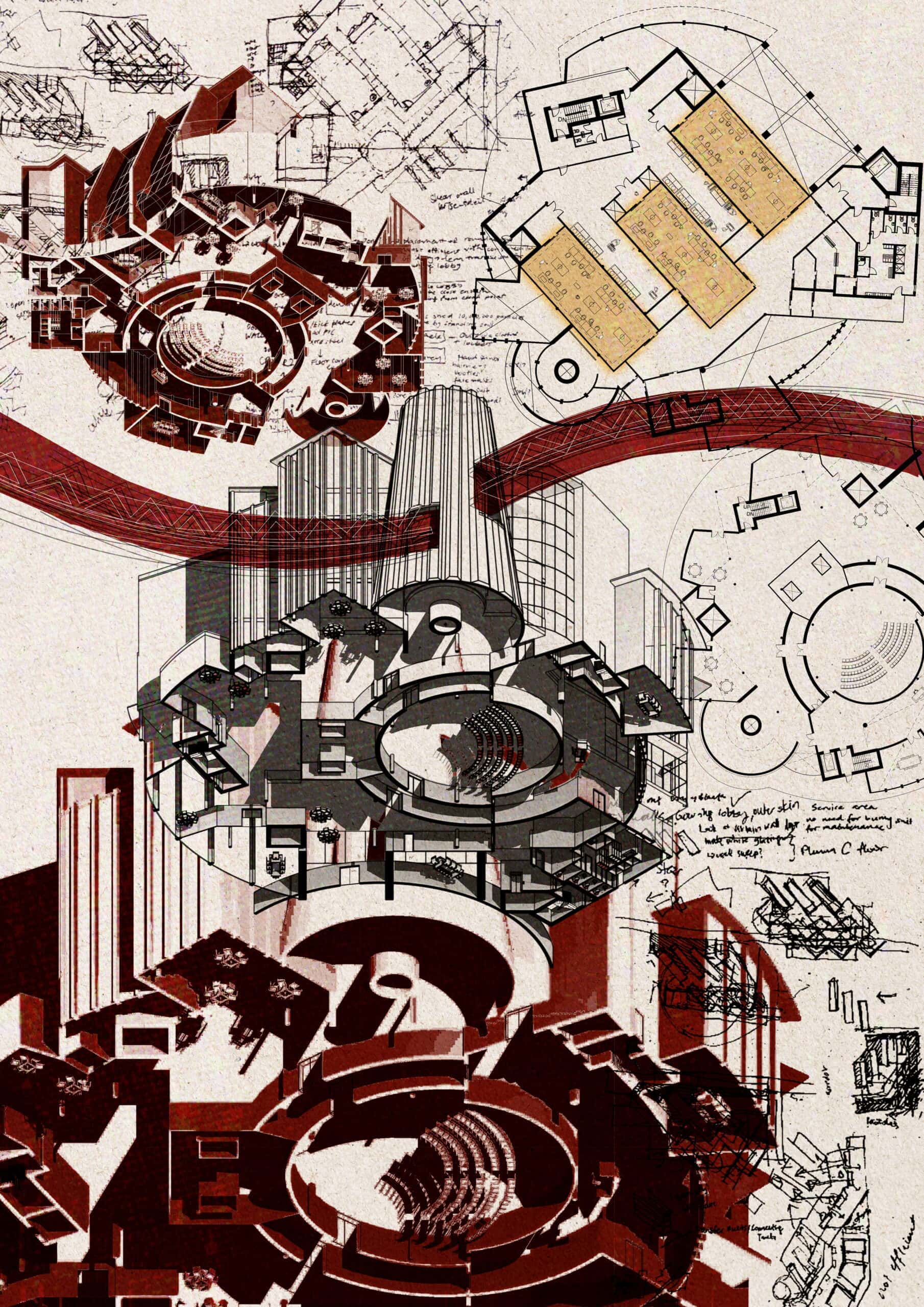
This is where Forgeworks gains traction as an architectural proposition rather than a simple industrial brief. The project takes the familiar “black box” typology and opens it up conceptually. It does not abandon the strict environmental demands of cleanrooms or aerospace assembly. It accepts those constraints and works through them. What changes is the attitude to visibility. Public routes, workspaces, laboratories, satellite areas and planted site buffers are arranged as related systems, allowing the building to communicate something about what it contains without compromising operational control.
Knowledge, Care and Consequence as a spatial framework
Knowledge, care and consequence as a spatial framework
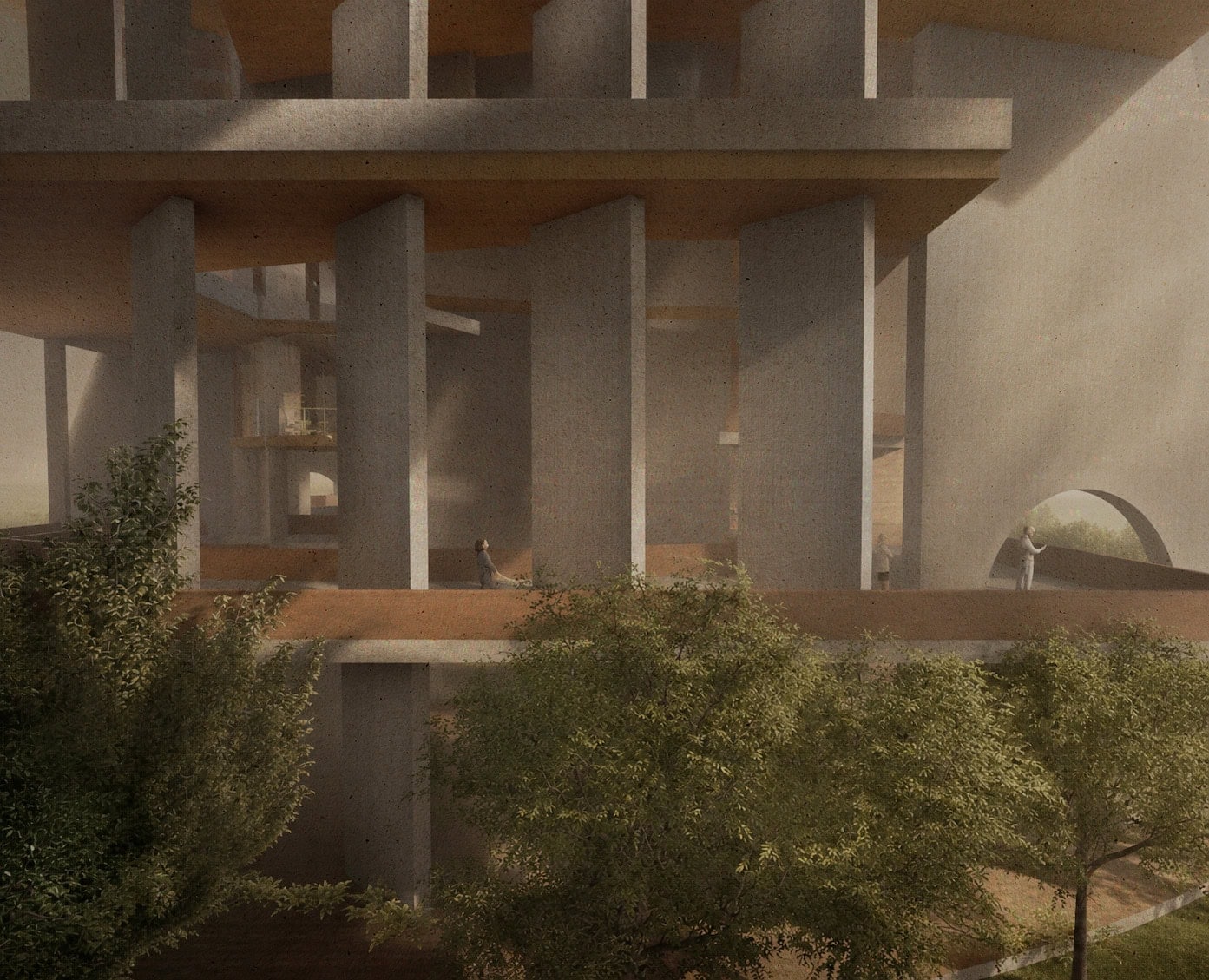
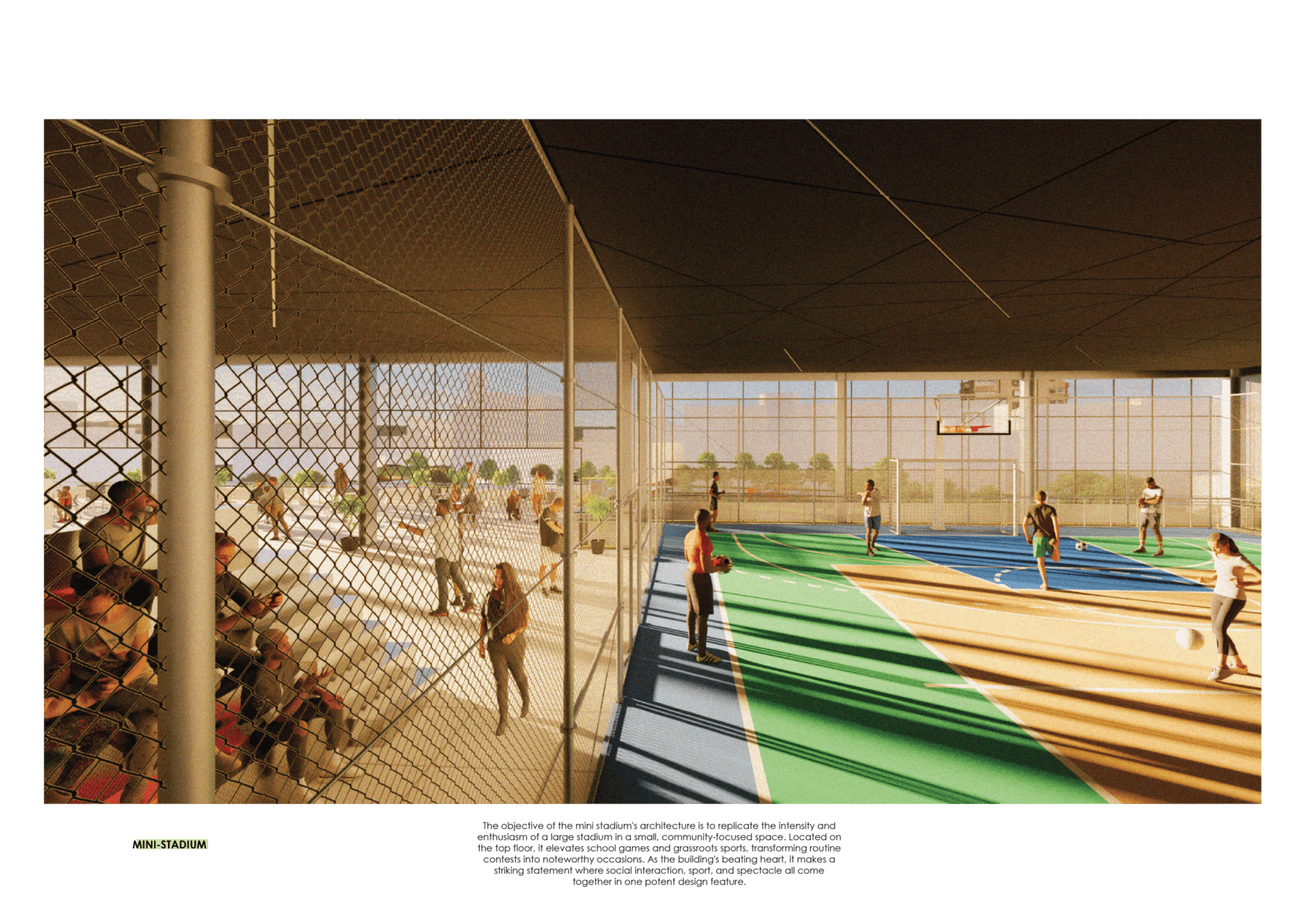
The project is organised through three terms, Knowledge, Care and Consequence. This gives the thesis a disciplined structure and helps avoid the common problem of technical projects becoming overrun by process diagrams without a clear architectural hierarchy. In Forgeworks, knowledge is carried by cleanrooms, fabrication spaces and satellite integration, care is expressed through worker wellbeing and legible circulation, and consequence is addressed through public visibility, landscape and environmental responsibility.
That framework gives the project a useful professional edge. It recognises that technically complex buildings still need to be understood by the people who work in them, visit them and live around them. For practices working on laboratories, advanced manufacturing, science buildings or specialist workplace projects, that ability to balance process, people and civic presence is valuable.
Why this matters to practice
Forgeworks shows a designer thinking beyond the sealed technical box. Kimberly Yong’s proposal asks how high-control environments can be planned with clarity, care and accountability, while still respecting the strict requirements of clean production and aerospace assembly.
For hiring teams, the project points to a Part II candidate who can connect spatial strategy with technical constraints and communicate complex programmes in a way that feels architectural rather than purely operational.
Kimberly Yong is seeking a Part II Architectural Assistant role. Practices interested in technically minded workplace, research or specialist production projects should take a closer look at the thinking behind Forgeworks.
What this project shows
Forgeworks is useful because it shows Kimberly Yong’s ability to connect a clear design idea with context, users and delivery constraints. It shows how advanced manufacturing and cleanroom-led buildings can still have readable circulation, worker care and a civic presence.
For employers reviewing student and graduate portfolios, the lesson is simple. Look past a single hero image and ask how clearly the candidate explains the brief, the site, the decisions and the technical consequences of the proposal.





Add a comment