
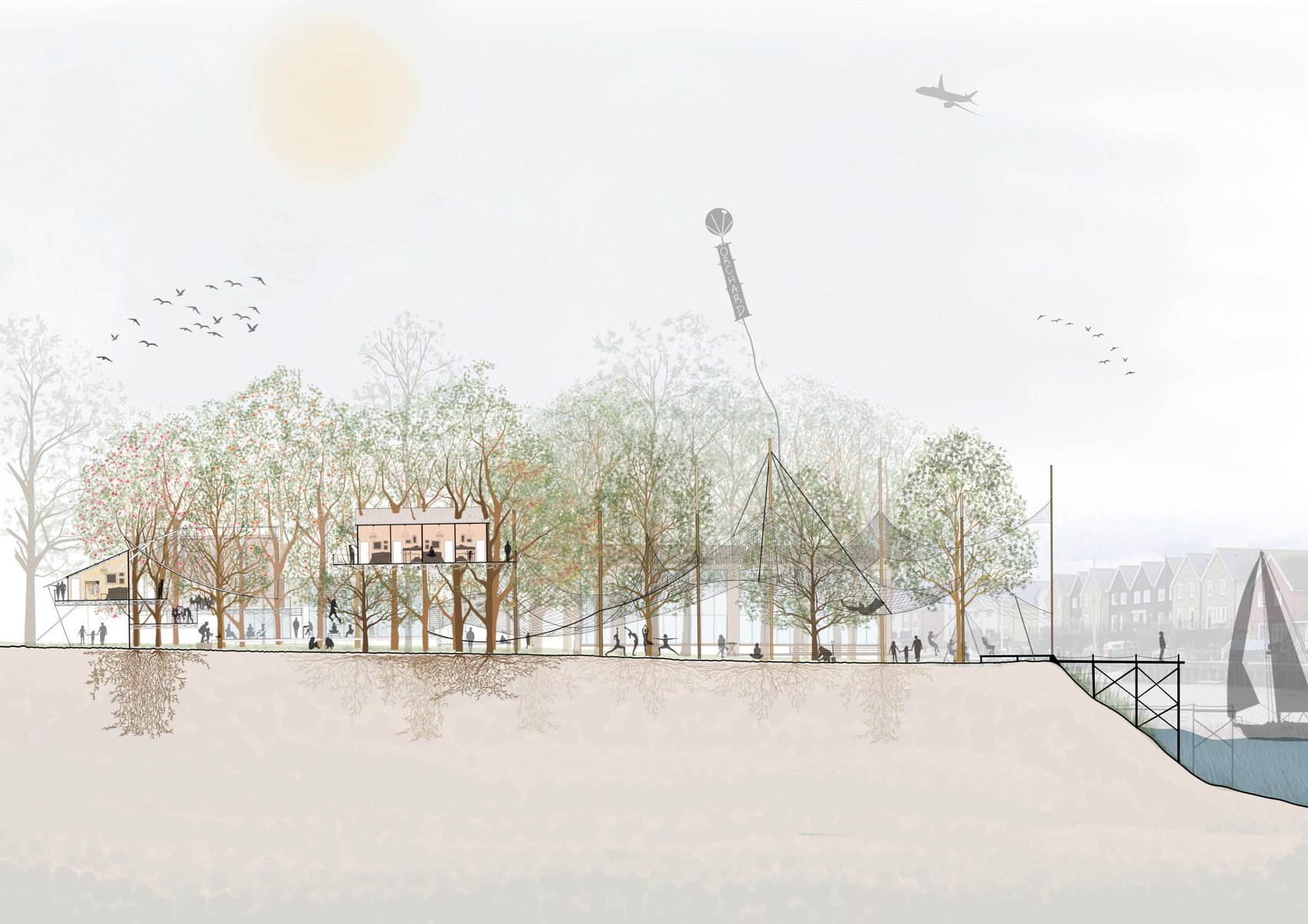
Divya Vura’s Growing Together thesis explores living architecture through grafted ecosystems: buildings, landscapes and community stewardship growing together over time.
The project is interesting because it treats the tree as structure, habitat, resource and social infrastructure. The architecture is not finished at handover. It is cultivated.
Project images
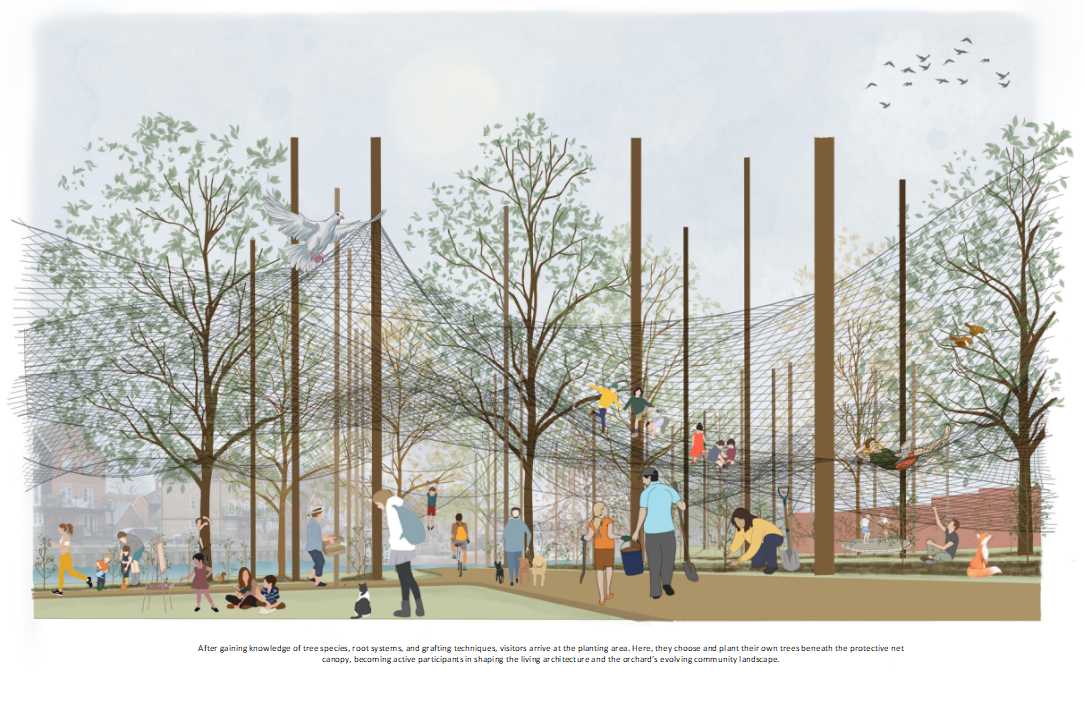
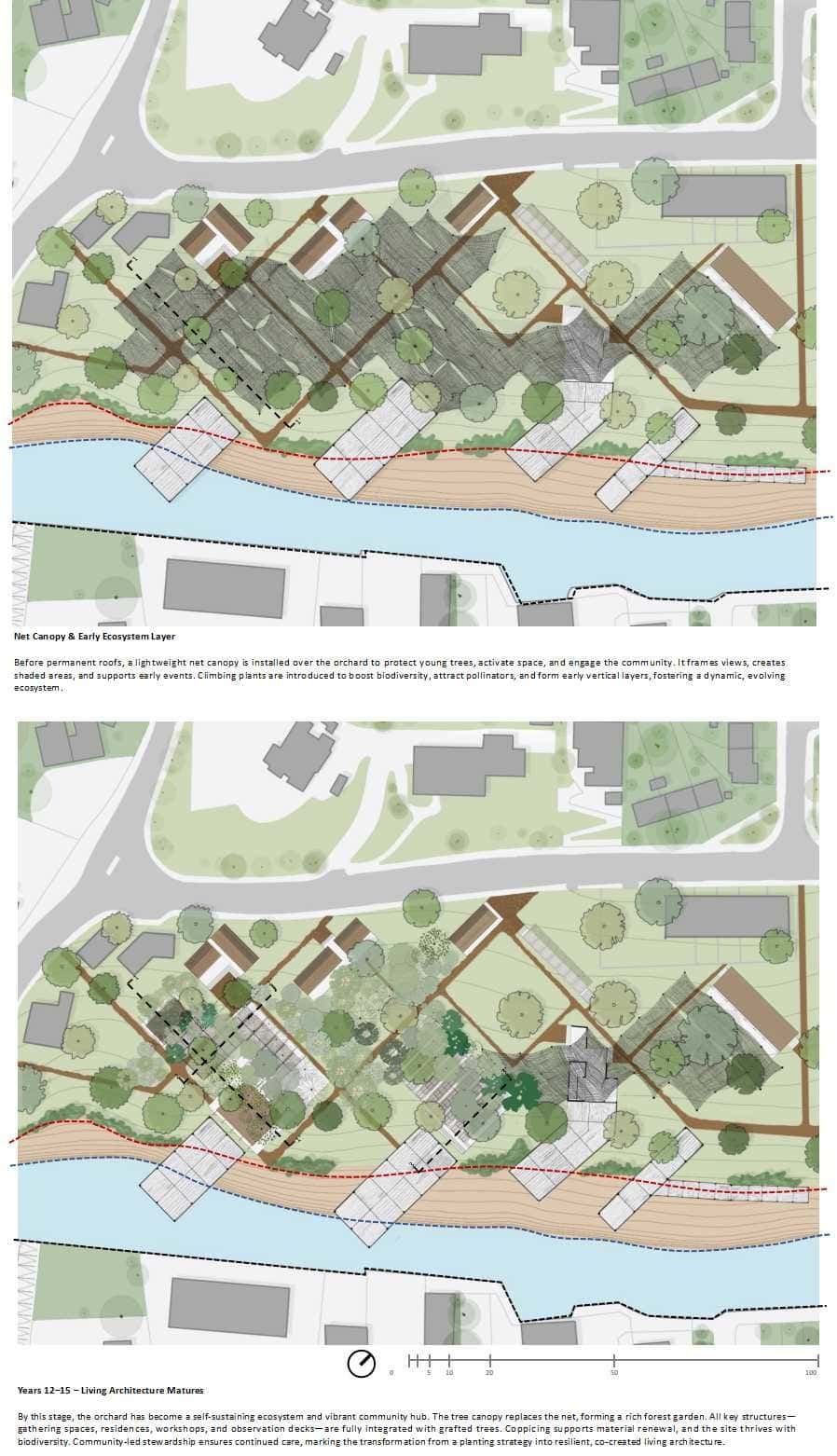
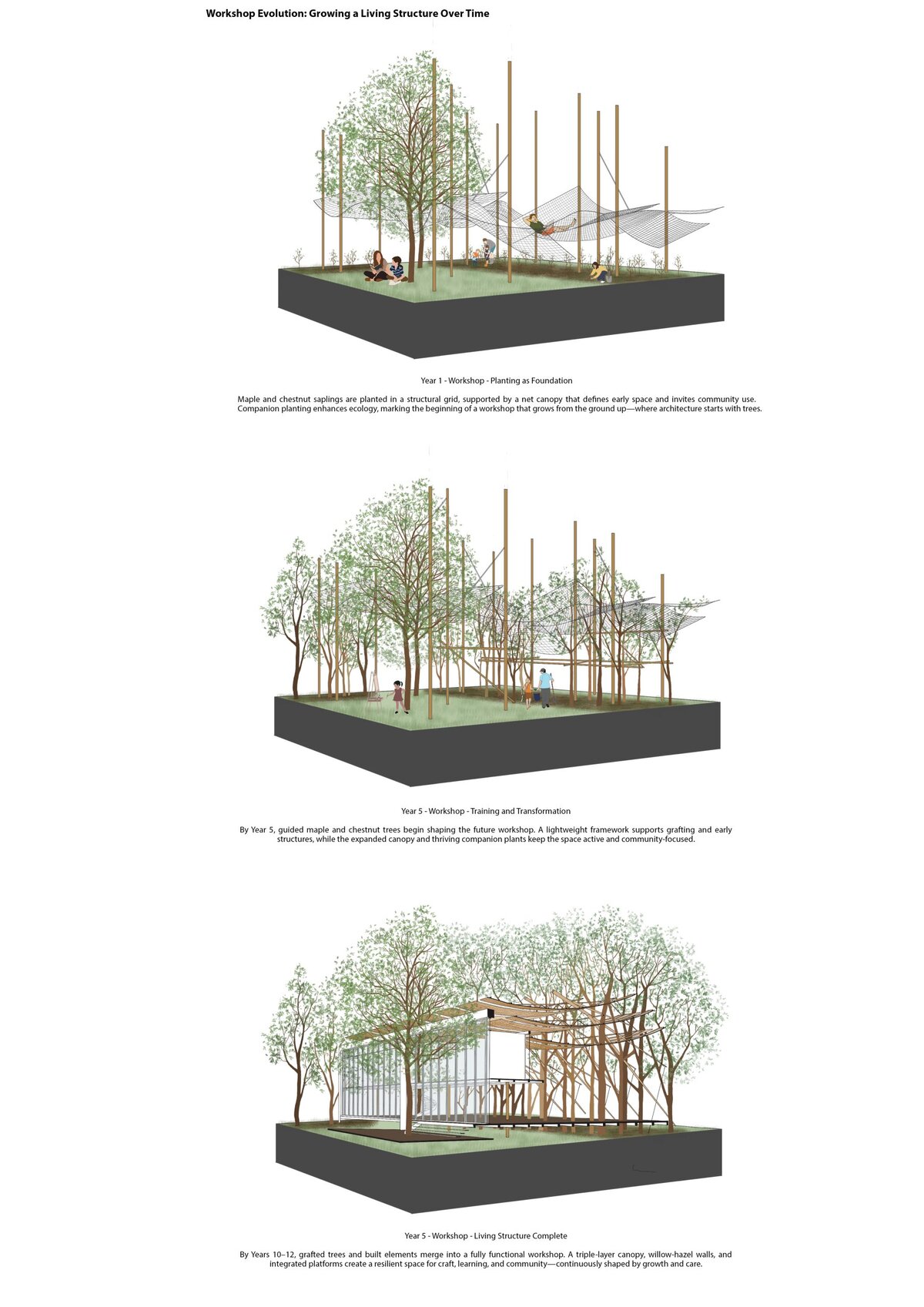
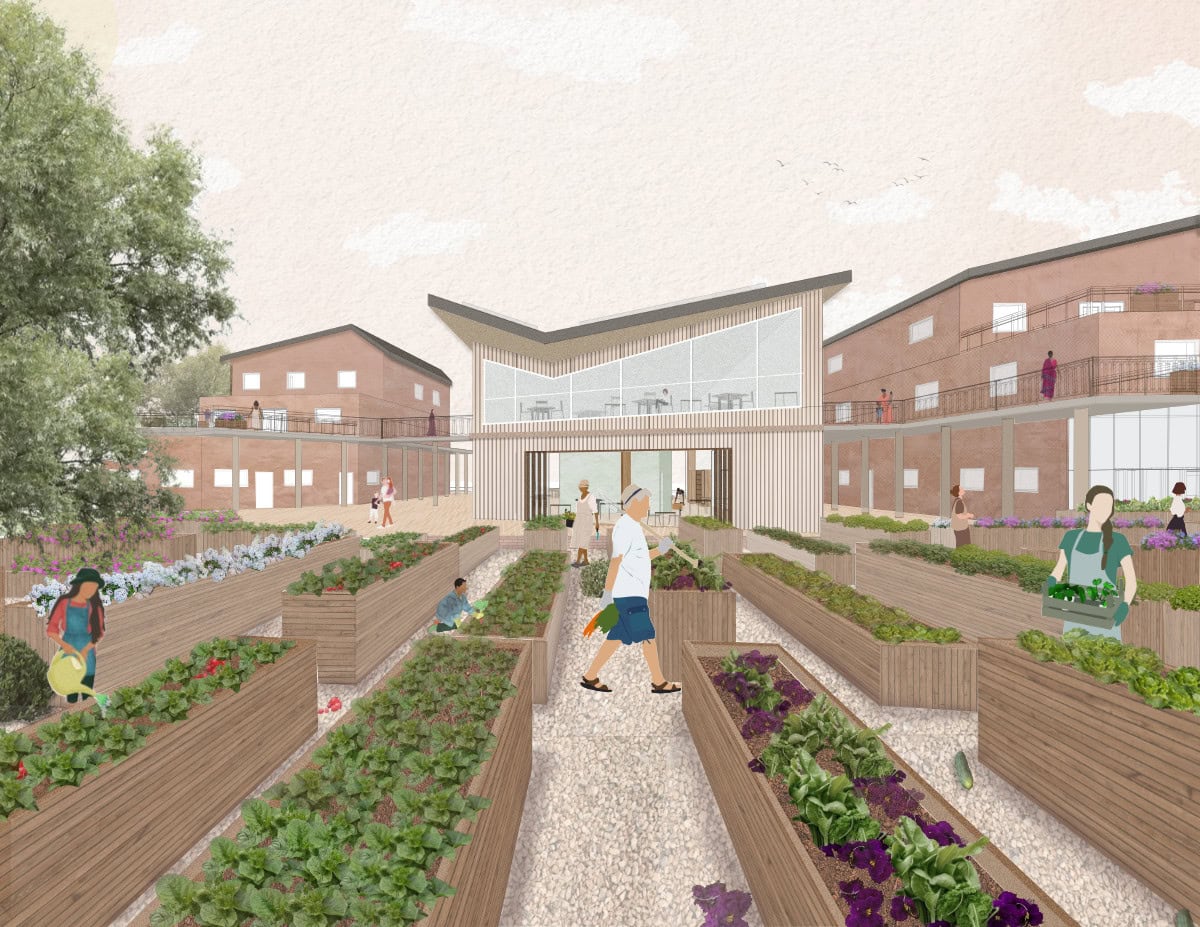
The project visuals show the proposal as a living landscape system rather than a single object building.
What makes the thesis different
The project is set in Faversham, Kent, and uses orchard land as both context and construction logic. Instead of importing a finished architectural object, the proposal works with trees, grafts, coppicing cycles, pollinators and community care.
- Grafting becomes a design method, not only a horticultural technique.
- Trees form canopies, thresholds and future structural frameworks.
- The orchard is planned as habitat, food source, craft resource and civic space.
- Community stewardship is part of the long-term brief.
- The project draws on Baubotanik and Meghalaya living root bridges as serious precedents.
Regenerative design needs time
Many sustainability projects stop at lower impact. This thesis pushes further by asking what happens when growth, decay, repair and seasonal change are part of the architecture.
That does not make the proposal less architectural. It makes the technical and social questions sharper: who maintains the structure, how long does it take to mature, what happens when growth is uneven, and how does the project remain useful during each phase?
Follow the project and compare similar work
The project is best read alongside other student showcases where landscape, ecology and social use carry the design argument.
Portfolio lesson
For a portfolio, this kind of project needs strong process pages. Show the ecological system, the seasonal logic, the phasing, the maintenance model and the human activities that make the project more than a beautiful landscape image.
Architecture Social view
Stephen’s recruiter view is that ecological work becomes more convincing when it is specific. Practices are more likely to trust a regenerative design argument when the drawings explain time, material, risk and responsibility.
Showcase an ecological or regenerative project
If your work uses landscape systems, living materials or stewardship, show the process as clearly as the final image.
- Explain the ecological system in plain language.
- Show the project over time, not only at day one.
- Name who maintains or adapts the design.
- Use captions that connect diagrams to lived use.
Next step
Browse more project showcases, read the portfolio guide, or submit your own architecture project.
If this project has made you rethink your own portfolio or next move, browse current architecture jobs or contact Architecture Social for a recruiter’s view.




Add a comment