
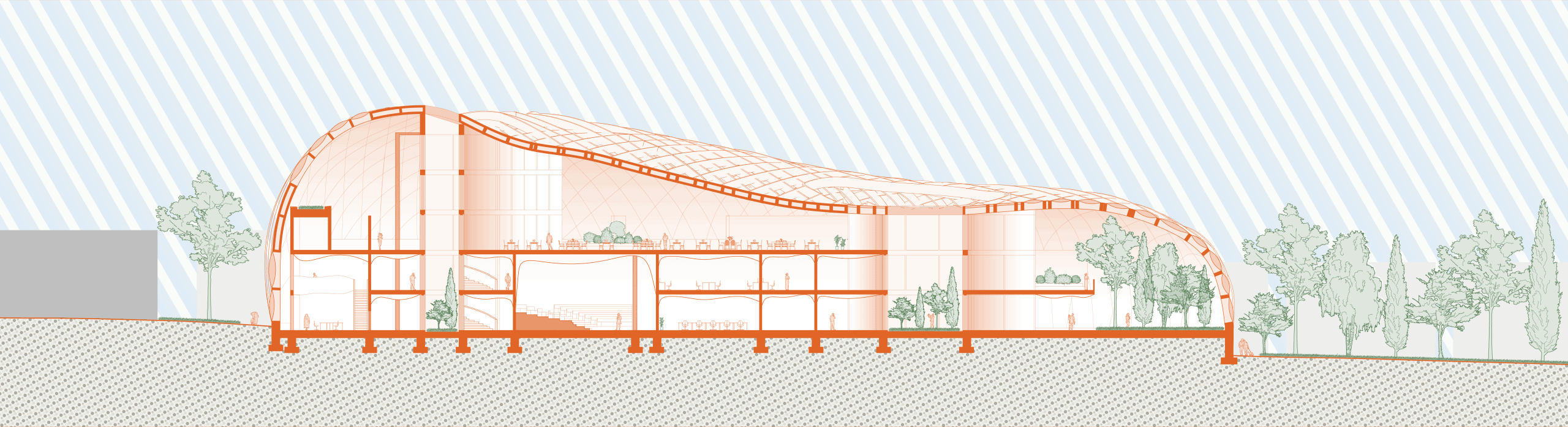
Lockleaze: Nature Unlocked by Hannah Lennon proposes a biophilic community hub for Gainsborough Square in Bristol.
The project works because the green idea is not just aesthetic. The structure, courtyard, facade and community programme all support the same ambition: reconnecting people with nature inside everyday civic life.
Project gallery
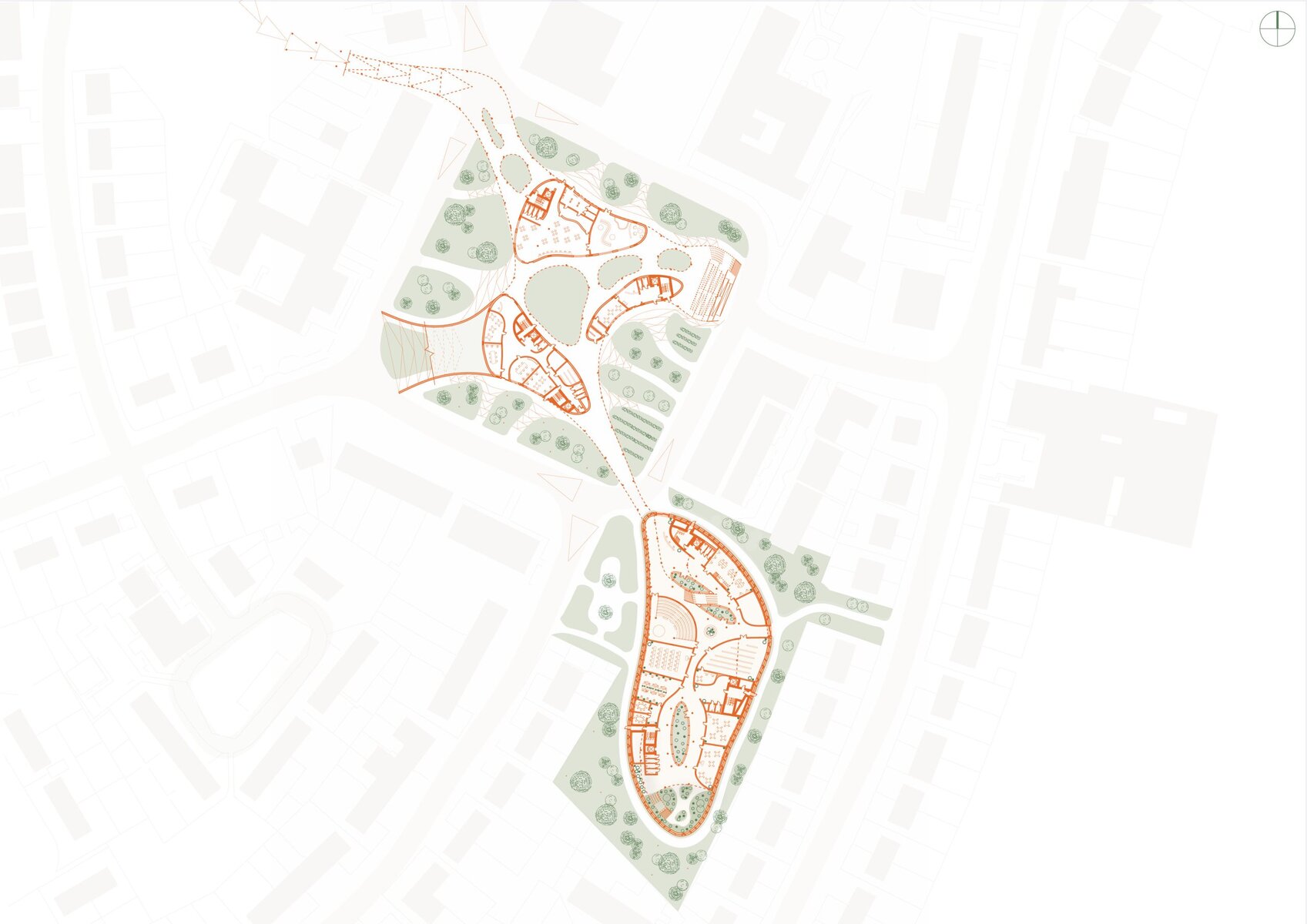
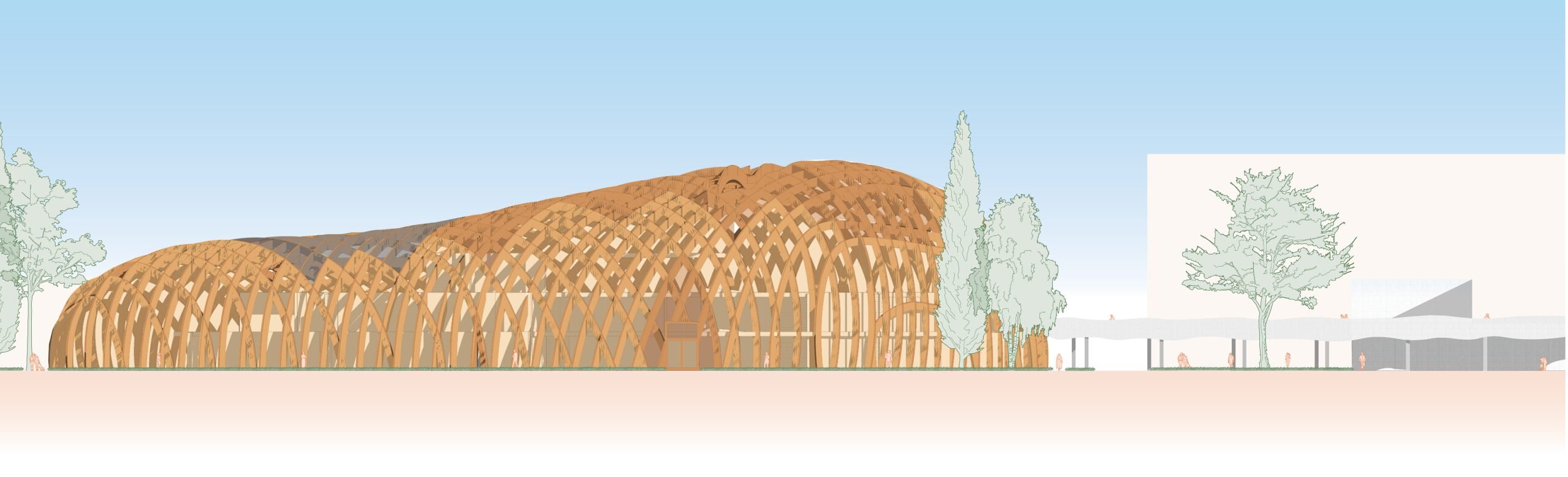
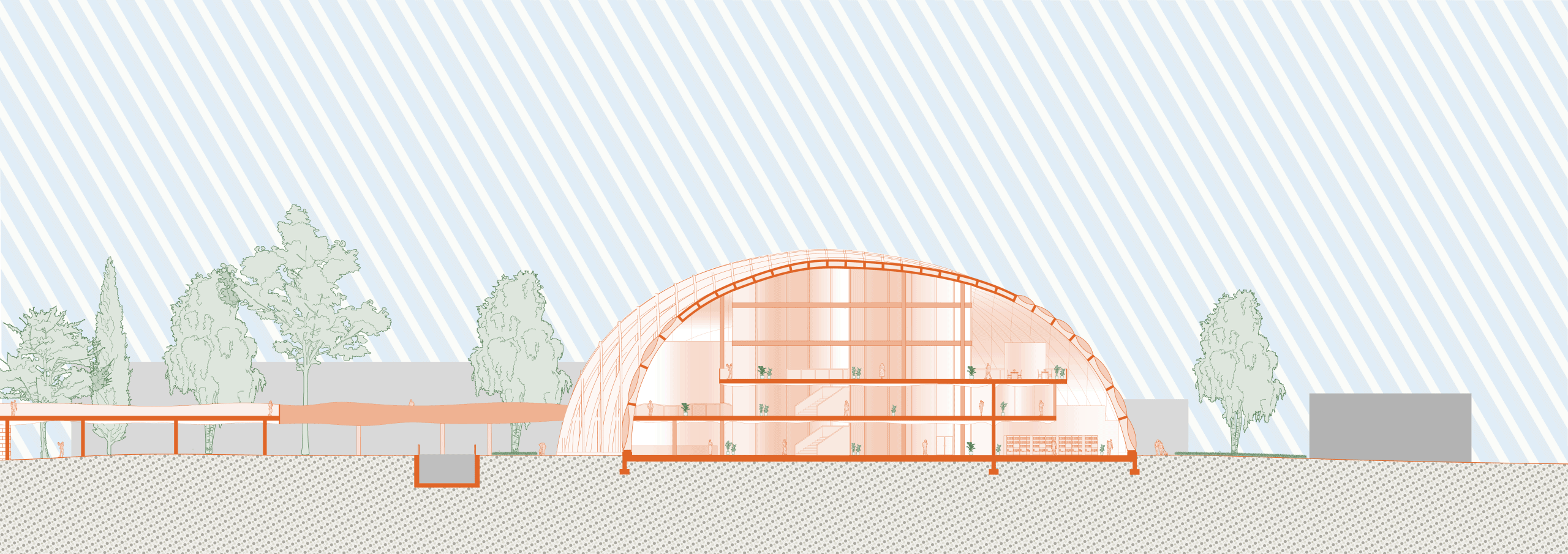
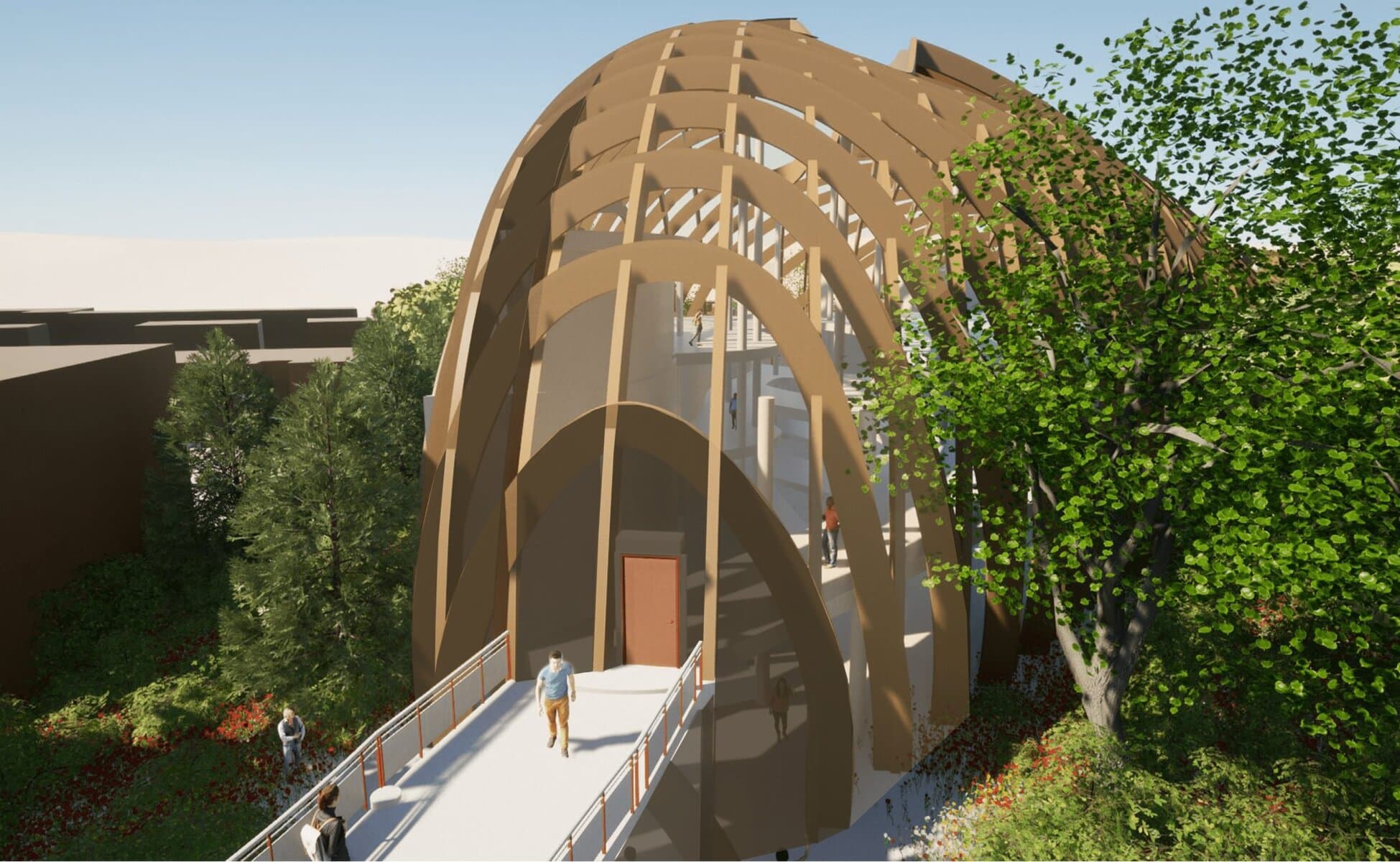
The project drawings show how the biophilic idea becomes structure, landscape, section and interior atmosphere.
How the biophilic idea works
At the centre of the scheme is a triple-height internal courtyard using ETFE to bring diffused daylight into the building. That courtyard is more than a visual feature. It gives the project a living axis for planting, air, light and social contact.
- A timber waffle shell gives the building a low-carbon structural identity.
- ETFE cushions bring daylight into the internal courtyard.
- Photovoltaic panels shift the facade towards energy generation.
- Timber infill panels add warmth and texture.
- Edible planting and learning zones connect the building to ecological education.
Why this is stronger than green language
A lot of sustainability projects talk about nature without proving the relationship between space and performance. Lockleaze is stronger because the environmental thinking appears in the structure, facade, planting, education programme and circulation.
The project also recognises that community buildings have to adapt. A sustainable community hub should not be frozen around one use; it needs to support different groups, activities and seasons over time.
Portfolio lesson
For candidates, this is a useful model for presenting a sustainability project. Do not only say the project is biophilic. Show the system: structure, daylight, facade, planting, occupation and community benefit.
Architecture Social view
Stephen’s recruiter view is that sustainable design carries more weight when the evidence is specific. A practice wants to see that you can connect environmental intent with buildable decisions.
Showcase a biophilic or community project
If your project connects ecology, people and structure, make the evidence visible.
- Show the environmental strategy in plan and section.
- Explain material choices in plain language.
- Connect public use with landscape and ecological learning.
- Use images that prove how the space feels and works.
Next step
Browse more project showcases, read the portfolio guide, or submit your own project to Architecture Social.
If this project has made you rethink your own portfolio or next move, browse current architecture jobs or contact Architecture Social for a recruiter’s view.


Add a comment