
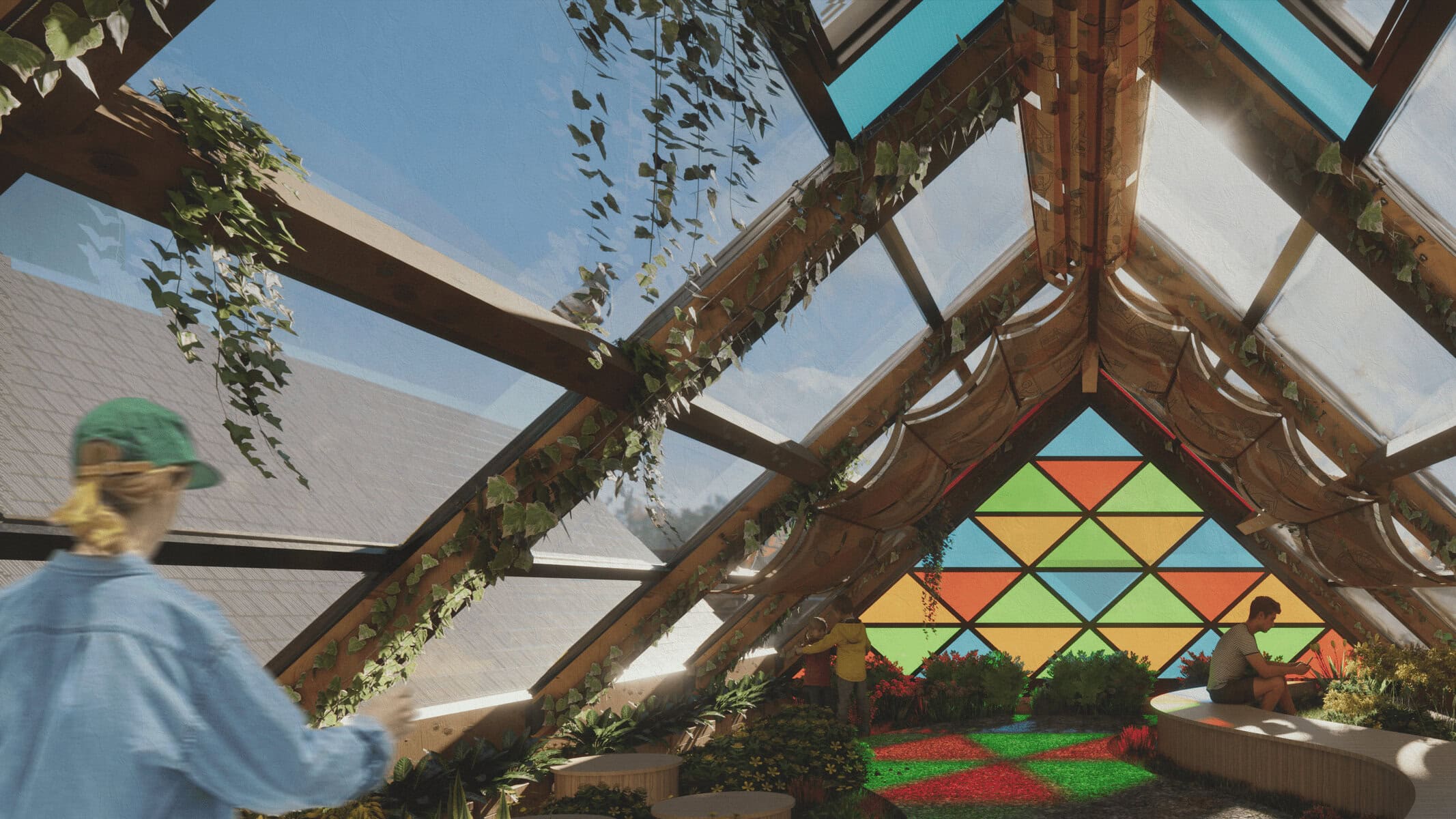
Nature’s Nexus by Benita Onuoha is a biophilic design architecture project for Circus Eruption in Swansea, connecting heritage, wellbeing, accessibility and community use.
The project is useful because it does not treat nature as decoration. Daylight, planting, movement, memory and access are used as part of the building’s wayfinding and social purpose.
Project gallery
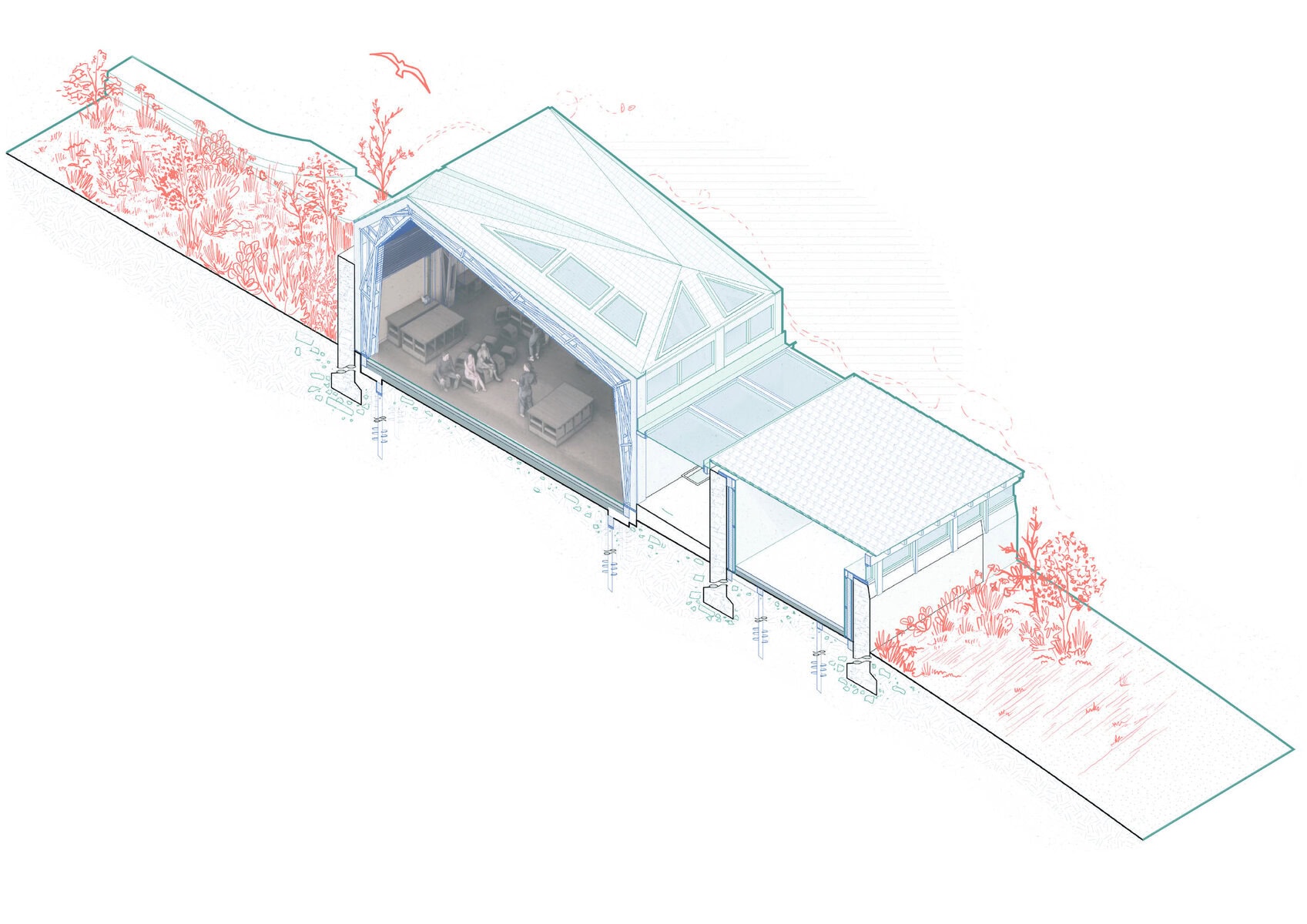
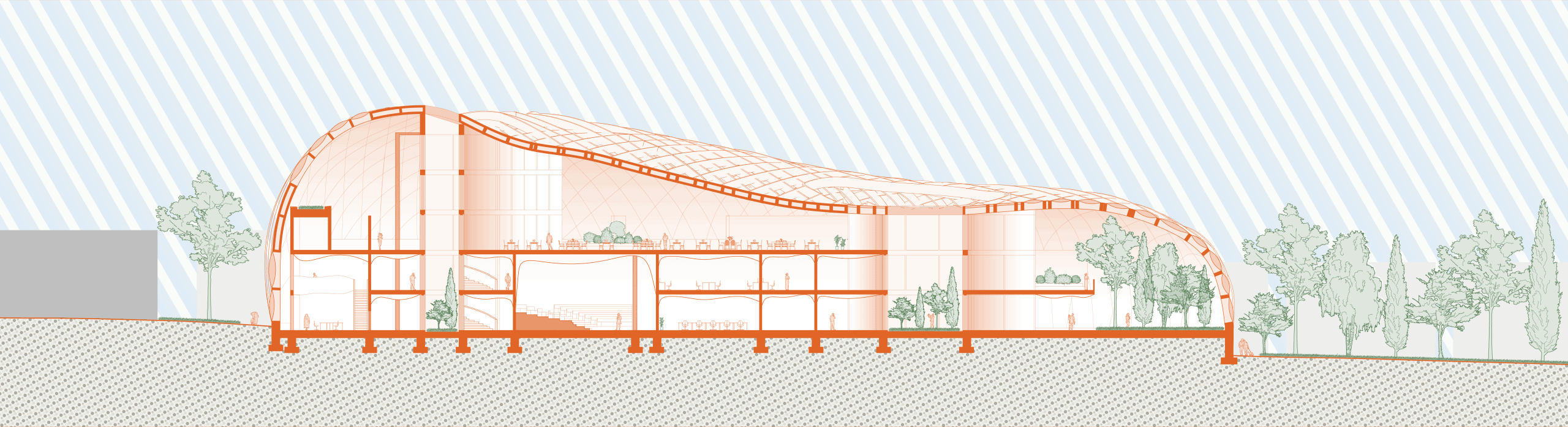
The project visuals show how the proposal uses structure, roof space, greenery and sectional thinking to connect the old hall with new community use.


Project overview
Benita completed her fourth year at the Welsh School of Architecture, Cardiff University. Her background spans architecture and interior design, including experience with Urban Shelter Limited, Haute Interiors and community work with the Ty Banc Canal Group.
Nature’s Nexus responds to Circus Eruption, an inclusion charity based at the former St Luke’s Church Hall in Cwmbwrla, Swansea. The brief called for a more open, creative and accessible place for movement, gathering and community engagement.
How the design uses nature
- A central courtyard links the church and hall as a shared green space.
- Daylight and planting become part of the route through the building.
- The café opens the mission hall to public life and respite.
- A roof garden creates space for play, reflection and community events.
- A triangular ETFE canopy draws on the coloured light of stained glass.
Why heritage and wellbeing belong together
The strongest part of the project is the way it connects old and new. The proposal keeps memory visible through the original timber roof trusses and renewed Remembrance Garden, while using new spaces to support access, comfort and community activity.
That makes the biophilic strategy more convincing. It is not only about greenery. It is about helping people move, gather, rest and feel welcome in a place that already carries meaning.
Showcase a biophilic community project
Architecture Social can feature student work where nature, wellbeing, heritage, access or inclusive community use are backed up by clear spatial evidence.
- Explain who the place serves.
- Show how nature affects movement, comfort or use.
- Connect heritage decisions to the new brief.
- Use drawings that prove access, atmosphere and programme.
Architecture Social view
Stephen’s recruiter view is that biophilic design needs discipline. Practices want to see more than plants and atmosphere. They need to understand the brief, the people, the access strategy and the drawings that make the idea credible.
Next step
Explore more student projects, read the portfolio guide, or submit a biophilic design project.
If this project has made you rethink your own portfolio or next move, browse current architecture jobs or contact Architecture Social for a recruiter’s view.



Add a comment