

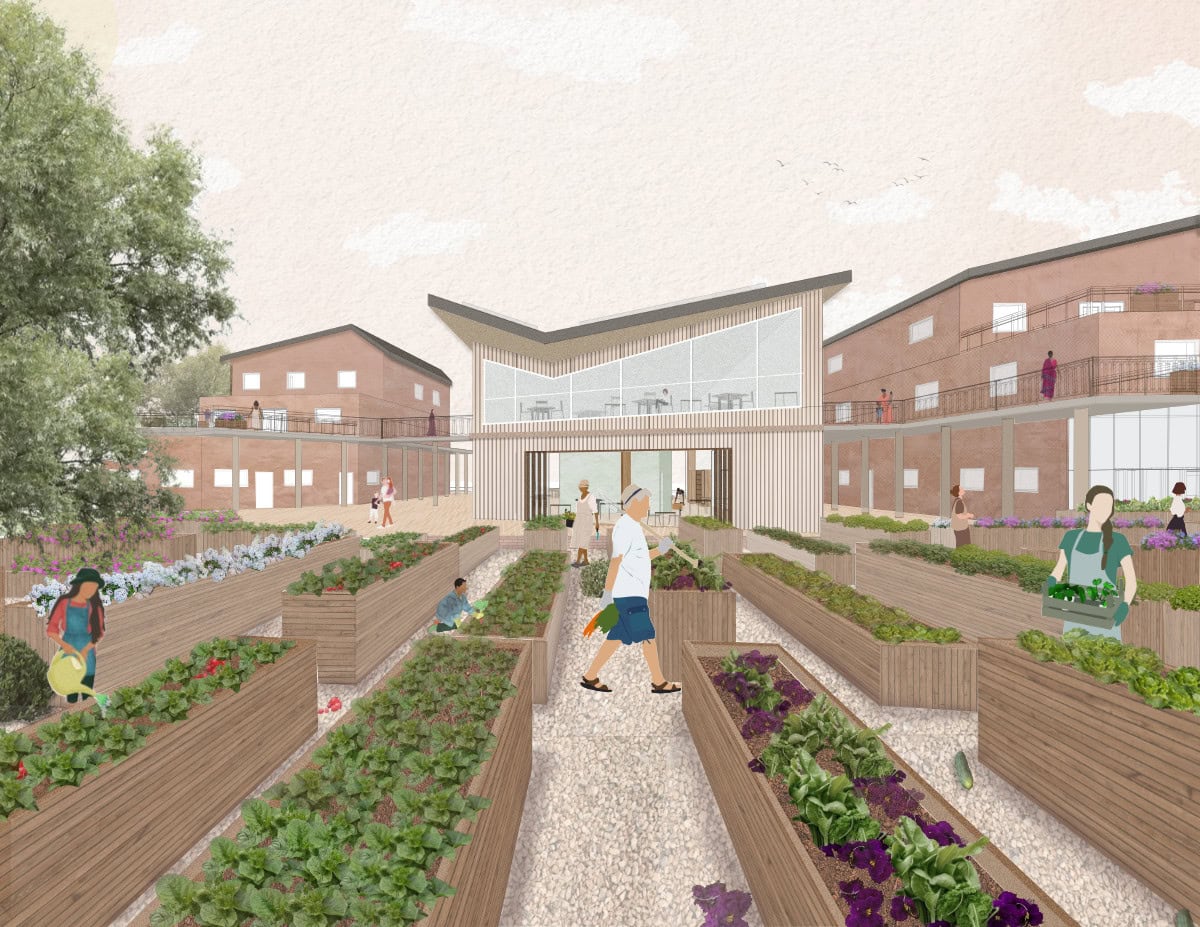
Play Space Utopia by Jacqueline Lau explores dementia care design through play, movement and present-moment experience. Instead of only asking how architecture can help people remember, the project asks how it can help people feel joy, curiosity and agency now.
That is a strong architectural question. Dementia care spaces are often discussed through safety, routine and familiarity, but Jacqueline uses play as a serious design tool for wellbeing.
A care brief built around experience
The project reframes dementia care away from passive environments. It looks at how spatial change, light, route, sensory engagement and playful movement can support residents in ways that are not only nostalgic or clinical.
- Play is treated as a wellbeing strategy, not a childish theme.
- Movement and changing routes become part of the spatial experience.
- The project draws on radical precedents to challenge conventional care layouts.
- The user experience is more important than the object-like appearance of the proposal.
Why the play idea matters
A playful care environment has to be handled carefully. The value is not novelty for its own sake. The value is in giving people places that invite exploration, interaction and moments of happiness without making the space feel unsafe or confusing.
For a student portfolio, that means the concept needs user evidence. It should explain who the space is for, what the person experiences, and how the architectural moves support that experience.
Follow the project author
Jacqueline shared a public profile route with the project for readers who want to see more of her work.
Architecture Social view
Stephen sees care and community projects land best when the user is not buried under theory. The idea can be ambitious, but the reader still needs to understand the human benefit quickly.
Make inclusive design human first
If you submit a care, health or inclusive design project, show the lived experience as clearly as the concept.
- Name the user group and the problem.
- Explain how the plan, route or section supports people.
- Show evidence for sensory, social or care-related decisions.
- Avoid hiding the human story behind theory alone.
Next step
Submit your student, graduate or practice project to Architecture Social Showcase if it combines a clear idea with useful project evidence.
If this project has made you rethink your own portfolio or next move, browse current architecture jobs or contact Architecture Social for a recruiter’s view.


Add a comment