Description
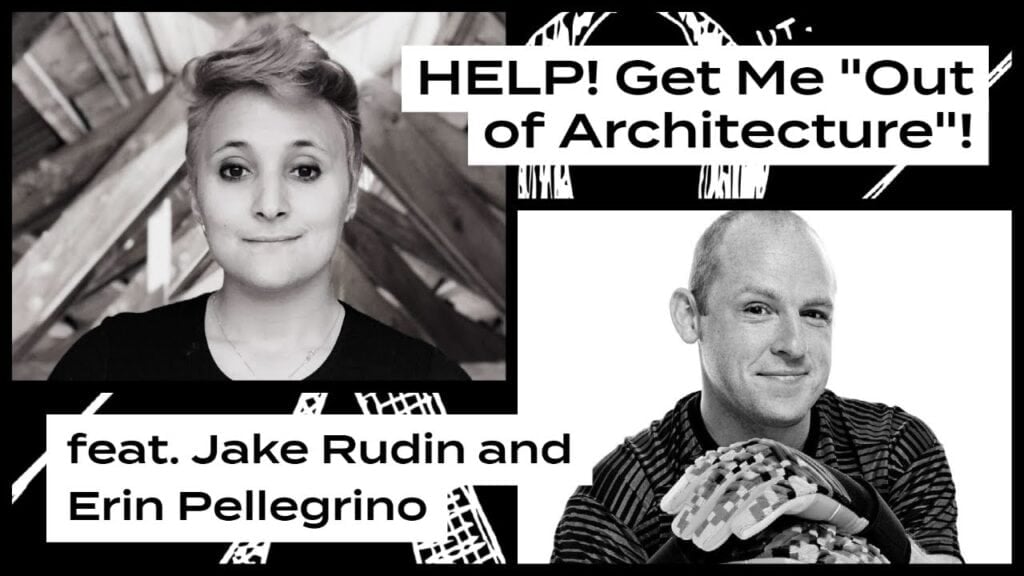
In this Architecture Social CPD, Stephen Drew sits down with Jake Rudin and Erin Pellegrino, the co-founders of Out of Architecture, for an honest conversation (around 61 minutes) about careers beyond traditional architecture practice. It is useful listening for anyone who has ever wondered whether their design education could take them somewhere other than the drawing board, and for practice leaders trying to understand why talented people leave and how to keep them.
Who this is for
Students and Part 1 / Part 2 assistants who are unsure whether traditional practice is for them; qualified architects and designers feeling stuck, underpaid or under-used; and practice owners and directors who want to retain ambitious people. It is equally useful for anyone curious about how the skills learnt in an architecture education translate into other industries.
Learning outcomes
By the end of this session you will be able to:
- Recognise the full range of career pathways open to people with an architectural education, inside and outside conventional practice.
- Identify the transferable skills your training has given you and describe them in language a non-architecture employer understands.
- Reframe a move away from traditional practice as a broadening of the profession rather than a failure or a betrayal.
- Take practical first steps to explore alternative directions while still in a role.
- Make a clearer decision about your own career by weighing your current path against genuine alternatives.
- Understand when and why investing in coaching, mentoring or honest external feedback is worthwhile.
The noun crisis: you are more than a job title
Jake and Erin describe what they call the "noun crisis": you start architecture school to become an architect, full stop, and the entire career pathway is defined around that single word. Once you step outside that narrative you start to see spec writers, computational designers, model makers, marketers, strategists and many others who all came from architecture. Treating "architect" as the only possible outcome quietly narrows your sense of what is achievable.
The transferable skills your education actually gives you
Erin makes the case that an architectural training teaches you to manage uncertainty and risk, to handle complex systems without being a deep specialist in any one of them, to make something out of nothing, and to organise your own time and other people through complicated processes. Most employers do not know an architect has these skills, so part of the work is learning to name them and own them.
Where architects actually end up
The pair share examples from across their client base of more than 700 people and several thousand conversations: designers working on launch pads for SpaceX, yacht designers, in-house sustainability strategists, UX and experiential designers, and people innovating in manufacturing and footwear. The point is not that everyone should leave, but that the range of destinations is far wider than most people in practice imagine.
Time as the real currency
A recurring theme is autonomy over your own time. Both guests, and Stephen, note that running your own thing often means working harder, not less, but it removes the clock-watching culture of waiting until it feels safe to leave the studio. As Erin puts it, money matters, but the most important currency is time and being able to decide how you spend it.
Reframing the guilt of leaving
Jake is open about the guilt many people feel, and the "pay your dues" mentality some firm leaders still hold. He reframes stepping away as a chance to support and broaden the profession from the outside. Tellingly, architecture firms now approach Out of Architecture looking for people who think differently, which suggests the wall around traditional practice is more permeable than it appears.
Explaining your value to a non-architecture employer
If the person hiring has never met an architect, that is an opportunity rather than a barrier. Erin's advice is to separate yourself a little from the title and explain how an architect thinks and what you were trained to do, rather than assuming the label speaks for itself. The skills are transferable; the language often has to be translated.
Where to begin if you are curious
The guests suggest low-cost, low-risk starting points: consume content and ideas from people who think differently, stop spending time only with other architects, build a network beyond your immediate circle, and start dabbling in the things you are drawn to, whether that is web design, fabrication, writing or technology. Small experiments outside work are often where new directions begin.
Honesty, sales and doing business the right way
Stephen reflects on his own move from architecture into recruitment, and how being honest, going straight for the "no" and declining work he does not believe in has served him better than hard selling. The best salespeople, the conversation concludes, are simply people who treat other people like humans. It is a useful reframe for anyone who associates "sales" or "business development" with something inauthentic.
Investing in yourself and the value of coaching
The session closes on why coaching works. Drawing on a story about a surgeon who invited a colleague to observe and give feedback, Jake explains that we struggle to do these things for ourselves, and that a coach helps you read back what you already half-know. Investing in yourself, when you can, tends to pay off, and accountability is a large part of why paid support gets results.
Key terms
Out of Architecture: a career consulting firm, co-founded by Jake Rudin and Erin Pellegrino, that helps people from design and architecture backgrounds find roles that use the full value of their education.
The noun crisis: the trap of defining your entire career around the single word "architect", which obscures the many other pathways open to you.
Transferable skills: capabilities such as managing complexity and uncertainty, synthesising information, and leading people and process, which an architectural education builds and which apply far beyond buildings.
Accountability: the idea that paid coaching or commitment makes you more likely to act on advice you may already have heard.
Reflective prompts for your CPD record
- Which parts of your current role energise you, and which leave you clock-watching? What does that tell you about the work you should be moving towards?
- List five skills your architectural training has given you. How would you describe each to an employer who has never worked with an architect?
- What is one low-cost experiment you could start this month to test an alternative direction, without leaving your current role?
About the guests
Jake Rudin is co-founder of Out of Architecture and, in his day job, works at Adidas across computational design, digital technologies and pattern engineering. Erin Pellegrino is co-founder of Out of Architecture and founder and principal of the design practice Matter, working on community-engaged and bespoke design alongside teaching at several universities.
Listen to the full conversation on Spotify or in the player above, and explore Out of Architecture on the Architecture Social directory.
Audio
Video
Industry
Topics
Company
People