Description
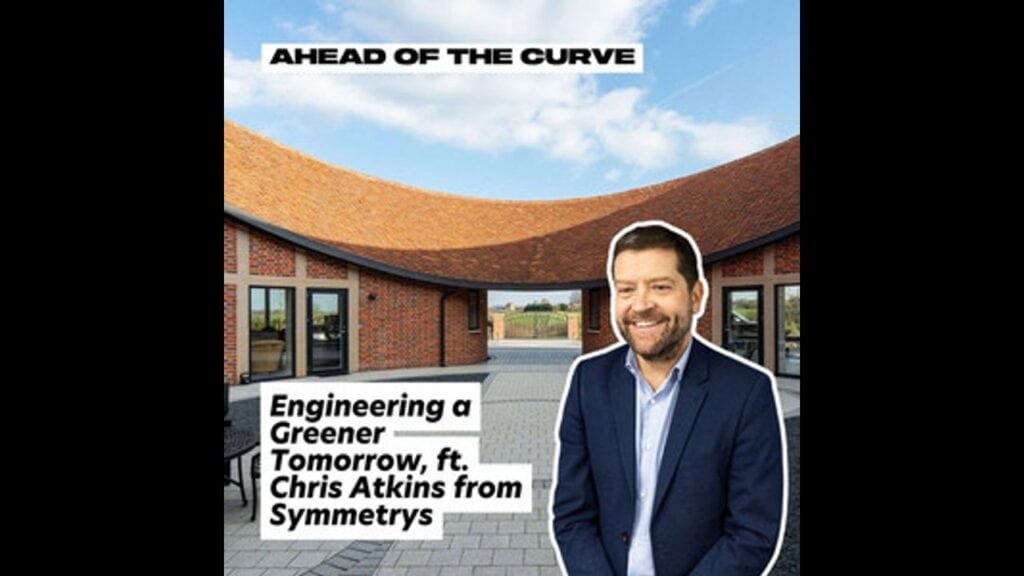
In this Architecture Social CPD, Chris Atkins, founder and Managing Director of Symmetrys, joins Stephen Drew to talk through proactive, low carbon structural and civil engineering. Running time is about 32 minutes.
Who this is for
Architectural assistants, architects, engineers and built environment professionals who want to understand how structural and civil engineers contribute to low carbon design, and how design teams can work together to cut embodied carbon. It is also useful for anyone curious about employee ownership and practice culture.
Learning outcomes
By the end of this session you will be able to:
- Explain the role of the structural and civil engineer within the design team and why the relationship with the architect matters.
- Describe how reusing existing structure and reclaimed steel can reduce the embodied carbon of a building.
- Outline how a digital tool such as FerrousWheel matches specified steel against available reclaimed sections.
- Distinguish between reactive and proactive approaches to sustainability and ESG in engineering.
- Consider how practice culture and employee ownership can support staff retention and long term resilience.
- Apply practical carbon questions to your own projects from the earliest design stages.
The engineer's role in the design team
Chris describes the structural and civil engineer's job as helping to realise the architect's vision and make it stand up using maths and physics, through foundations, columns, slabs and beams. He stresses that the architect and engineer relationship can be a bumpy journey, and that going through it together without finger pointing is what gets a building built well.
Why sustainability has to be proactive
The conversation makes the case that being merely reactive on sustainability is no longer enough. Chris argues that engineers should look at every commission from the outset, ideally from stage zero, and ask honestly whether the work is actually reducing carbon. If it is not, something needs to change.
Reusing structure and steel
A central theme is reuse. Retaining existing foundations and structure, and specifying reclaimed steel rather than new, can significantly cut embodied carbon. The Roots in the Sky project in Southwark is a clear example, reusing a 1960s building and its foundations and adding a lightweight hybrid steel and cross laminated timber frame to support a large rooftop urban forest.
FerrousWheel and sharing knowledge
Chris explains FerrousWheel, a Revit based tool developed with London South Bank University that swaps specified new steel for reclaimed steel currently available in the market. Just as important is his point about sharing: rather than keeping research to themselves, engineers should talk openly about what works so the whole industry can learn and cut carbon faster.
AI in engineering practice
On artificial intelligence, Chris sees it already entering day to day work, particularly for report writing and removing mundane tasks, while design and business judgement stay with people. The takeaway is to use AI to remove friction rather than expecting it to replace core engineering decisions.
Culture and employee ownership
Symmetrys has moved to an Employee Ownership Trust, which Chris frames as a natural step to give the team security, stability and a stronger voice. He links good culture to a simple test: whether people want to get up on a Monday and come to work. For anyone considering the same path, his advice is to research it properly and be clear about why you are doing it.
Advice for a bumpy career
Reflecting on a career that started in 1986, Chris is candid that engineering careers are rarely a straight line and often track economic cycles. The trade off, he says, is the reward of seeing something you designed actually built, which for him is hard to beat.
Key terms
- Embodied carbon: the carbon emissions associated with making, transporting and installing the materials in a building, separate from operational energy.
- Reclaimed or reused steel: structural steel recovered from existing buildings and reused rather than newly manufactured.
- Hybrid steel and CLT frame: a structure that combines steel with cross laminated timber to reduce weight and carbon.
- FerrousWheel: a Revit tool, developed by Symmetrys with London South Bank University, that matches specified steel against available reclaimed sections.
- Employee Ownership Trust (EOT): an ownership structure in which a trust holds the company on behalf of its employees.
- Stage zero: the earliest, strategic point of a project, before concept design, where sustainability choices have the most leverage.
Reflective prompts for your CPD record
- On your current project, where could retained structure or reclaimed materials reduce embodied carbon, and who needs to be involved to make that happen?
- How early are sustainability questions raised in your design process, and what would it take to move them to stage zero?
- What one change to how your team shares knowledge would help others cut carbon faster?
About the guest
Chris Atkins is the founder and Managing Director of Symmetrys, a structural and civil engineering practice based in north London that he established in 2006. A chartered structural engineer (CEng MIStructE), he has worked in the profession since 1986, including earlier roles across South East Asia, the Middle East and the UK. Symmetrys works across commercial, residential, hospitality, education and heritage projects, with a strong focus on low carbon design and steel reuse.
Audio
Industry
Topics
Company

People