Description
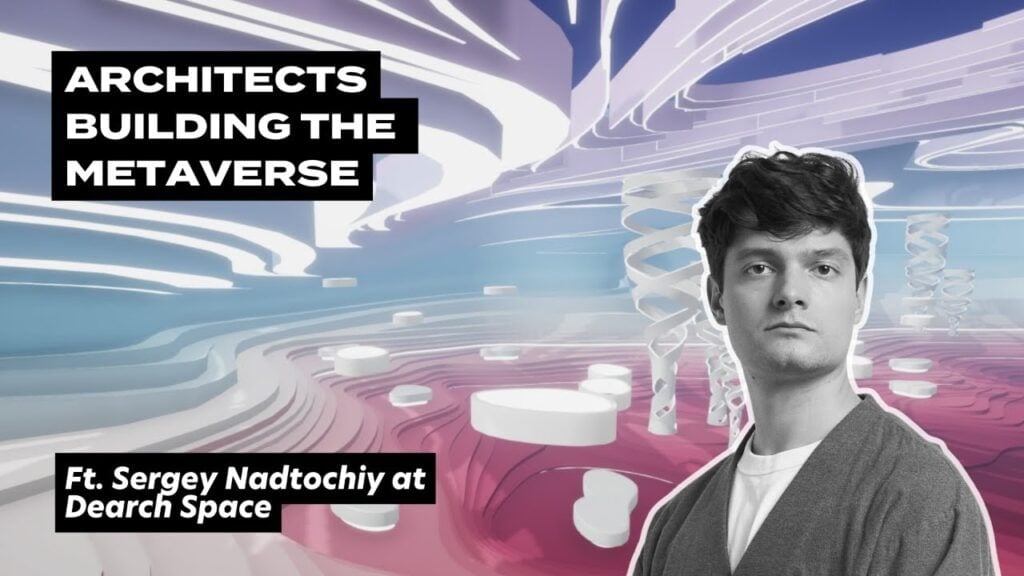
A CPD lesson with Sergey Nadtochiy, founder of Dearch Space. Approx. 42 minutes. Watch the video below or listen to the audio.
Who this is for
Architects and designers who are curious about virtual and metaverse space, anyone weighing whether to offer it as a service, and practitioners who want a clear-eyed view of where the value is now that the early hype has faded.
Learning outcomes
By the end of this lesson you will be able to:
- Explain which architectural skills transfer most directly to designing virtual and metaverse spaces.
- Describe how the market changed after the 2021 to 2022 hype, and why a smaller, calmer market can be healthier.
- Compare the main ways a studio can deliver metaverse work: bespoke spaces, high-fidelity visualisation and ready-made templates.
- Weigh the trade-offs between platforms on graphics quality, visitor capacity and cost.
- Avoid the "press-render" trap by designing spaces that function and get used, not just spaces that photograph well.
- Identify a sensible, low-cost first step into designing for the metaverse.
1. From practice to the metaverse
Sergey trained at the Architectural Association and worked in architectural practice, with a long-standing interest in virtual reality and computational design. Early studio speculation about virtual space in 2019 hardened into a business in 2022, when he and his co-founder Valentin set up Dearch Space to ask a focused question: what can architects actually bring to the metaverse?
2. What architects bring to virtual space
The argument for architects in this field is that the discipline already knows how to make space that is functional, legible and enjoyable, and how to express a brand's identity through the environment rather than by scattering logos. Ergonomics and spatial sequence carry over from the physical world more than people expect, which is why an architectural eye tends to produce virtual spaces that read very differently from the norm.
3. After the hype: a healthier market
Two years of speculation around NFTs and virtual land was, in Sergey's view, not especially healthy. The correction that followed cleared out money made "out of nowhere" and forced a more honest question: what does a studio actually contribute, and does a client really need a crypto wallet to benefit? The upside is that producing a metaverse project today is far simpler and cheaper, and you no longer need to buy virtual land to take part.
4. Three ways the studio works
Dearch Space settled on three offers. Bespoke spaces and events for clients who want something custom. Higher-fidelity real estate and product visualisation, reframed as immersive commerce, where a buyer can move through a design rather than read a flat visualisation. And ready-made templates on the studio's website, so a brand can choose a layout, supply its brand assets and 3D models, and have a usable space in a few days before committing to anything larger.
5. Choosing platforms and tools
There is no single best platform, only trade-offs. Decentraland offers lower graphical fidelity but reaches a large, established audience and can host big crowds. Worlds allows much higher fidelity and richer interactivity for smaller numbers. Game engines such as Unity and Unreal give the most control but take longer to learn. The job is to balance graphics quality, visitor capacity and cost against what the project actually needs.
6. The Metaverse Architecture Biennale
Sergey curates the Metaverse Architecture Biennale, "Presence of the Future", presented across Decentraland and Worlds. The format pairs a large expo-style site of roughly thirty architectural pavilions with separate, higher-fidelity worlds you teleport into from each pavilion. Fifteen invited architects sit alongside a further fifteen selected through an open call, taking inspiration from events like the Venice Architecture Biennale to give visitors a genuinely architectural experience rather than a gallery of images.
7. Do not build for the press render
A recurring failure mode in the industry is the beautiful announcement: striking visualisations that travel well in press releases but feel hollow when you actually enter the space. The discipline Sergey argues for is the opposite of a rendering: build environments with real atmosphere, texture and flow, then populate and use them. A virtual space, like a building, is only as good as the life that happens inside it.
8. Getting started as a designer
The barrier to entry is lower than most assume. Many platforms offer a browser-based builder where you upload a 3D model and set it up in a couple of hours, with written guidance to follow; engine-based work takes longer. The most important step is not the upload but the use: invite colleagues in, run something there, and treat the space as a place rather than a portfolio image.
Key terms
- Metaverse: persistent, shared 3D environments that people enter and move through, reached by laptop, phone or headset.
- Immersive commerce: presenting products, property or brands in navigable 3D space rather than as flat images or visualisations.
- Bespoke vs template spaces: fully custom virtual builds versus ready-made layouts a brand can adapt quickly and at lower cost.
- Fidelity: the level of graphical detail and interactivity a platform supports, traded off against how many visitors it can host and at what cost.
- Game engine: software such as Unity or Unreal used to build higher-fidelity, more interactive virtual scenes.
Reflective prompts for your CPD record
- Which parts of your current design process, from functional planning to brand thinking to ergonomics, would transfer most directly to a virtual space?
- For a client or brand you know, would a bespoke build, a template space or a simple visualisation add the most value, and why?
- If you built a virtual space tomorrow, who would you invite into it, and what would they actually do there?
About the guest
Sergey Nadtochiy is the founder of Dearch Space and curator of the Metaverse Architecture Biennale, "Presence of the Future". Episode recorded 2023. Explore the Dearch Space practice page and Sergey's profile on the Architecture Social directory.
Audio
Video
Industry
Topics
People