Description
In this Architecture Social CPD, Greta Kriovaite, Design Principal at Woodalls, joins Stephen Drew to explore the future of workplace design. Running for around 59 minutes, the conversation moves from post-pandemic offices and the balance of form and function to inclusive design, the role of artificial intelligence in practice, and practical advice for graduates entering the profession.
Who this is for
This session is aimed at architects, interior and workplace designers, design managers and built environment professionals working on commercial and workplace projects. It will also be useful to students and early-career designers who want practical advice on standing out in a competitive job market.
Learning outcomes
- You will be able to explain how the purpose of the office has shifted from a place of focus work to a place of connection.
- You will be able to describe the difference between collaboration space and focus space, and why a single workplace cannot be only one or the other.
- You will be able to apply inclusive and universal design principles that account for different teams, personalities and abilities.
- You will be able to discuss how artificial intelligence can support, rather than replace, the creative work of designers.
- You will be able to evaluate how a CV or job application can stand out within the first few seconds of a reviewer's attention.
- You will be able to reflect on workplace strategy from discovery and listening through to delivery and post-occupancy.
The shifting purpose of the office
Greta argues that the office is here to stay, but its function is changing. Where the workplace was once the default setting for focus work, collaboration and client meetings all at once, many people now do high-focus work at home and come into the office primarily to connect with people and with the brand.
Homification, not hotelification
She pushes back on the post-pandemic trend of designing offices to feel like hotel lobbies. Instead she favours what she calls homification: spaces with character and personality that feel like somewhere you belong, supporting a sense of community rather than performing hospitality.
Balancing form and function
A workplace cannot be a single mode. Some teams, such as finance, need quiet, acoustically considered focus space, while others, such as marketing, need higher-energy collaborative areas. Good design accommodates both, alongside the wear, use and practicality that real offices demand.
Designing for everyone
Greta makes the case for universal and inclusive design that caters to extroverts and introverts, to different working styles, and to the more than one fifth of the UK population living with a visible or non-visible disability. The goal is a balance of social, collaborative, restorative and quiet spaces where people can control sound and temperature.
The future of work and AI
Woodalls has been testing AI tools that generate test fits, zoning and basic three-dimensional layouts in minutes. Greta sees these as support rather than replacement: by handling repetitive production, they free designers to spend more time with clients, on concept and on the selection of finishes and furniture. The creative, human touch, she argues, still carries the value.
Embracing human imperfection
The conversation explores a growing appetite for realness as AI-generated content becomes common. Greta suggests that people remain drawn to human warmth, connection and even imperfection, and that designers should embrace what makes work feel genuinely human.
Advice for graduates and standing out
For those entering the profession, Greta values curiosity and a varied skill set, from hand drawing to new software. She encourages applicants to be brave and different, noting that a reviewer's attention is captured in seconds, so a short personal video or a thoughtfully made CV can make the difference between being remembered and becoming wallpaper.
Market sentiment and emerging roles
Recorded in October 2024, the discussion reflects a busy market, with significant office construction planned for London over the coming decade. Greta highlights growing demand for expertise in sustainability, BIM and digital transformation as new roles continue to emerge alongside technology.
Key terms
- Hotelification - the trend of designing offices to feel like hotel lobbies; Greta argues against it.
- Homification - designing workplaces to feel more personal and homelike, fostering belonging.
- Universal and inclusive design - design that accommodates different teams, personalities and abilities.
- Seeking system - the part of the brain activated by curiosity, exploration and experimentation, referenced from the book Alive at Work.
- Discovery stage - the early listening phase of a project that defines its purpose and sets the foundation for design.
Reflective prompts for your CPD record
- Think about your own workplace. Which activities does it genuinely support, and where does it create distraction or cognitive overload?
- How could inclusive and universal design principles change a current or recent project brief?
- Where in your workflow could AI take on repetitive tasks so you can spend more time on concept, client engagement and craft?
About the guest
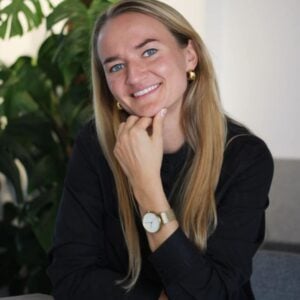
Greta Kriovaite is Design Principal at Woodalls, the London-headquartered workplace and design and build studio. She leads the design team and works with clients to transform their spaces into inspiring environments that support people and performance. She studied interior architecture at the University of Brighton and has previously worked at Woods Bagot and Unispace. Her design philosophy draws on phenomenology and behavioural design, creating environments that evoke a personal and emotional response.
Audio
Industry
Topics
Company

People