Description
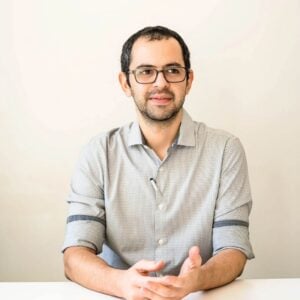
In this Architecture Social conversation, Stephen Drew speaks with Matias Daroch, founder of MIK Architecture in Miami, about what it takes to set up and run a residential practice in a fast-moving market. Running time is around 44 minutes.
Who this is for
Architectural assistants, Part 2s and early-career designers curious about practice overseas; architects thinking about setting up on their own; and anyone interested in how an architecture studio can work alongside builders and developers. It is also useful for students sharpening their CV and portfolio.
Learning outcomes
By the end of this lesson you will be able to:
- Explain how a combined design, build and development model works, and why it changes the way a project is designed.
- Describe how a Miami residential practice approaches feasibility, site research and delivery.
- Recognise why early budget and buildability feedback improves design efficiency.
- Identify what one practice owner looks for in a CV and portfolio.
- Summarise where BIM and AI are adding value in a small residential studio.
- Compare hybrid and in-studio working from a small-practice owner's point of view.
From Chile to Miami: an unconventional route
Matias trained as an architect in Chile before moving to the United States in 2016. He arrived to work in residential real estate as a developer and investor, and found it hard to source architects who could work to a developer's programme rather than a homeowner's. That gap led him to gain a Florida architecture licence in 2019 and to found MIK Architecture in 2020.
The one-roof model: architect, builder and developer together
MIK shares premises and a partnership with a building firm, and sits within a wider development group that brings together architect, builder and realtor. Design, construction and development effectively work side by side, so questions about cost or buildability can be answered quickly rather than through long formal exchanges.
Designing for developers, not just homeowners
Because the client is often a developer or investor, efficiency is built into the brief from the start. Matias describes designing with the budget in view, then value engineering as the market moves, since several months can pass between submitting to the city and going out to bid.
Building in Miami: climate, flood zones and contemporary style
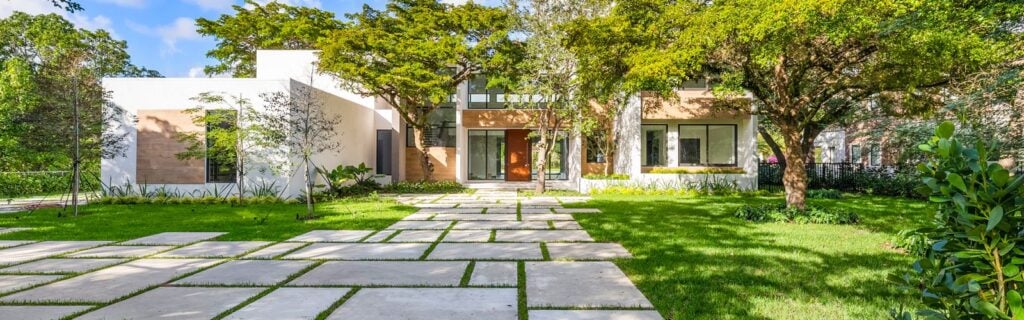
The local style has shifted from a traditional South Florida look towards a more contemporary, light-filled, modern architecture influenced by Latin America, with planting integrated into projects. Climate and site drive a lot of decisions; one waterfront house had to be lifted out of a flood zone, with parking, a pool and outdoor space tucked beneath the living floors and a rooftop terrace above.
Feasibility and finding projects
In MIK's market, opportunities can move to contract within days, so someone in the development group is always watching for listings. Once a site is secured, Matias runs a full feasibility study covering what can be built, local codes, septic and trees. He notes that few Miami firms offer feasibility as a service.
BIM, Revit and where AI fits
MIK is a full Revit and BIM practice, which Matias contrasts with a number of established Miami studios still working in CAD. He uses AI heavily on the marketing and ideas side, and is exploring it cautiously in production. For single-family work he finds it is not there yet, but he believes practices that do not start exploring AI now may struggle on efficiency in the years to come.
Hiring and what stands out in a CV
Matias's main tip for CVs and portfolios is to explain the work, not just list projects: the challenge, how it was overcome and what was learned. He values a short personal profile paragraph, and is wary of self-rated software bars where everyone scores nine or ten. In interviews he pays as much attention to how candidates reason as to the answer itself, and rates those who ask questions to better understand what is being asked.
Office culture, hybrid and in-studio working
The team blends in-studio and remote working, with some members based in Chile, and tries to share lunch together each day. After a long fully remote spell, Matias finds most of the team now prefers the studio, valuing the difference between sharing a screen remotely and sitting side by side at the same drawing.
Market outlook: migration and demand
Matias describes Miami as moving in the right direction, driven by migration from Latin America, New York and California, and by companies relocating headquarters and senior staff. He is candid that this raises costs and pressures smaller businesses, while opening more opportunities for developers.
Key terms
Feasibility study - early research into what can be built on a site, including codes and constraints. BIM - Building Information Modelling, a coordinated 3D approach to design and documentation. Revit - the BIM software MIK uses. Value engineering - adjusting a design to meet budget without losing intent. RFI - a request for information raised during construction. Development group - a partnership of architect, builder and realtor sourcing, designing and delivering projects together.
Reflective prompts for your CPD record
- How would earlier budget and buildability feedback change the way you currently design?
- What could you add to your CV or portfolio to explain the challenge and learning behind a project, rather than just listing it?
- Where could AI or BIM realistically improve efficiency in your own work over the next year?
About the guest
Matias Daroch is the founder of MIK Architecture, a Miami studio focused on contemporary single-family, high-end residential. A licensed architect (AIA, NCARB) who trained in Chile, he works across feasibility, design and delivery within a combined design, build and development model.
Audio
Industry
Topics
Company
People