
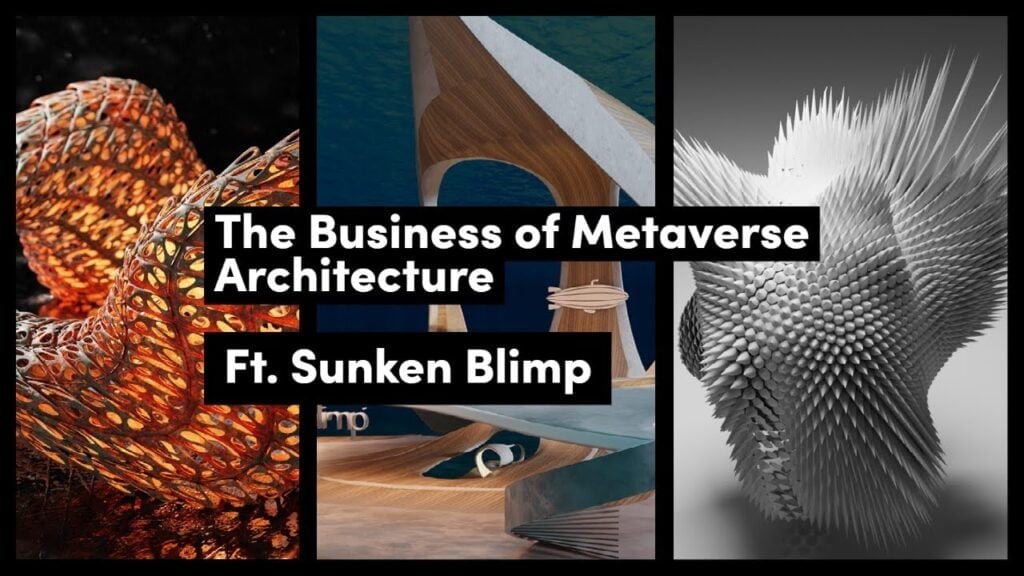
Description
In this Architecture Social CPD, Stephen Drew speaks with Matheus Stancati, co-founder of Sunken Blimp, a metaverse architecture studio, about whether designing architecture in virtual worlds can be a genuine commercial business rather than a side project. Running time is roughly 48 minutes.
Who this is for
Architects, architectural assistants, computational and 3D designers, and students curious about practising in the metaverse, plus anyone weighing whether virtual design work can earn fees like traditional practice.
Learning outcomes
By the end of this session you will be able to:
- Explain how a metaverse architecture studio earns fees and structures commercial projects.
- Describe practical use cases for virtual spaces, from event venues to product showrooms and conferences.
- Weigh the accessibility trade-offs between browser-based platforms and VR headsets.
- Apply behavioural observation and iteration to the design of virtual environments.
- Recognise how community, digital twins and blockchain provenance shape virtual design work.
- Assess the emerging career routes for architects working in the metaverse.
A real business, not just a side project
Sunken Blimp operates as a metaverse architecture firm and charges clients fees in the same way a physical practice would. Started around eighteen months before this conversation, the studio runs with a distributed team drawn from Colombia, Qatar, Belgium and Mexico, and had recently taken on more 3D modellers and Unity developers as commercial work grew.
Designing spaces, not objects
Matheus frames the work as core architecture: translating a client's vision into an environment people can move through, explore and use. He notes that we spend most of our lives inside built environments, and that virtual spaces increasingly frame how we communicate, so the discipline of shaping experience carries directly into the metaverse.
Accessibility can matter more than fidelity
The studio favours platforms such as Spatial that open in a browser or on a phone from a single link, with no headset required. While Matheus is enthusiastic about virtual reality, he points out that headset adoption is still low, and that a one-click link keeps clients and audiences from dropping off, much like sharing a video-call link.
Commercial projects in practice
Examples discussed include the Rock House event space built for Haskell, a large South Florida construction company, which hosted a multi-hour programme for more than 500 attendees; a virtual showroom for a custom vehicle builder so out-of-state clients can explore options; and a virtual forum for neuroscientists preparing medical conferences. Further work spanned an artificial-islands resort concept in the Bahamas, a proposed premiere theatre, and inflatable runway studies for a fashion-week setting.
The Stage and Dive Live
Sunken Blimp hosts a weekly lecture series, Dive Live, on a custom Spatial venue. At the time of recording it had featured more than 30 speakers and welcomed roughly 6,000 visitors. Because lectures happen inside a space rather than over slides, sessions can drop portals into real buildings, for example exploring Frank Lloyd Wright's Fallingwater so students anywhere can walk through it.
Iterate using behavioural data
A key advantage of virtual space is how cheaply it can be changed. The team studies how visitors behave, where they choose to sit, which paths they take, and whether they prefer a ramp or stairs, then adjusts the design and observes again. The stage has moved through several versions on the back of this iteration.
Generative and bespoke design
Matheus deliberately avoids a fixed house style, starting each project from the client's questions. The studio also uses rule-based, generative methods, including a set of 777 unique algorithm-generated galleries for a creative-AI museum, and generative private residences for a members' club where each member can display their own collection.
Community, digital twins and provenance
Community is treated as part of the space, with members shaping what gets added. Roomship is the studio's workflow for scanning a physical room into a virtual asset, a digital twin that bridges real and virtual. The stage itself is minted as an NFT so its provenance is traceable, and the studio has acquired physical land, the Sanctuary, to prototype phygital construction and sustainable building techniques.
Careers in the metaverse
Matheus and Stephen compare today's metaverse roles to computational design a decade ago, when scripting skills quietly became BIM management before dedicated job titles existed. The expectation is that architecture roles in the metaverse will follow a similar path, funded by commercial work that in turn pays for continued research.
Key terms
- Metaverse architecture: designing inhabitable virtual spaces for clients, using architectural thinking.
- Spatial: a browser and mobile-friendly platform for hosting virtual spaces and events.
- Digital twin / Roomship: a virtual copy of a physical space created by 3D scanning.
- Phygital: design that links physical and digital environments.
- Generative design: using rules and algorithms to produce many unique design outputs.
- NFT provenance: using the blockchain to record the original creator and ownership of a digital asset.
Reflective prompts for your CPD record
- Where could a virtual space add value for your practice or clients, and what would success look like?
- How would you balance accessibility against visual fidelity for your intended audience?
- What skills would you need to develop to deliver paid work in virtual or phygital design?
About the guest
Matheus Stancati is co-founder of Sunken Blimp, a metaverse architecture studio that designs virtual spaces for companies and brands and describes itself as a vessel for design exploration across architecture, computational design, digital fabrication and XR. You can find out more at sunkenblimp.com.
Audio
Video
Industry
Topics
Company

People


