
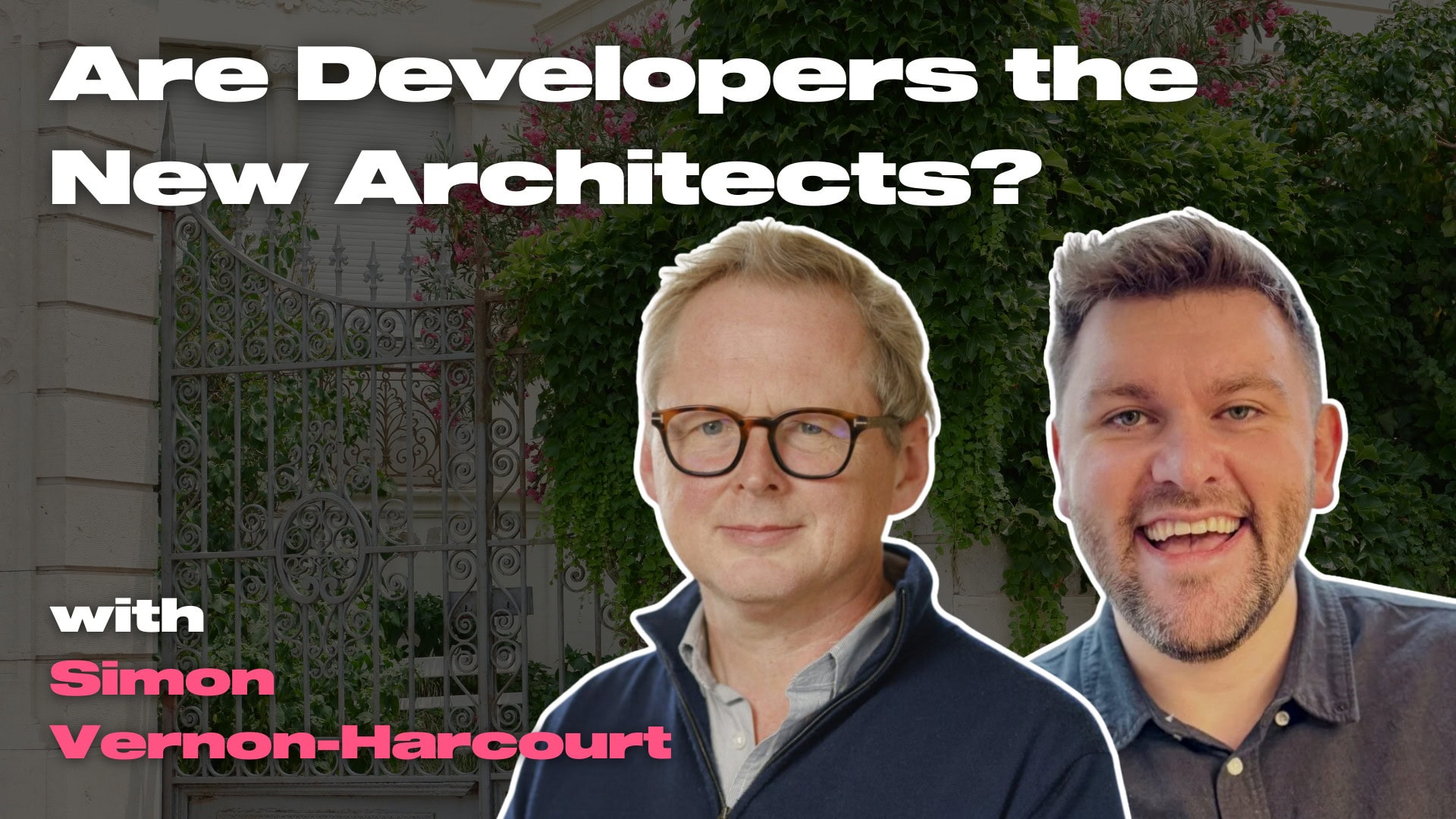
Moving from architecture into development can sound attractive because the decisions sit closer to money, land, risk and delivery. But that also means the design conversation changes.
In this episode, Simon Vernon-Harcourt discusses that shift, including the complexity of heritage conversion and design-led development.
Watch: moving from architecture into development
This conversation is useful if you are curious about the developer side of the built environment and what changes when design meets viability.
Listen: Simon Vernon-Harcourt’s journey
The podcast version gives more room to the career route, heritage projects and development-side decision making.
You can also open the related Architecture Social podcast page.
What changes on the developer side
The work becomes less about producing the design package and more about making decisions that affect viability, planning, programme, sales, heritage, construction and long-term value.
- Design judgement still matters.
- Commercial language matters more.
- Risk has to be understood earlier.
- Planning and stakeholder pressure become central.
- The best answer is not always the most architecturally pure answer.
How to tell if the route suits you
If you enjoy the bigger picture, messy constraints and commercial decisions, development may be a good fit. If you mainly want design authorship, it may feel frustrating.
Common mistakes
- Assuming developers simply have more control.
- Underestimating financial and planning constraints.
- Talking about design without viability.
- Ignoring sales, phasing and stakeholder pressure.
- Moving too quickly without understanding the role change.
Check if development-side work fits you
Before chasing the move, test whether the day-to-day work actually suits your strengths.
- Do you enjoy commercial constraints?
- Can you explain design value in non-design language?
- Are you comfortable with risk, viability and stakeholder trade-offs?
Architecture Social view
Stephen’s recruitment view is that the move can work brilliantly for some people, but it is not a shortcut. You need to enjoy the commercial and delivery reality, not just the idea of being closer to the decision.
Next step
Watch or listen to the episode, then write down which parts of development appeal to you and which parts you may be avoiding.
For related career support, compare the architecture salary guide, browse current architecture jobs, set up architecture job alerts or contact Architecture Social for a recruiter’s view.


Add a comment