Description
Kingfisher House is the culmination of a project that spanned three decades. The clients bought the vacant waterfront site in the early 1980s, and a long process with the council and neighbours saw the brief shift and evolve over the years that followed. What began as a large family home gradually became a house for near empty-nesters, one that still needed to welcome five adult daughters and their families during regular visits from out of town, while feeling intimate when the owners are on their own. The spaces are controlled but comfortable, scaled to suit an individual, a small group or a large gathering equally.
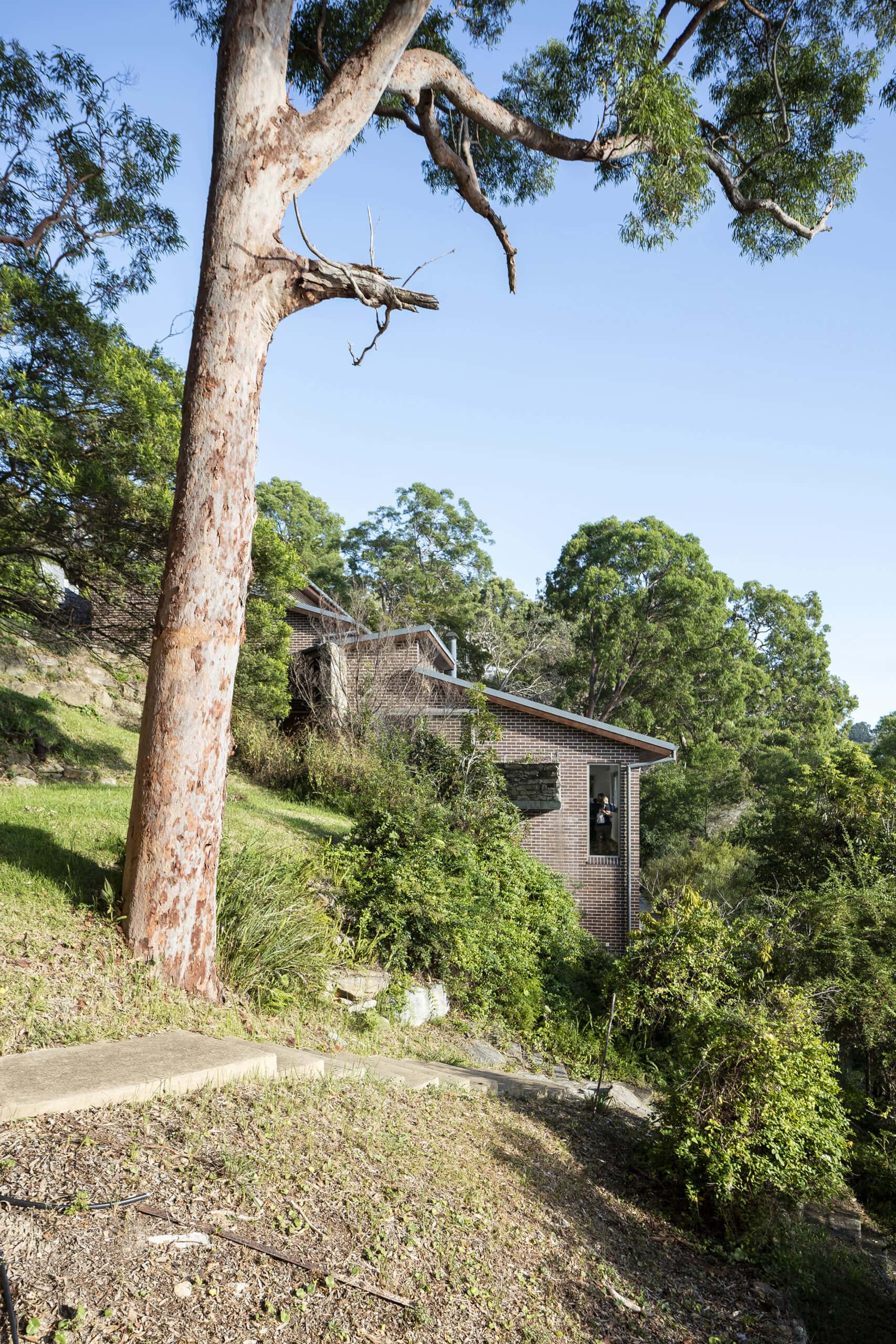
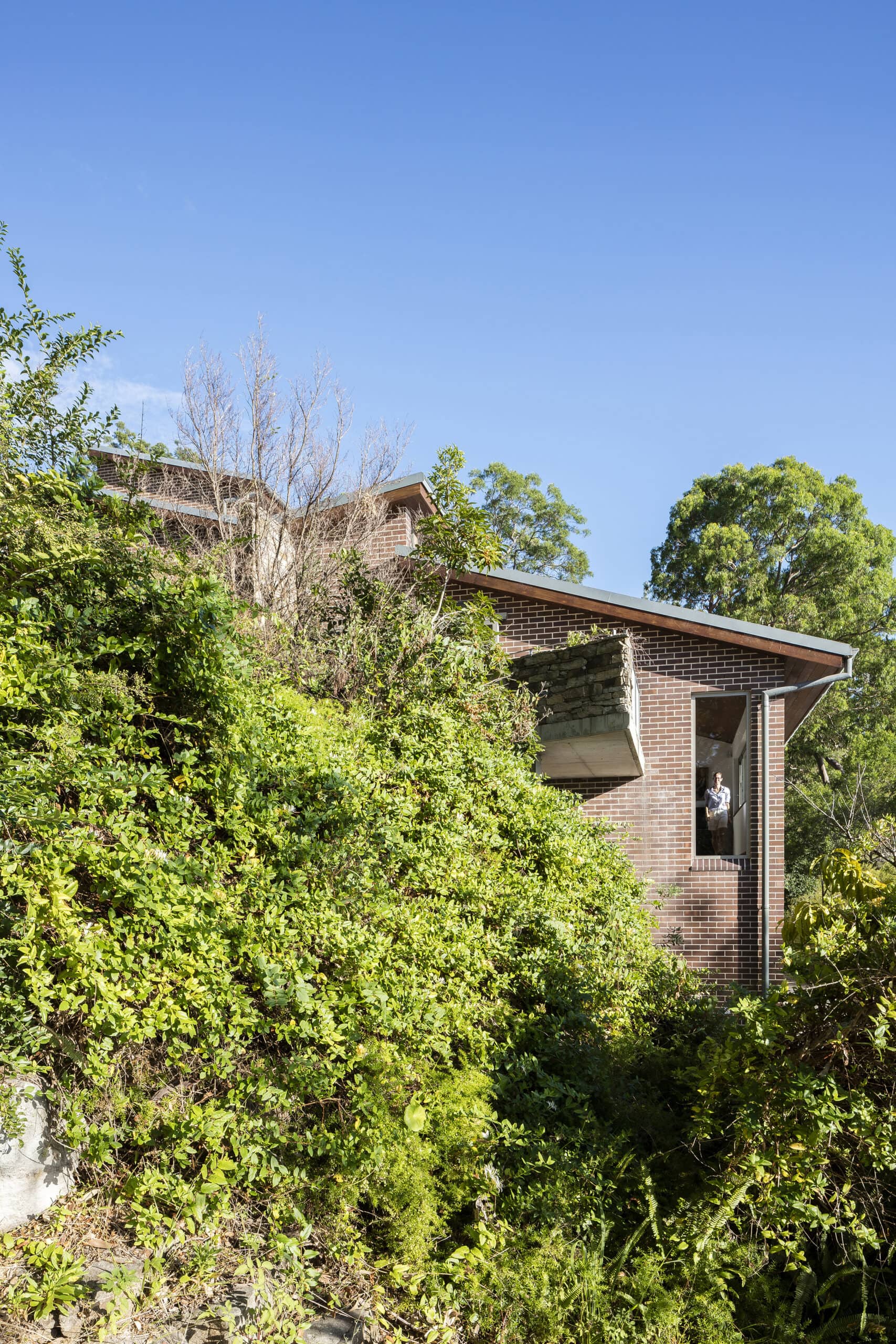
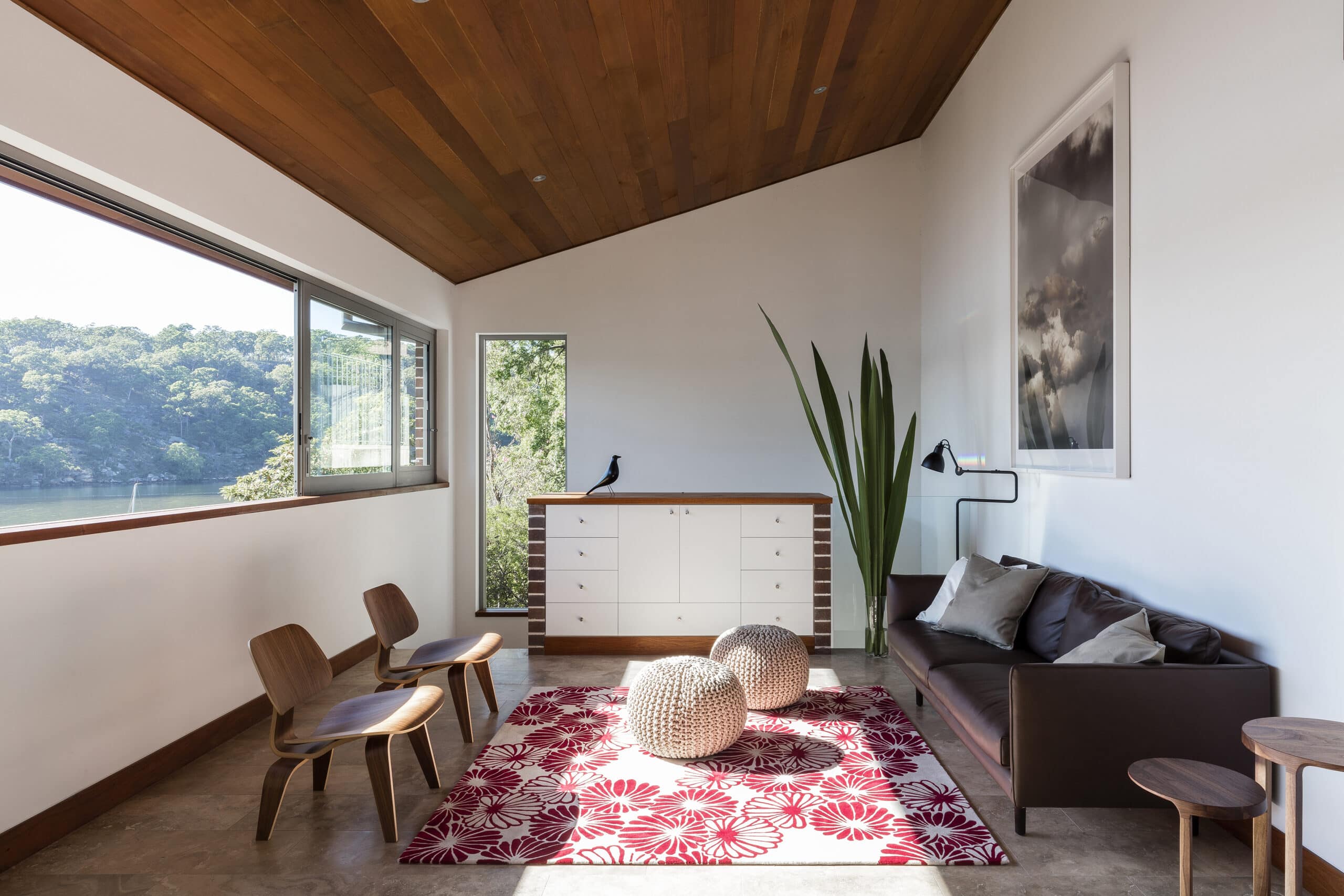
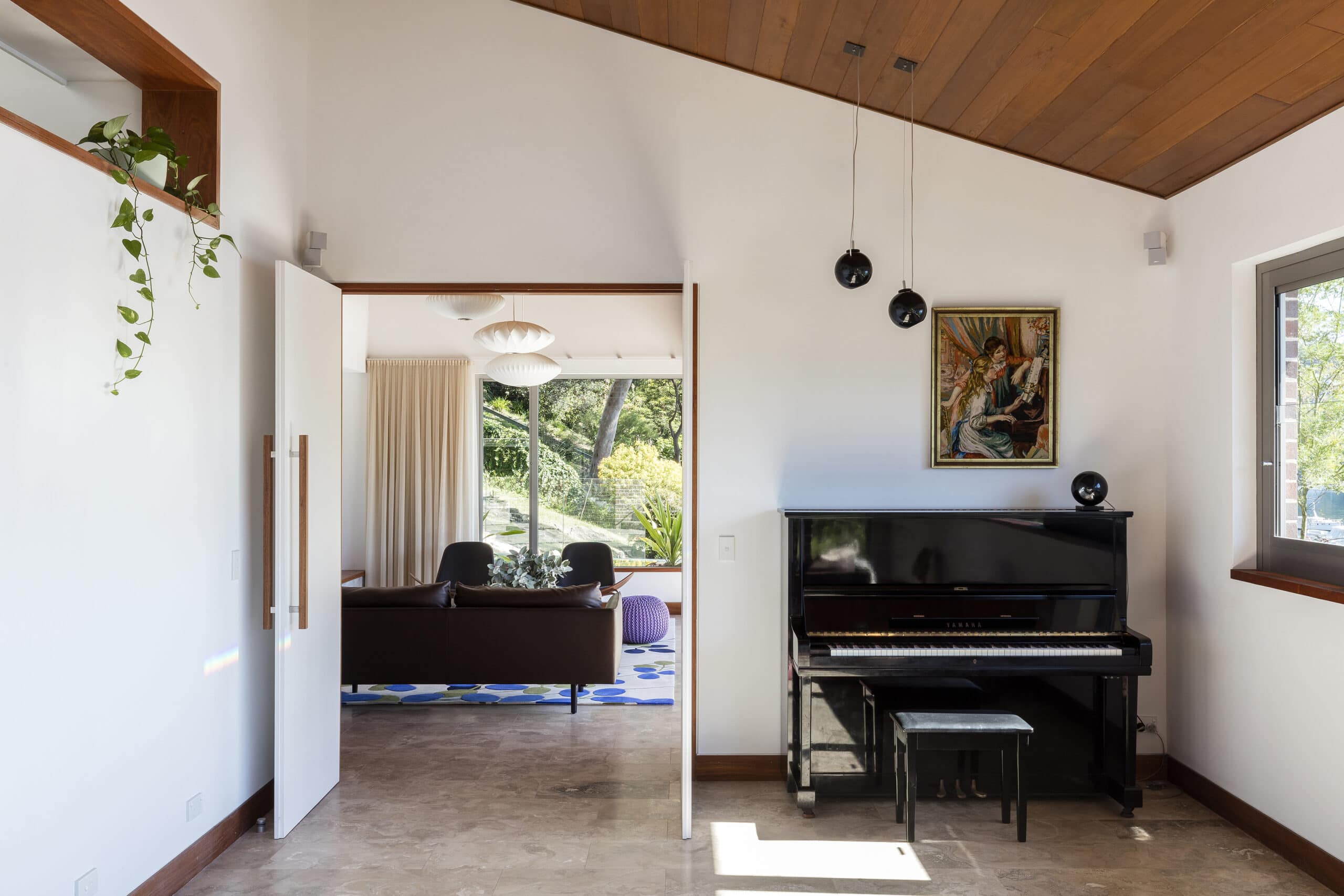
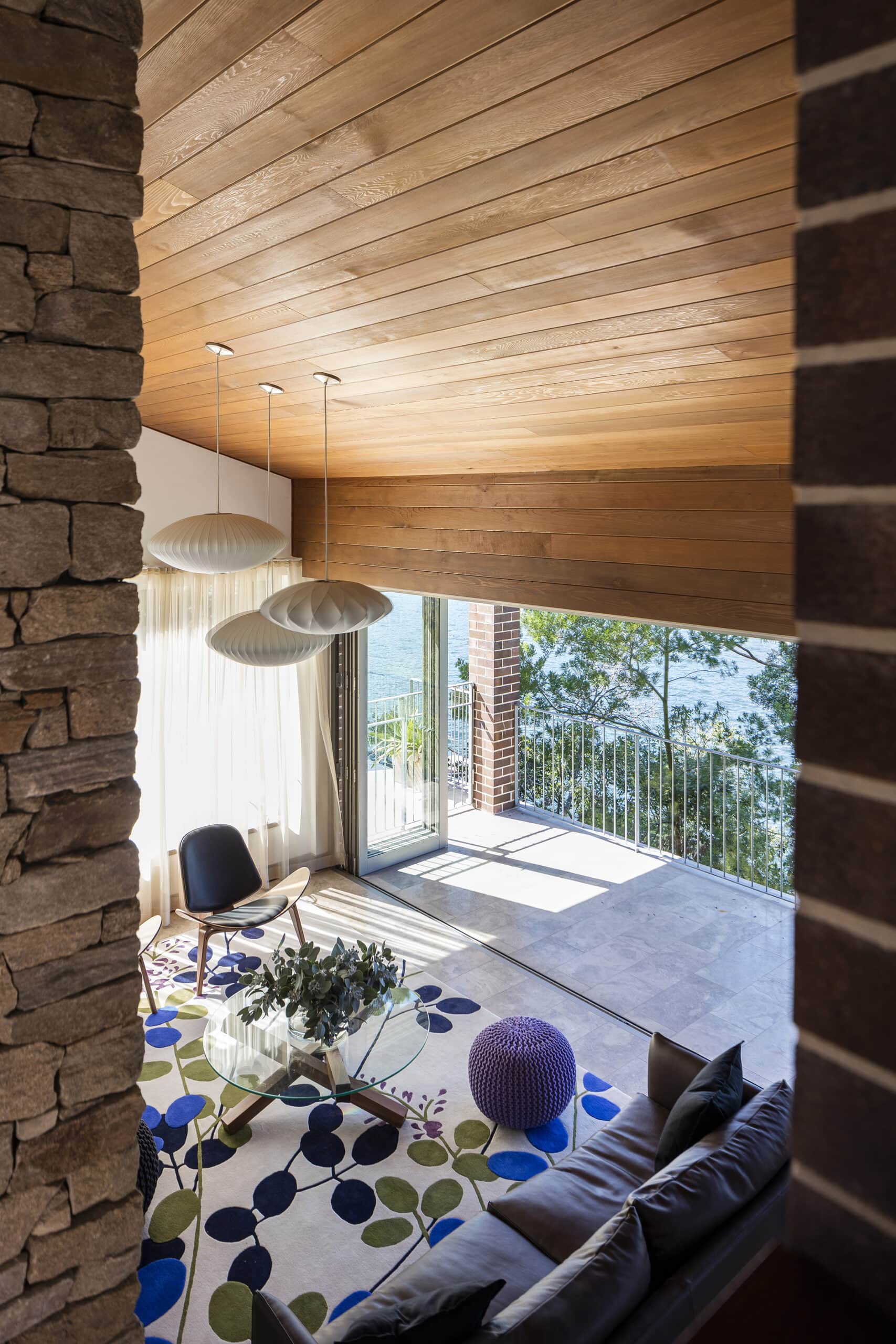
The house descends its north-east facing site in a series of split levels that step down towards the Hacking River. Roof planes echo the steepness of the slope and anchor the dwelling, while the site's natural contours, sandstone outcrops and existing vegetation all informed the design. Honest, robust materials were chosen to settle the house into its rugged waterfront setting, and the boundaries between inside and out are deliberately blurred so the occupants stay connected to the surrounding native bushland. The view across the water is concealed and revealed rather than constant, so it can be enjoyed directly or left to sit quietly in the background of daily life.
Sustainability is built into the fabric of the house. A 53,000-litre tank sits beneath the elevated pool, harvesting roof water for reuse throughout the home. Recycled Blackbutt features as a material throughout. Rather than relying on air conditioning, the house uses stack-effect ventilation and a ventilated roof to cool itself naturally. Built to a high standard and tuned precisely to its site, the house is made to endure and to be enjoyed by future generations.
Project size: 730 m2. Completed 2016.
Architect: Josephine Hurley, Josephine Hurley Architecture. Photographer: Tom Ferguson.
Gallery
Company

Industry
Sector
Details
- Project Size: 730 m2
- Completion Date: 2016
- Photographer: Tom Ferguson
Region
Discuss