Description
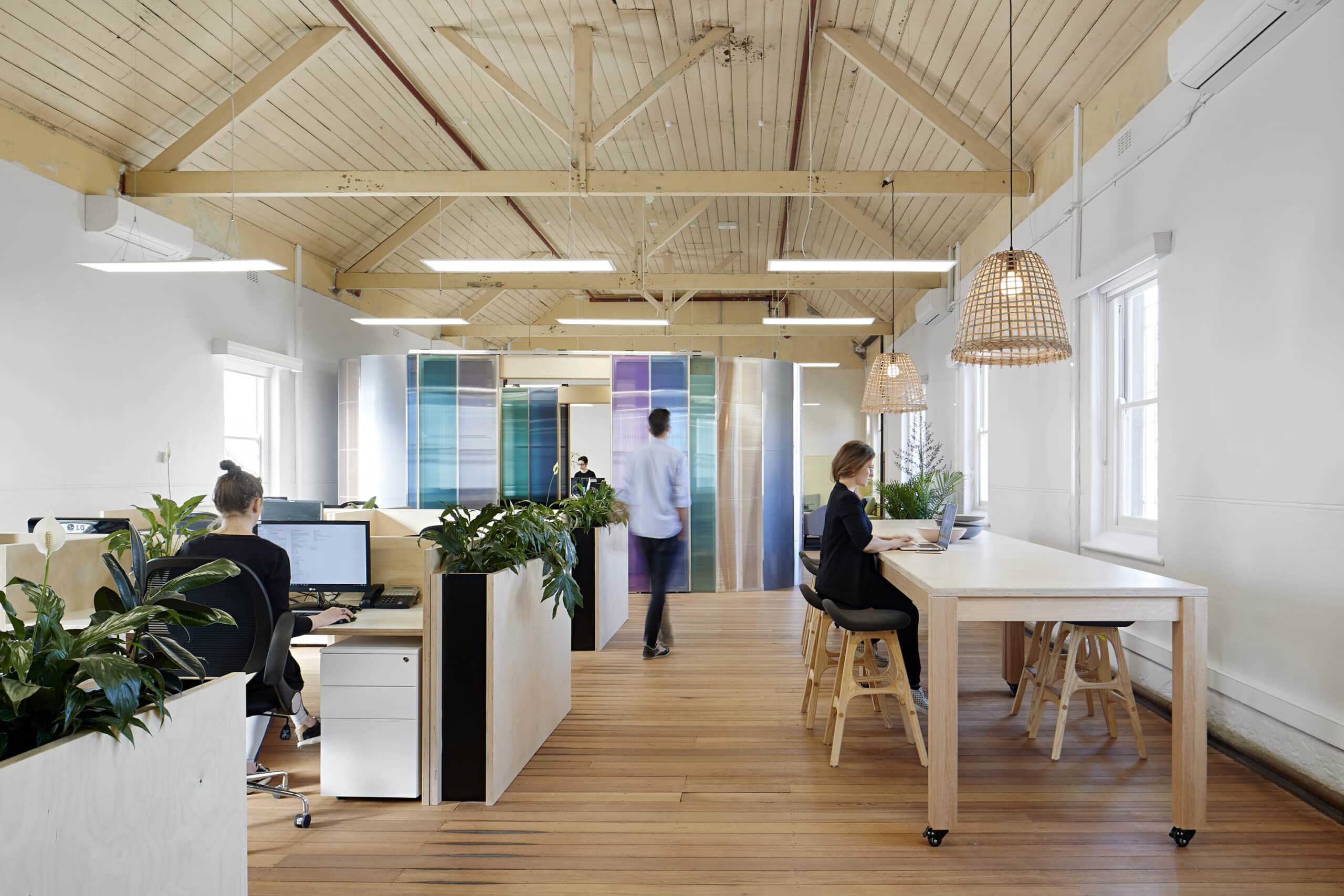
Polyglot is a palimpsest, a restrained insertion into a heritage space that lifts what was already there through careful zoning and a clear design parti. mcmahon and nerlich were approached by Polyglot, a not-for-profit children's theatre company, to help find a site and translate the brief into grant documentation, which was approved under a matched-funding model. The chosen home was a soaring first-floor space in the Sacred Heart building at Abbotsford Convent, the former young women's ward, with exposed trusses, peeling paint, lost tiles, decorative metal window bars and light flooding in.
The design holds a deliberate dichotomy. Polyglot is a company for children, but this is an office for adults, so the space carries a sense of playfulness, wonder and joy while staying thoroughly workable. Social sustainability shaped the material choices, with locally or Australian-designed products specified wherever possible, all on an extremely tight budget.
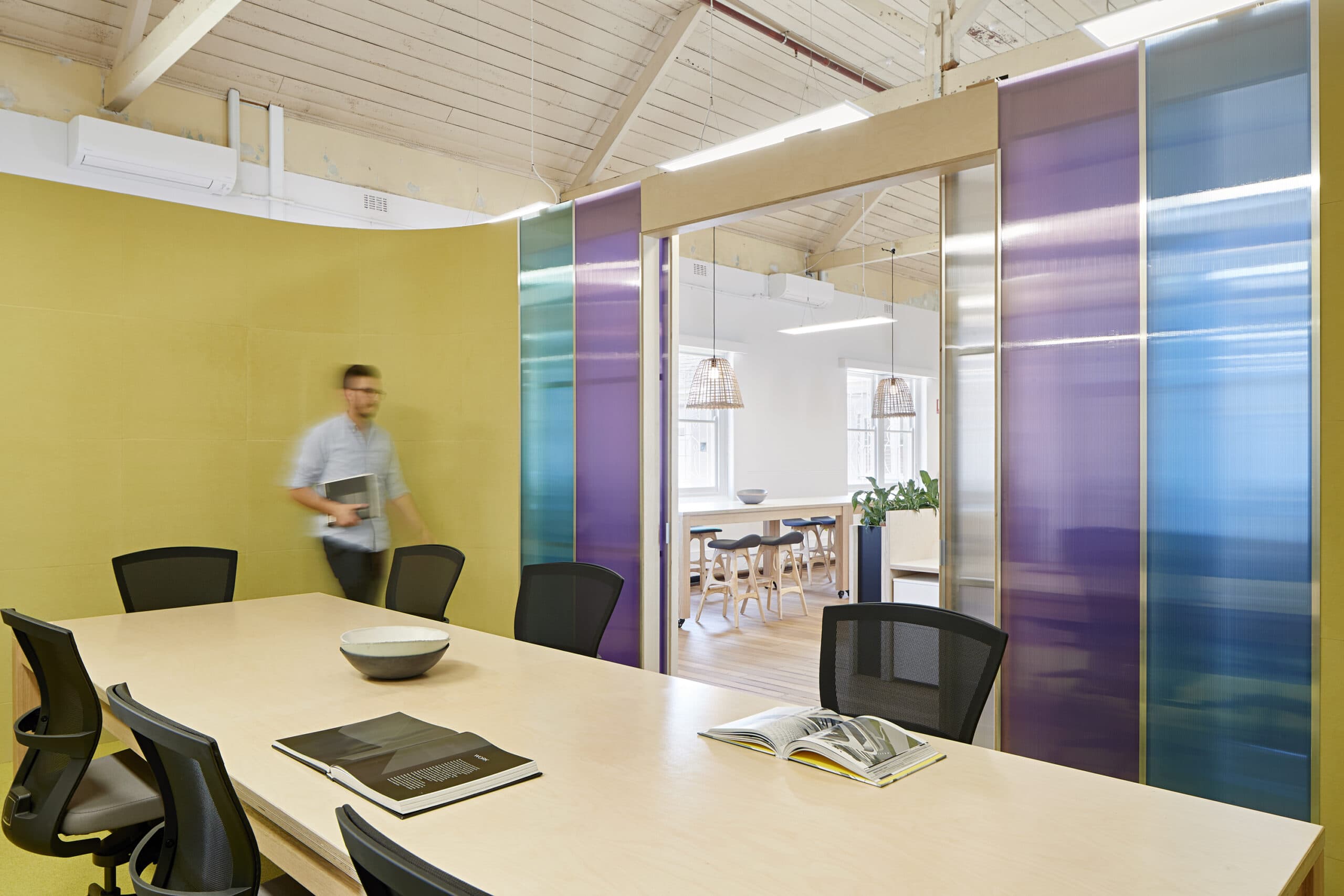
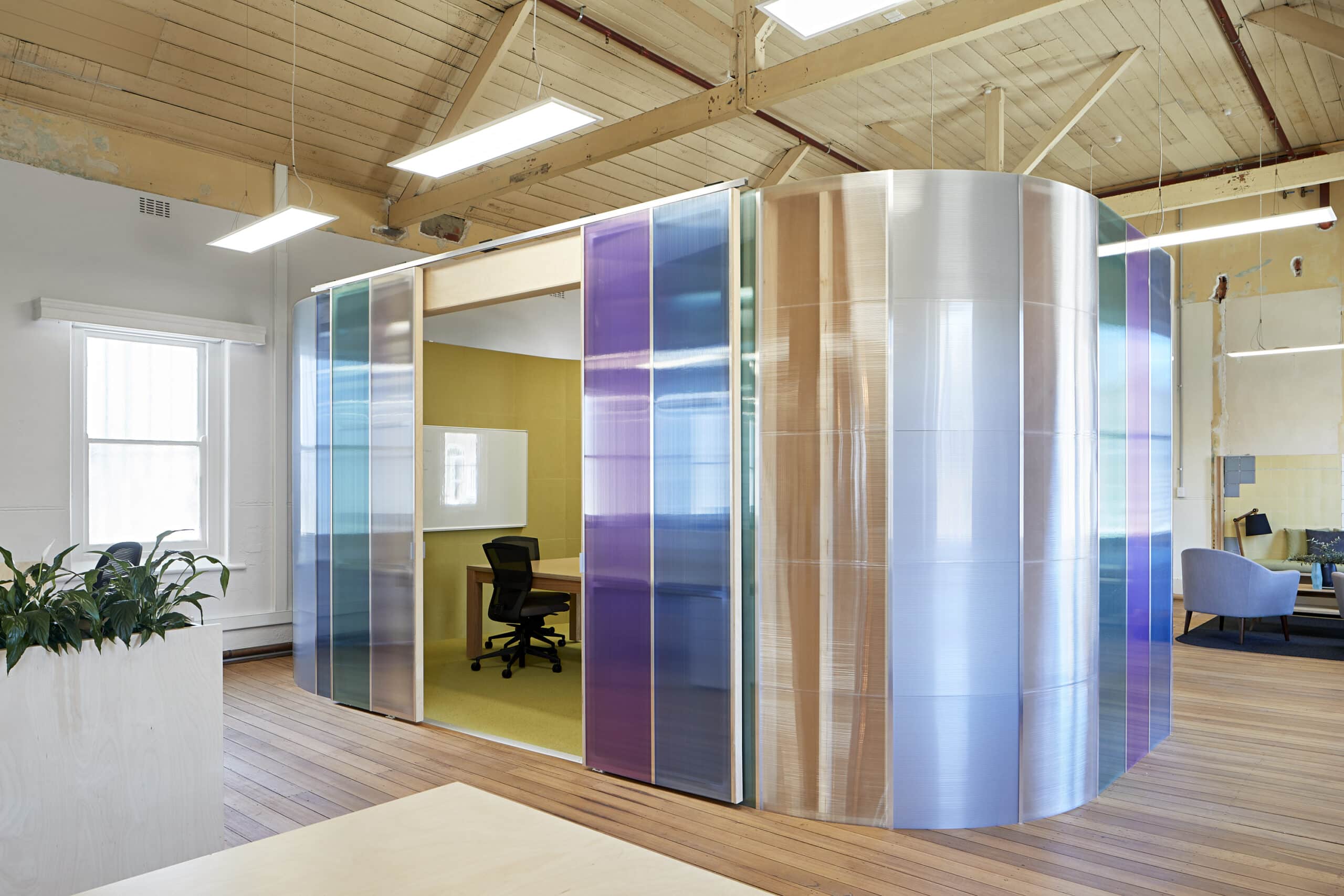
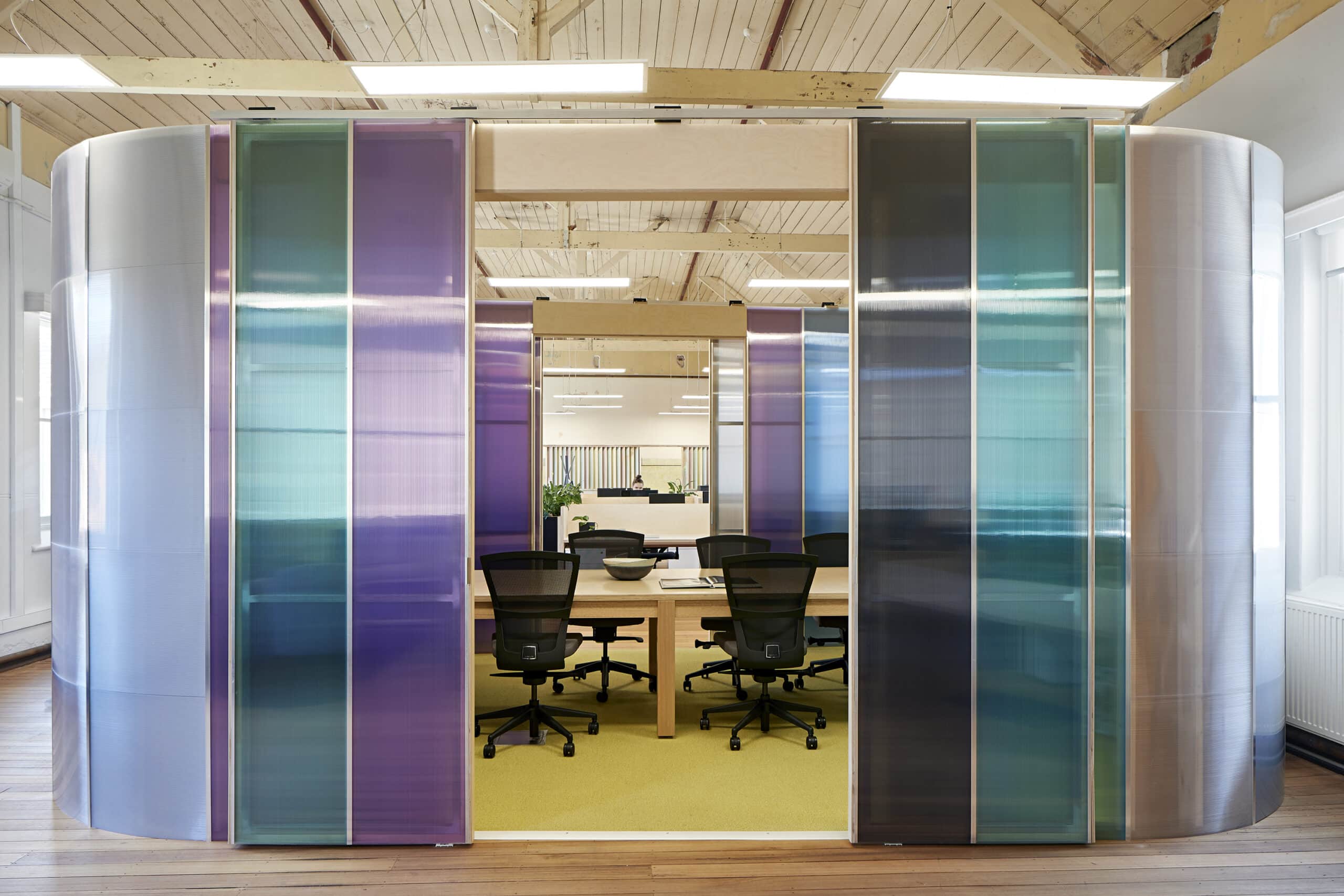
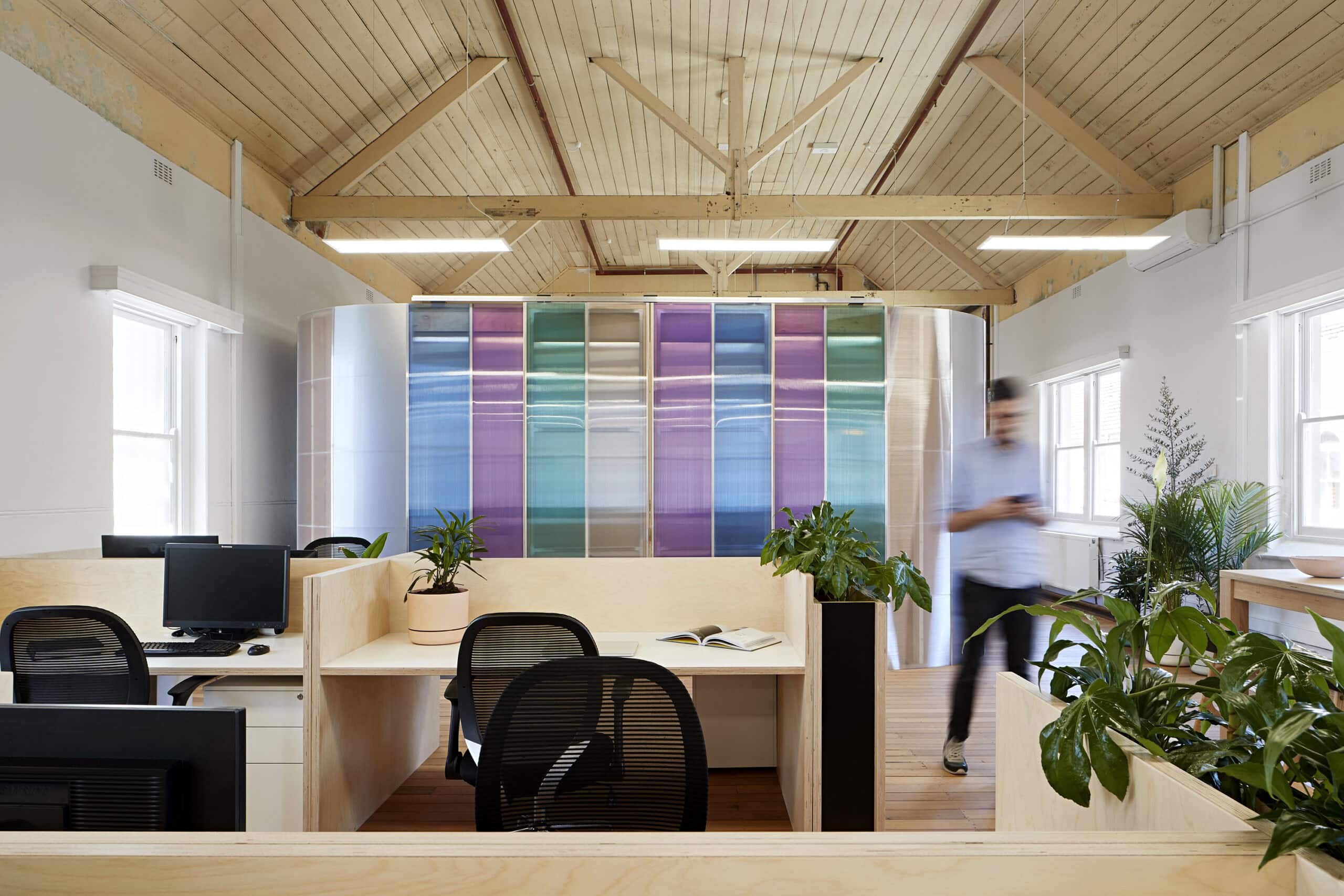
The scheme centres on the Polypod, a bold curved polycarbonate boardroom pod that draws the eye across the tenancy in an optical illusion and gives the fit-out its maximum impact. Around it sit five parti elements. The original Heritage Screen is lightly sanded and heritage-protected, demarcating the kitchen with heritage basins still visible beneath the benchtops and original terrazzo below. A Reading Nook banquette is defined by the heritage yellow tiles, using Australian-made Warwick upholstery and Shaw Contract carpet with an adhesive system that satisfied the heritage permit. Mobile Co-Lab tables foster creative collaboration, the zone framed by bamboo cloches from Koskela. The Polypod itself is clad in striking verticals of curved coloured polycarbonate with a green interior that echoes the heritage palette. Finally, the Greenery sees custom desks house planters that define the working edge, with Mr Kilty pots marking entries and circulation.
The entire fit-out had to touch the floor and walls lightly, with approval from the building surveyor and Heritage Victoria and compliance with the heritage permit and conservation management plan. No recessed or flush details were permitted, and every fixing had to allow removal without leaving a mark. Working in partnership with builder Sinjen, the desks, co-lab tables and boardroom tables were custom made by their joiners to the tight budget, the pale plywood with black verticals set as a foil to the heritage fabric. Advanta boardroom chairs were sourced from one of the few locally designed and made suppliers in Australia, while the existing desk chairs were recycled from the old office. With no excess of materials or construction waste, the palimpsest approach proved inherently sustainable.
Project size 200 m2. Completed 2018.
Architecture by mcmahon and nerlich (Kate McMahon and Rob Nerlich). Builder: Sinjen. Photography by Shannon McGrath.
Gallery
Company

Industry
Sector
Details
- Client: Polyglot
- Project Size: 200 m2
- Building Levels: 1
- Completion Date: 2018
- Photographer: Shannon McGrath
Region
Discuss