
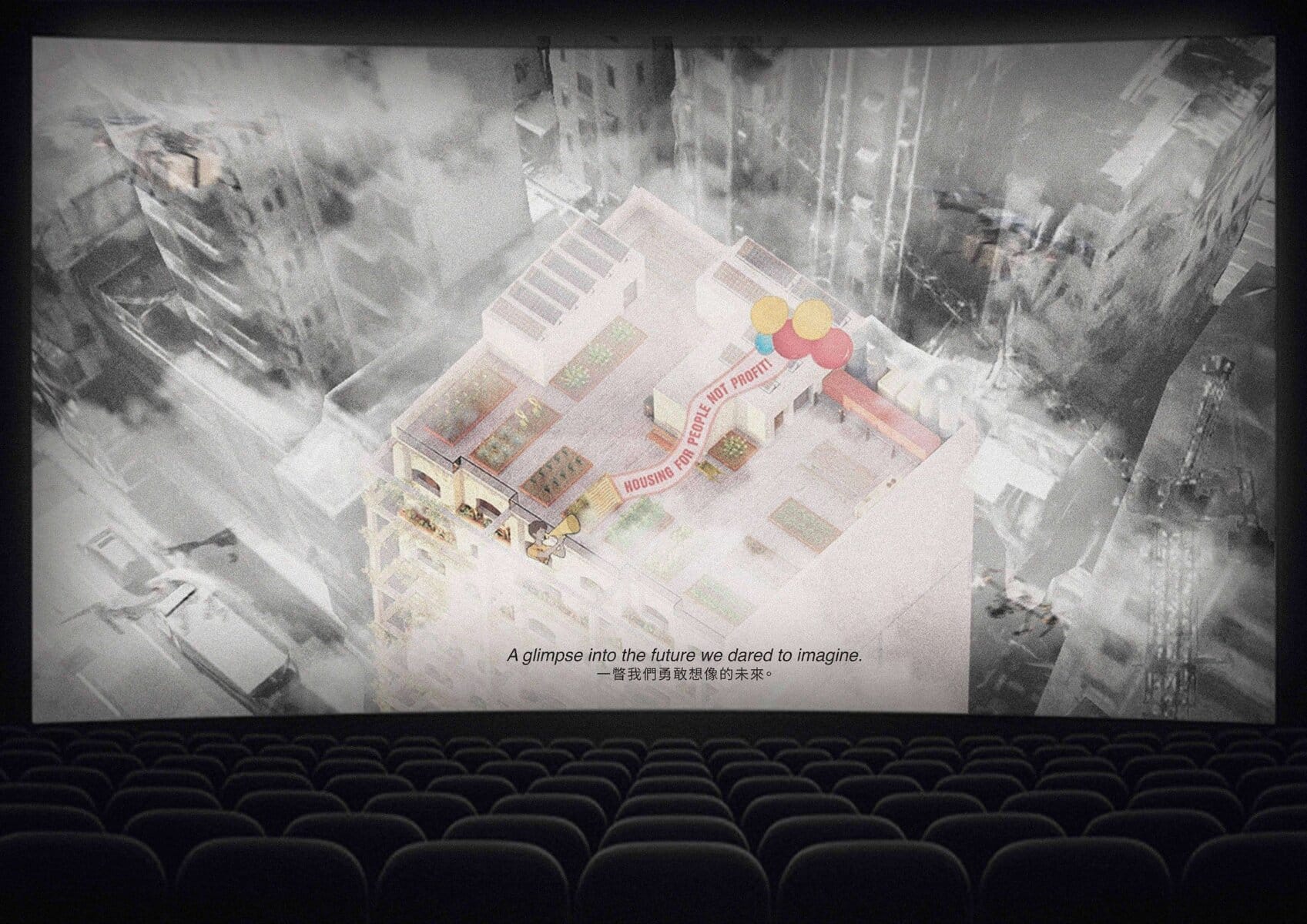
Samuel Lee’s Hong Kong transitional housing thesis, Towards Dignified Living, asks how architecture can restore dignity and agency in some of the city’s most pressured living conditions.
The project matters because it starts with residents, not spectacle. In Sham Shui Po, ageing three-nil buildings create unsafe corridors, poor privacy and everyday stress for people who are often left out of architectural attention.
Watch: Architecture Social video
This Architecture Social video adds useful context before the practical guidance below.
As transitional housing design, the work is strongest when the modular system, shared spaces and resident research are understood together.
What the project responds to
The thesis focuses on Sham Shui Po, one of Hong Kong’s densest and poorest districts. More than 200,000 people live in three-nil buildings, often without proper management, representation or safe shared space.
- The project treats housing as a question of dignity, not only density.
- Compact homes are combined with communal courtyards, gardens, shared kitchens and workshops.
- Privacy, thresholds, sightlines and lighting are part of the design argument.
- Participatory mapping helps reveal daily routines, hazards and small acts of adaptation.
- Feminist spatial thinking gives care, shared resources and everyday labour a visible place in the architecture.
Why the method matters
Samuel’s thesis is not just a proposal placed onto a difficult site. It is grounded in lived experience, including the ordinary places that often carry the most meaning: stairwells, rooftops, thresholds and shared corridors.
That approach gives the project a stronger ethical position. The design is not trying to make poverty look poetic. It is asking what people need to live with more safety, privacy and agency.
Follow the project and designer
The project has a strong social-value and housing angle, so these routes help readers connect the work back to Samuel and compare it with other student showcases.
Architecture Social view
Stephen’s recruiter view is that social-impact projects land better when the evidence of listening is visible. If a portfolio says it is about dignity, the drawings and text must show where dignity is won or lost.
Showcase a housing project with a clear social purpose
If your project deals with housing, care or social infrastructure, make the resident problem and the design response easy to understand.
- Explain who the project serves.
- Show the daily conditions the design responds to.
- Connect plans, sections and thresholds to care, safety or agency.
- Use captions that make social research visible.
Next step
Browse more project showcases, read the portfolio guide, or submit your own architecture project.
If this project has made you rethink your own portfolio or next move, browse current architecture jobs or contact Architecture Social for a recruiter’s view.


Add a comment