
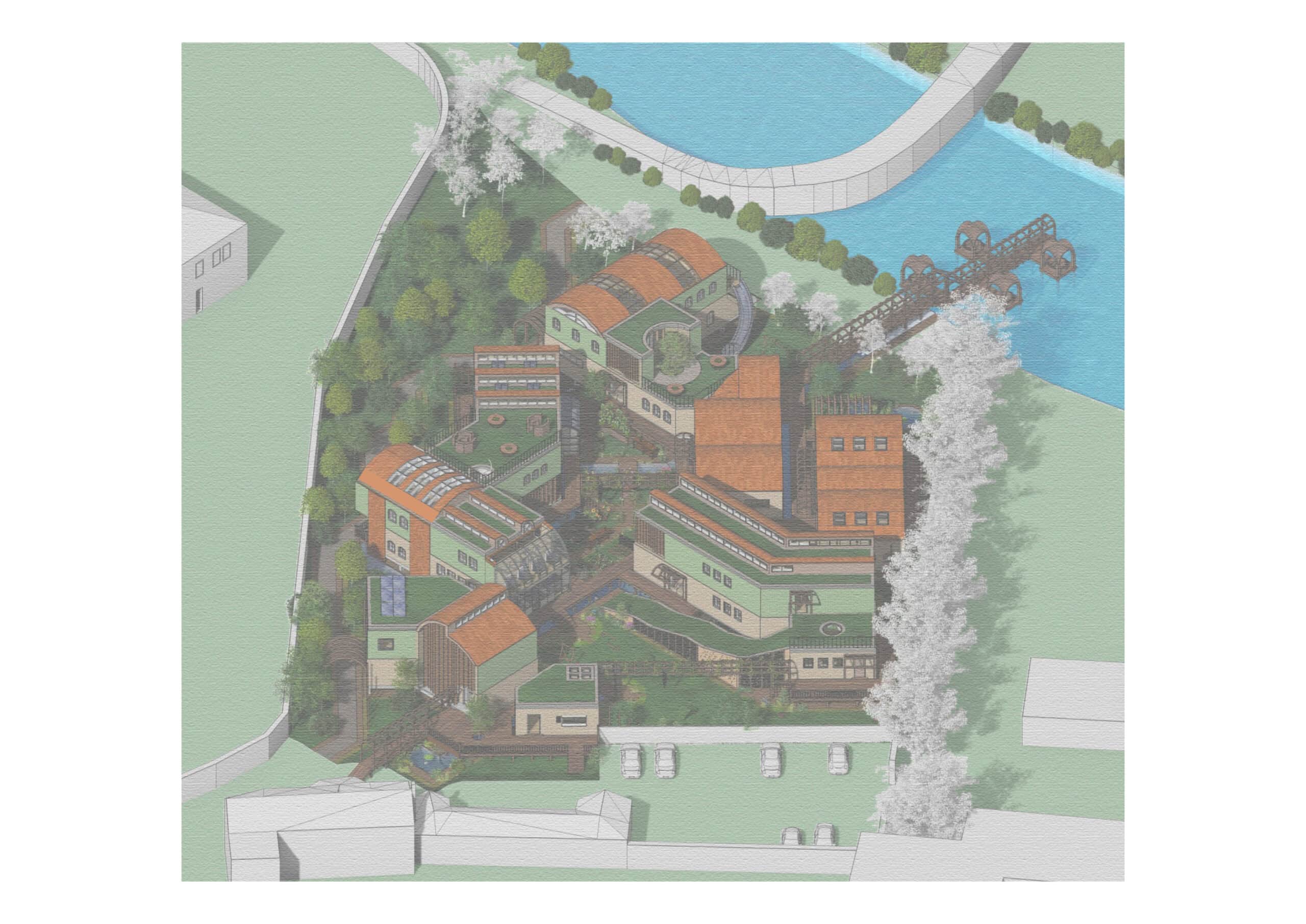
The Ripple Effect and the Case for Trauma Informed Therapeutic Architecture
Safa Shafi is a recent Part I Architecture graduate from the University of Nottingham, graduating with a 2:1 and now seeking a Part I Architectural Assistant role. Her early exposure to practice came through the RIBA Mentorship Programme, where she shadowed a senior architect working on a residential project. That matters, because her thesis, The Ripple Effect, is not framed as a purely academic exercise. It reads as an attempt to tackle a live and difficult question. How can architecture support unaccompanied refugee minors in ways that are spatially clear, emotionally safe, and rooted in everyday care rather than symbolism?
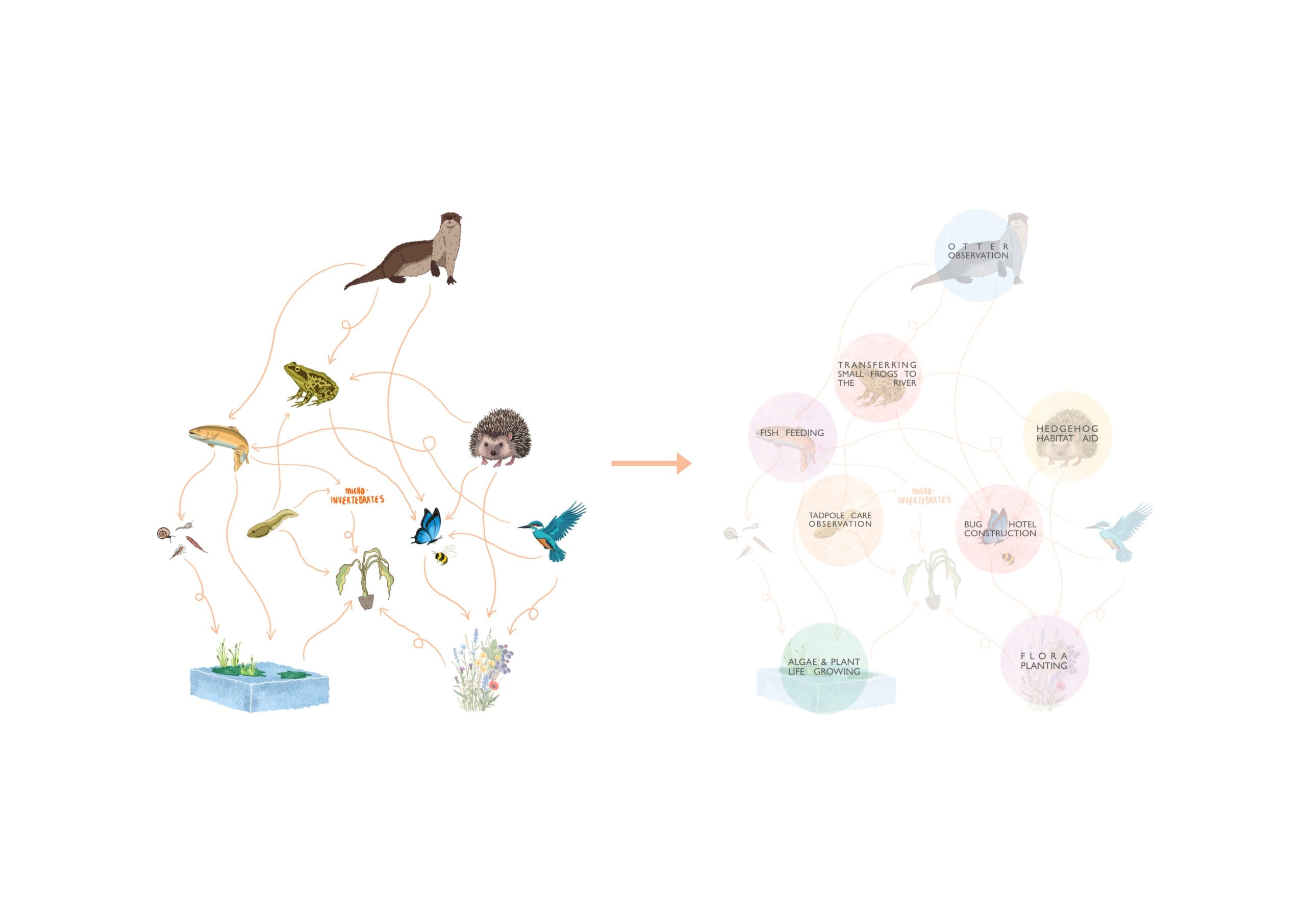
This is a serious brief. Unaccompanied young people arriving through displacement often face trauma, uncertainty, and institutional fatigue. Any building intended for them has to do more than provide rooms. It has to manage privacy, safeguarding, supervision, sensory comfort, and access to outdoor space without slipping into a clinical atmosphere. Safa’s response is an eco therapy centre that combines play therapy with nature conservation, using contact with wildlife, planting, and tactile settings as part of the healing process. The project’s value lies in how it positions architecture as an active part of care delivery, not just a container for it.
A care brief that asks for more than standard community architecture
What gives The Ripple Effect weight is the way the brief is defined around the needs of a specific group rather than a generic wellness agenda. Safa’s proposal focuses on unaccompanied refugee minors, which immediately changes the architectural priorities. A project like this must think carefully about transitions between public and protected space, the legibility of circulation, and the ability for staff to supervise without creating an institutional feel.
The use of play therapy as a primary mode of healing is also well judged. In architectural terms, that shifts attention towards scale, thresholds, acoustics, daylight, and sensory variation. Therapy for children and young people often depends on environments that feel permissive but not chaotic. Spaces need enough openness for exploration, but enough enclosure for emotional safety. That balance is difficult, and it is where many student projects become vague. Safa avoids that by organising the building as a series of interconnected pavilions, each dedicated to a different form of therapy.
This pavilion strategy is more than a formal move. It breaks the programme into manageable pieces, which is useful for users who may find large institutional buildings overwhelming. It also gives the scheme a clear hierarchy of spaces, with movement between pavilions becoming part of the therapeutic routine. Instead of one monolithic centre, the project suggests a small community of buildings where care is distributed across indoor and outdoor settings.
Pavilions, thresholds and the outdoor setting as part of treatment
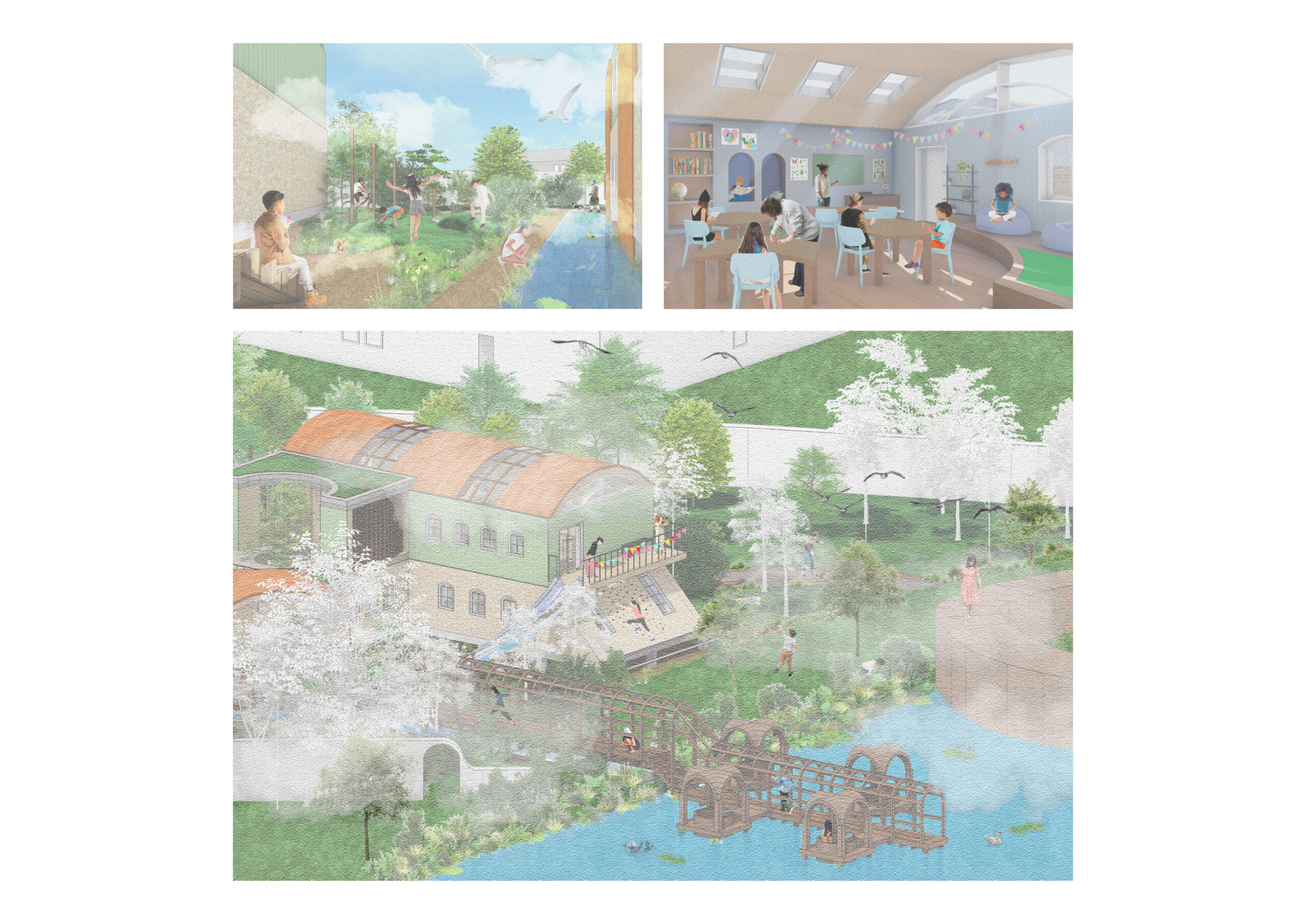
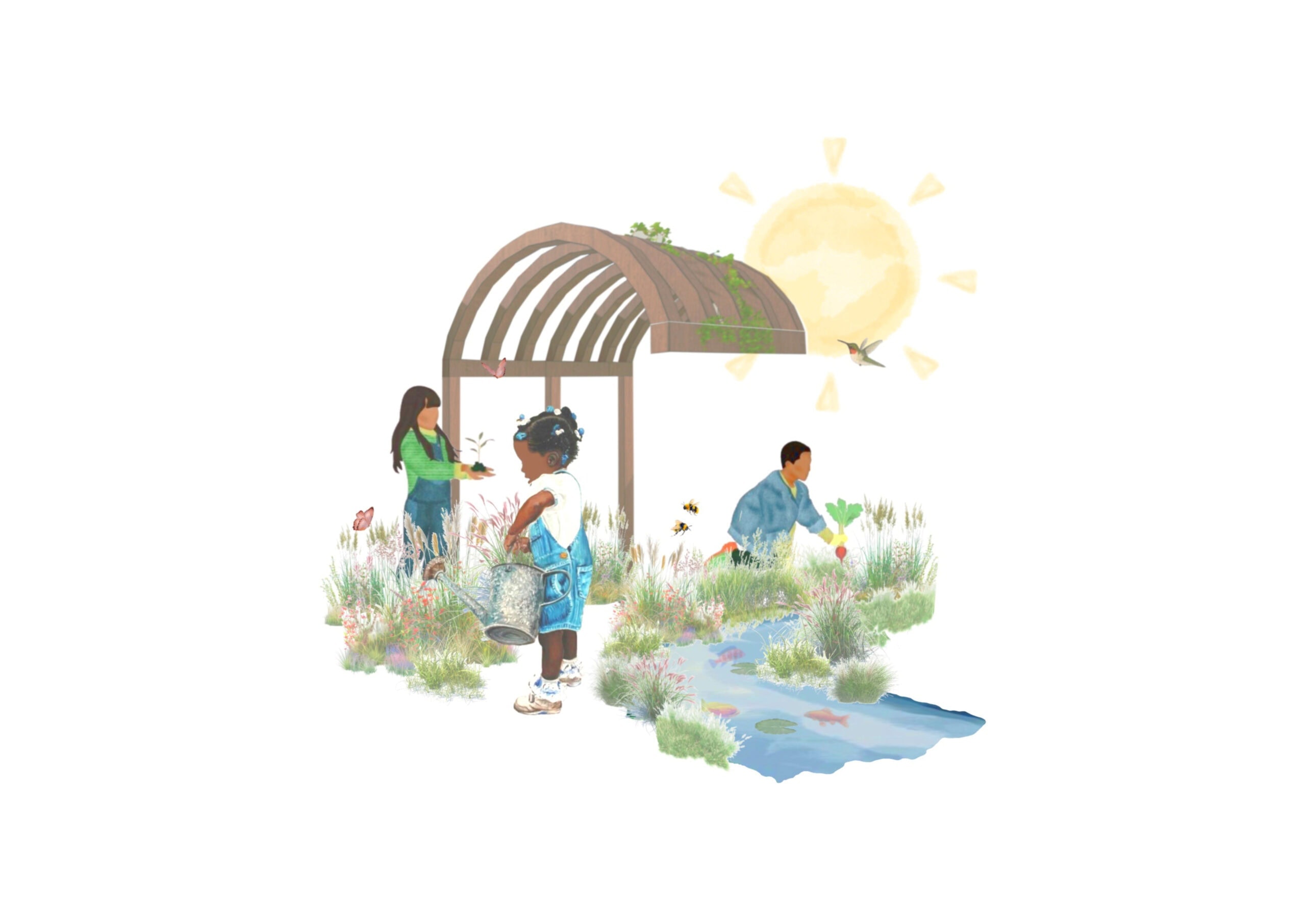
Without relying on spectacle, the proposal uses the site itself as part of the brief. The outdoor setting is not treated as leftover amenity space. It is integral to the project’s therapeutic logic. That is a sensible move for an eco therapy centre, but it also has a practical architectural benefit. By placing therapy in relation to planting, wildlife habitats, and sensory routes, the scheme creates graded experiences rather than a single dominant space.
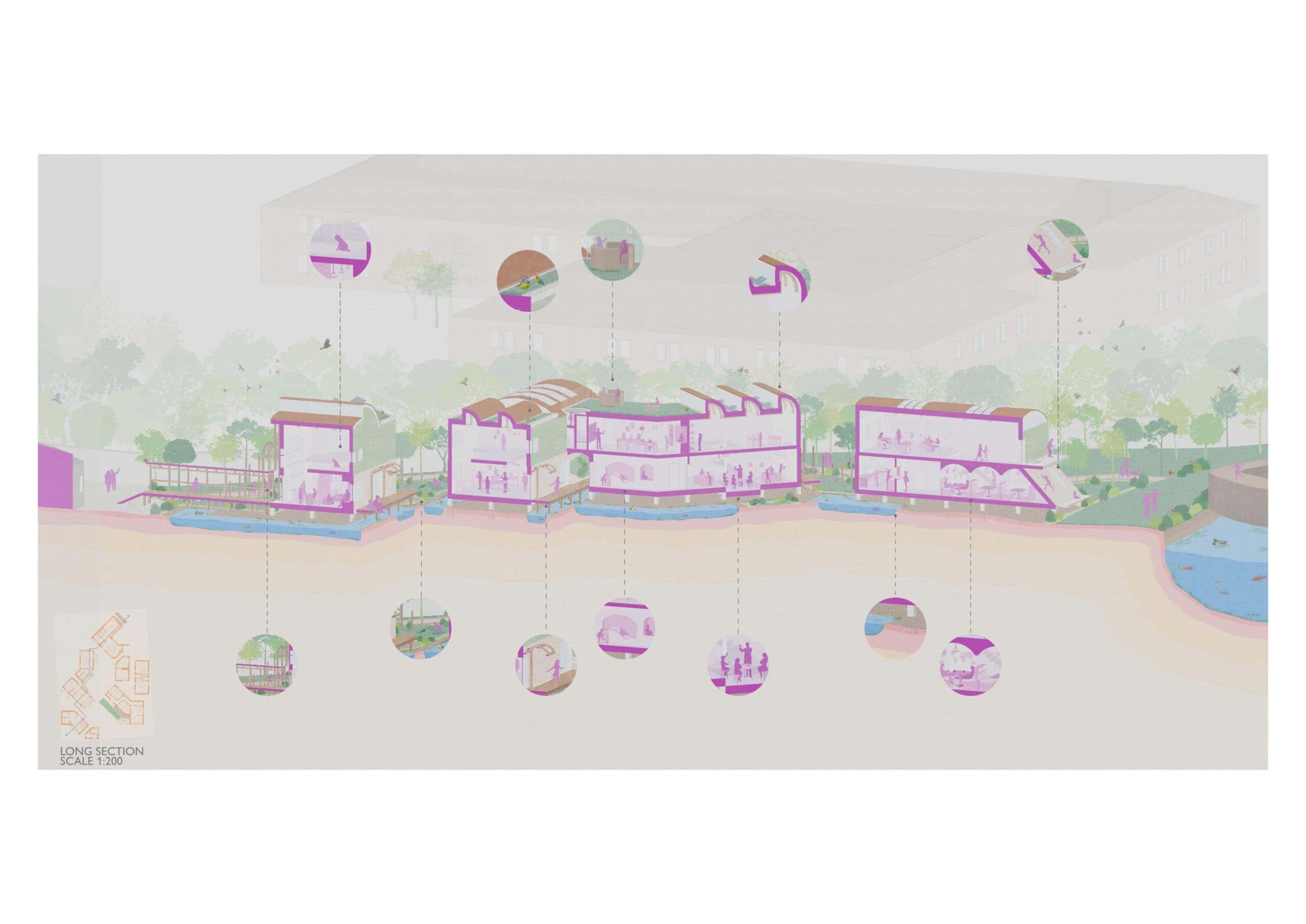
The interconnected pavilion arrangement appears to support that reading. Different therapies can operate with a degree of independence while remaining part of a coherent whole. This matters operationally. A centre serving vulnerable minors needs spaces that can accommodate group work, one to one support, informal play, quiet retreat, and staff oversight. Separating these functions into linked buildings can reduce acoustic conflict and allow each space to develop its own character.
There is also a safeguarding argument in favour of this layout. Clear sightlines between buildings, visible entrances, and controlled external routes can help staff monitor movement without making users feel watched. For young people dealing with trauma, that distinction is important. Architecture cannot solve trauma, but it can reduce friction and remove avoidable stress from daily routines.
Material warmth, environmental sense and the discipline of restraint
Although the information available on the scheme is concise, the project’s core ideas point towards a material strategy that should be tactile, low impact, and easy to maintain. For a centre built around sensory engagement, hard or overly polished finishes would work against the brief. The architectural logic is stronger when materials offer warmth, texture, and acoustic softness. Timber, clay based finishes, or other natural materials would be consistent with the proposal’s therapeutic aims, provided they are detailed properly and can withstand intensive use.
Environmental performance is also tied closely to the brief. A low rise pavilion scheme lends itself to good daylight access, natural ventilation, and a close relationship between inside and outside. For a care environment, passive design is not just a sustainability measure. Stable light, fresh air, acoustic control and access to nature all support the emotional safety that the brief depends on.
Why this matters to practice
The Ripple Effect is strongest where it treats therapeutic architecture as a practical design problem rather than a soft visual theme. It asks how vulnerable young people might move through a place, where they can retreat, how staff can support them, and how outdoor spaces can become part of everyday care.
For practices working in education, health, community or supported living, Safa Shafi’s project is a useful reminder that safeguarding, sensory comfort and landscape are not separate design conversations. They need to be considered together from the start.
Safa is seeking a Part I Architectural Assistant role. Hiring teams looking for early-career talent with a thoughtful approach to social value, care environments and environmental design should review the project in detail.
What this project shows
The Ripple Effect is useful because it shows Safa Shafi’s ability to connect a clear design idea with context, users and delivery constraints. It connects care, safeguarding, landscape and environmental comfort in a way that feels relevant to real community and therapeutic briefs.
For employers reviewing student and graduate portfolios, the lesson is simple. Look past a single hero image and ask how clearly the candidate explains the brief, the site, the decisions and the technical consequences of the proposal.


Add a comment