
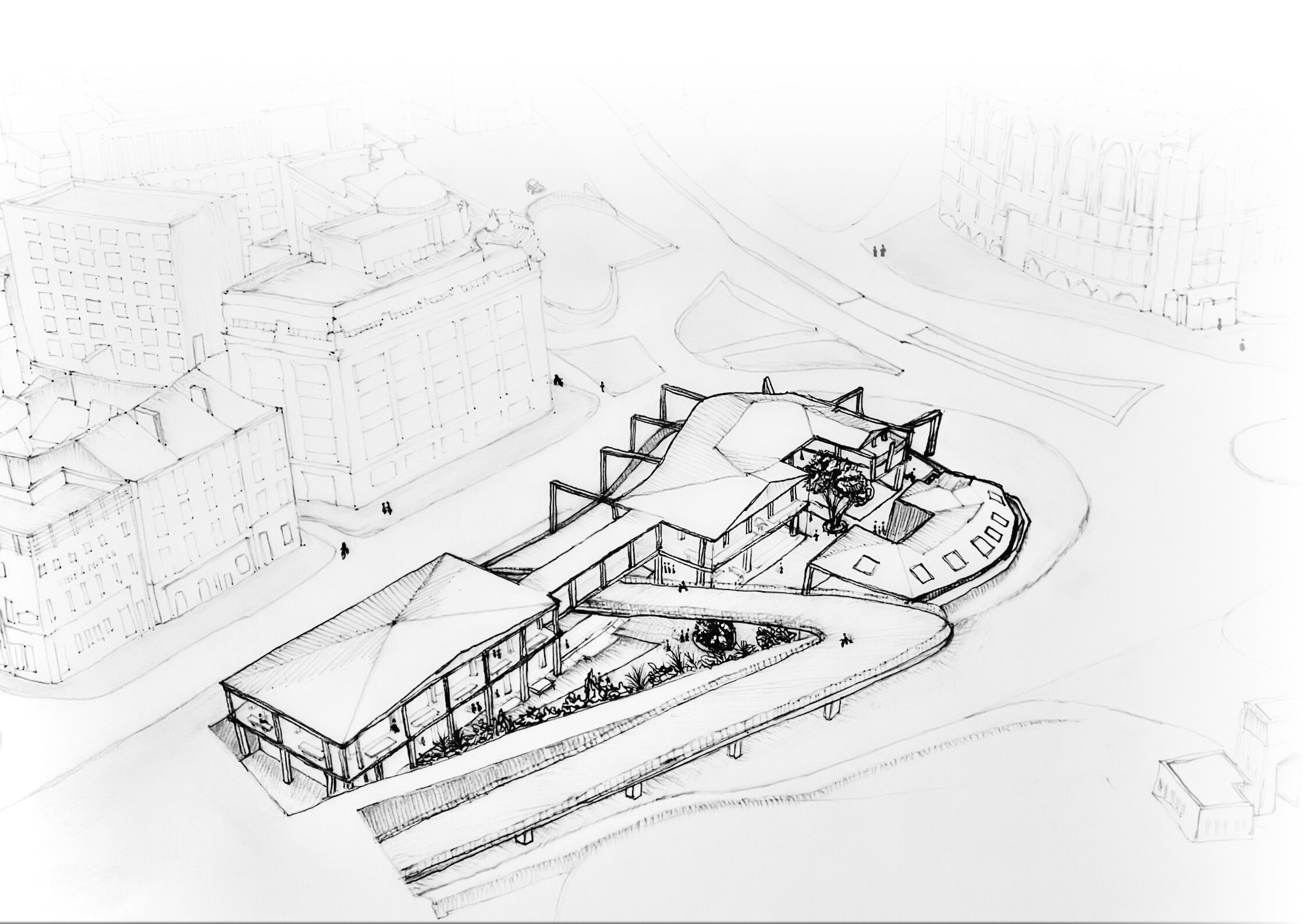
Hinal Gosai’s Solaris Recasts Liverpool’s Tunnel Edge as Civic Infrastructure
Hinal Gosai has recently graduated from the University of Liverpool with a 2:1 and is now seeking a Part I placement. Her portfolio is centred on civic space, sustainability and technical clarity, and Solaris, her BA3 community cycle hub, gives a strong sense of how those interests come together in built form. Set at the entrance to Liverpool’s Queensway Tunnel, the project takes on a part of the city that is usually read only through movement, noise and engineering. It is a threshold shaped by cars, retaining walls and hard edges, and one that has long broken pedestrian and cycle continuity between Liverpool and Birkenhead.
What makes Solaris worth attention is that it does not treat this condition as a problem to be disguised. Gosai instead works with the awkwardness of the site. The proposal accepts the tunnel approach as a piece of heavy infrastructure and asks whether that leftover territory can support public life. That is a serious urban question, particularly in UK cities where road led planning has left behind a chain of underused fragments that are too often written off as residual.
Working with a Site Defined by Noise, Speed and Fragmentation
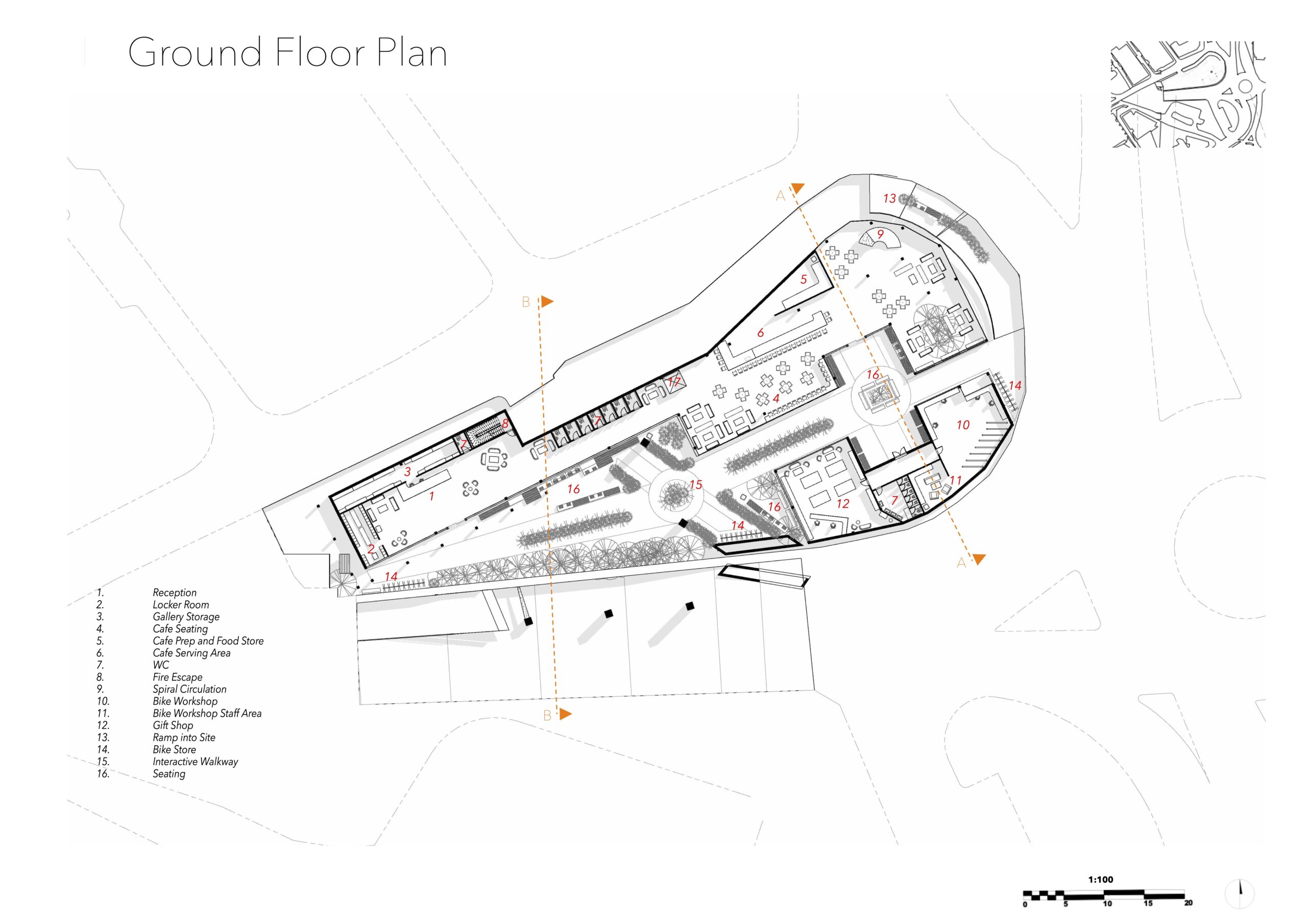
The project begins with a clear reading of context. Rather than placing a generic community building beside the road, Gosai maps desire lines and noise levels to determine where occupation is viable and where circulation should take priority. That gives the scheme a logic that feels architectural rather than graphic. The cycle bridge becomes the central organising move because it responds directly to movement patterns across the site, while quieter gallery and mezzanine spaces are pushed away from the harsher traffic edges.
This is an intelligent response to a difficult brief. A cycle hub at this location could easily become a token gesture, little more than a service point inserted into a hostile setting. Solaris avoids that by treating cycling as a civic activity rather than a technical add on. The bridge is not simply a route across the building. It is the social and spatial core of the proposal, drawing people through the project and allowing the act of movement to shape how the building is experienced.
That decision matters in the Liverpool context. The Queensway Tunnel is one of the city’s defining infrastructural works, but it also marks a longstanding break in the continuity of public space. Gosai’s proposal does not claim to repair that urban divide in one move. It does something more credible. It creates a place where that divide can be occupied, read and used. In current practice, where designers are often asked to work with difficult edge conditions rather than ideal city centre plots, that is a valuable skill.
A Spatial Strategy Built Around Shelter and Sequence
The internal arrangement of Solaris shows a good grasp of sectional planning. Noisy, exposed edges are treated as the domain of movement and transition, while the more contemplative parts of the programme sit in protected positions. This gives the project a clear environmental gradient. Users move from traffic and exposure into filtered light and quieter occupation, which is exactly the kind of sequence a project like this needs if it is to feel welcoming rather than merely functional.
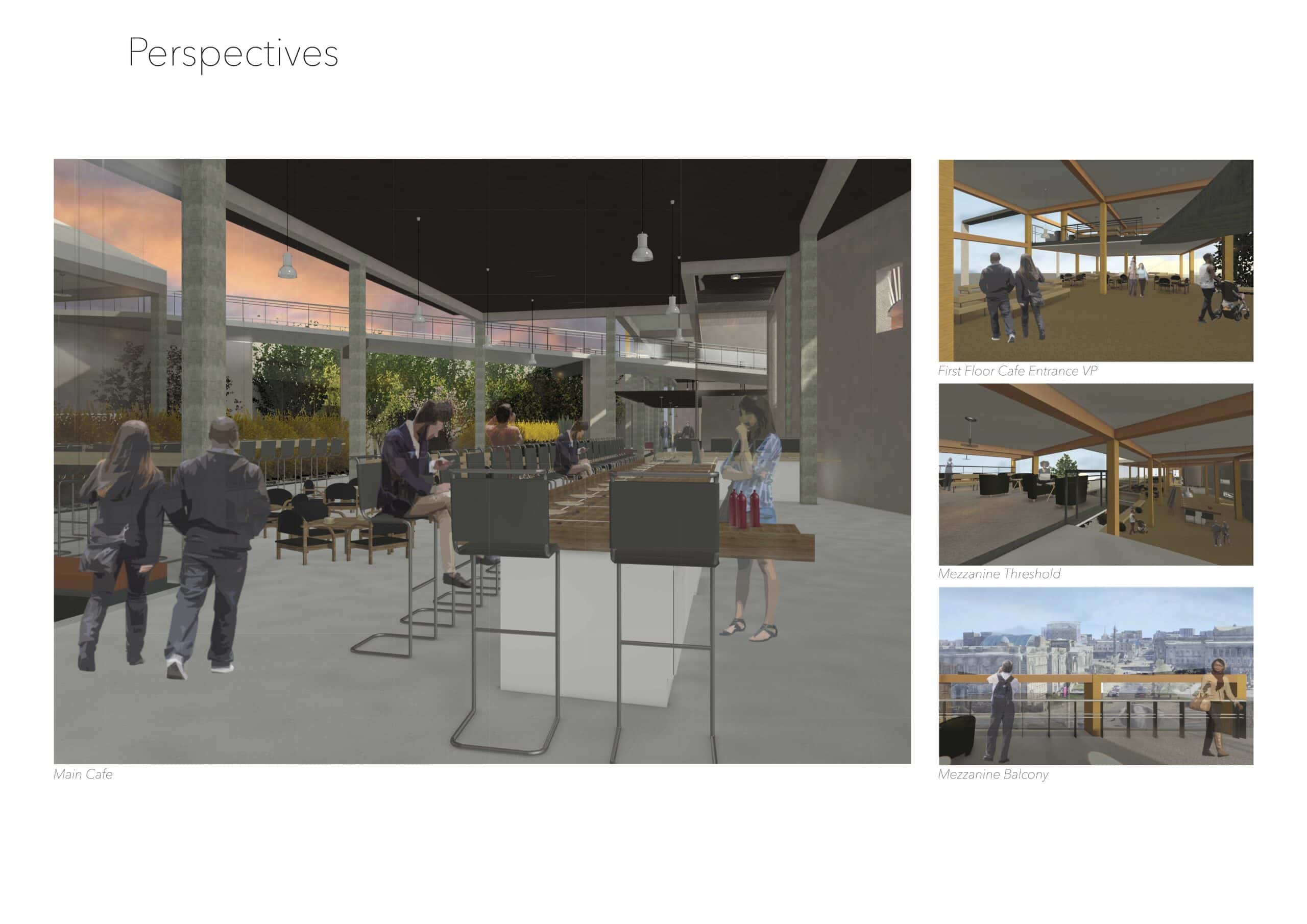
The gallery and mezzanine spaces are particularly important because they broaden the building’s civic role. Without them, the scheme might read as a transport facility with some architectural dressing. By including spaces for gathering, viewing and pause, Gosai shifts the building into the territory of public institution. That move also supports the project’s core argument, which is that forgotten infrastructure can host new urban life if it is given enough spatial generosity.
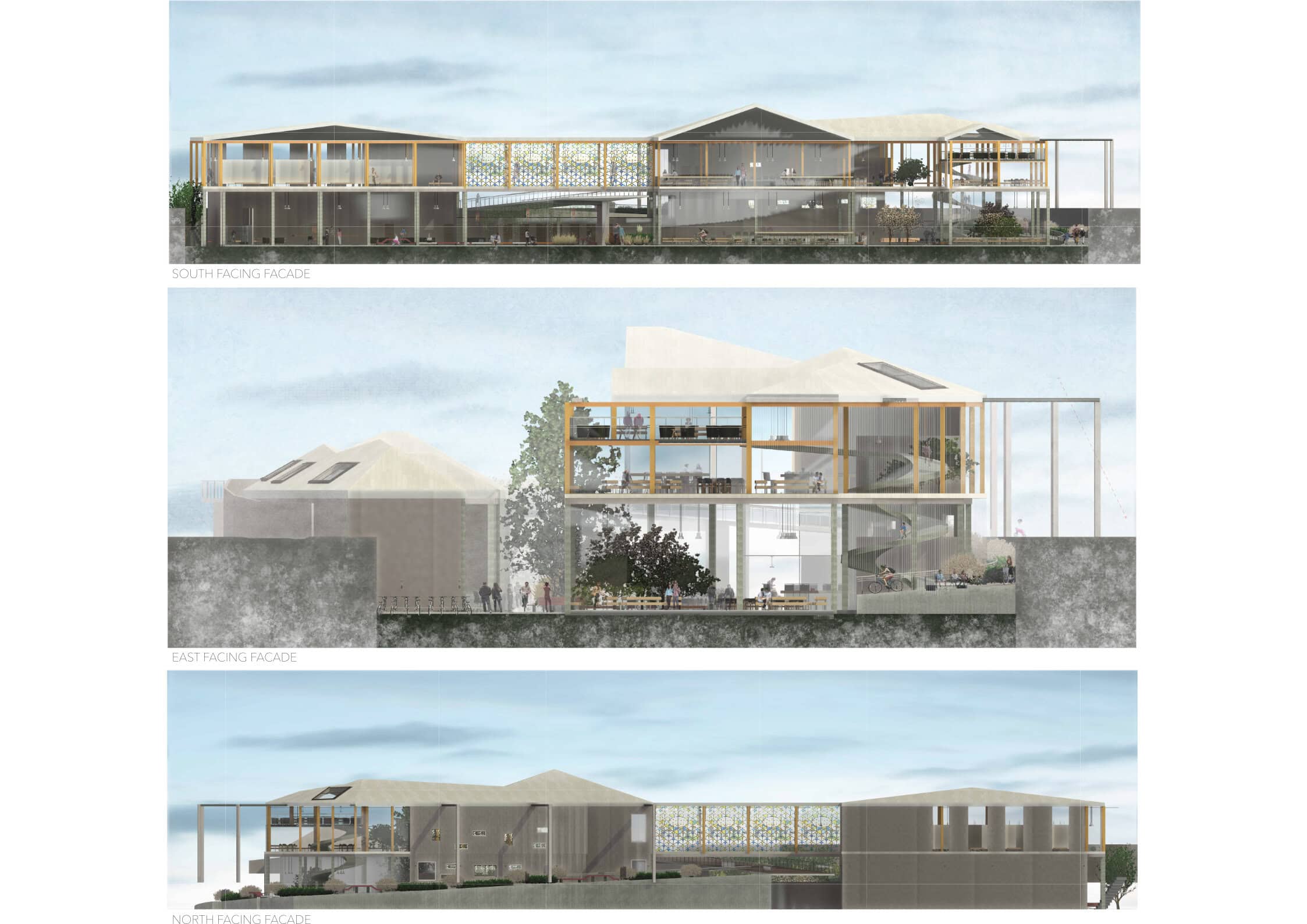
There is also restraint in how the proposal handles symbolism. The stained glass curtain wall façade, informed by Liverpool Cathedral, could have become an easy formal citation. Instead, it works because it is tied to light quality and atmosphere. Filtered daylight, shifting colour and a more cinematic threshold help turn a harsh infrastructural edge into a place with cultural weight. It is a contextual reference that operates through performance as much as image.
Material Choices That Balance Weight, Warmth and Buildability
The structural strategy combines concrete with glulam, using mass where stability is needed and timber where warmth and lower embodied carbon can shape the upper parts of the building. That hybrid approach feels appropriate for the programme and site. At tunnel level and near major vehicle routes, a sense of permanence and structural confidence is important. Above that, the glulam introduces a more tactile civic character and supports the project’s environmental aims.
Gosai’s technical thinking comes through in the environmental measures as well. Rainwater harvesting, thermal mass and skylights oriented south are not presented as decorative sustainability features. They are integrated into the project’s basic operation. In student work, these systems can often appear detached from the architecture itself. Here, they sit within a coherent tectonic and spatial proposal.
That is likely to be of interest to Practices looking for Part I candidates who can move beyond concept language and start thinking about how buildings are put together. Solaris suggests a student who is comfortable linking site analysis, structural choice and atmosphere. Those are useful instincts in any early career architectural assistant, especially in studios working on civic, cultural or infrastructure led projects.
Why Solaris Matters for Practice Now
There is a wider relevance to this proposal. Across the UK, architects are being asked to work with existing infrastructure, constrained urban plots and politically charged questions around active travel, public health and carbon. Solaris engages all of those themes without turning into a manifesto. It is specific, technically aware and rooted in place. That combination is often what separates a promising academic project from one that can speak credibly to practice.
Hiring directors seeking a Part I assistant with a clear interest in civic architecture, sustainability and carefully resolved detailing should take note of Hinal Gosai’s work. Peers, mentors and Studios can connect with her on LinkedIn at www.linkedin.com/in/hinalg.
If you are a student, graduate or young professional with a project that deserves a wider audience, Architecture Social welcomes submissions featuring academic work, competition entries and built proposals. Share your work and put it in front of the people shaping the next generation of architectural practice.
What this project shows
Solaris is useful because it shows Hinal Gosai’s ability to connect a clear design idea with context, users and delivery constraints. It turns a difficult infrastructural edge into a civic proposal with movement, shelter, public space and technical intent working together.
For employers reviewing student and graduate portfolios, the lesson is simple. Look past a single hero image and ask how clearly the candidate explains the brief, the site, the decisions and the technical consequences of the proposal.


Add a comment