
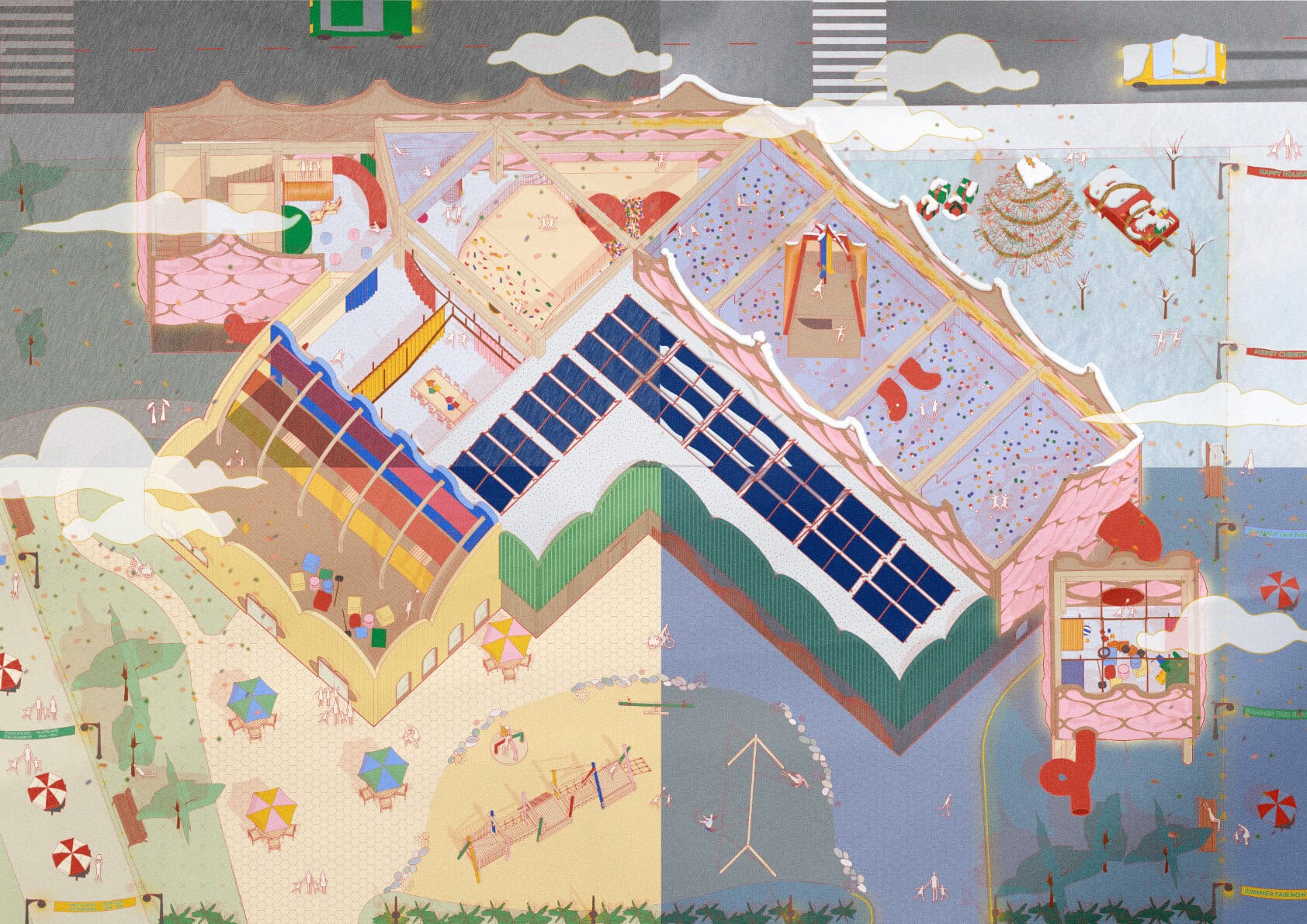
The Play Patchwork by Hana Ahmad Baihaki proposes a Community-Play House for Harpurhey in North Manchester. The project asks how architecture can bring free, unstructured play back into everyday neighbourhood life.
It is a useful project because the brief is social before it is formal. The architecture is there to support children, families and local relationships, not just to provide a polished play object.
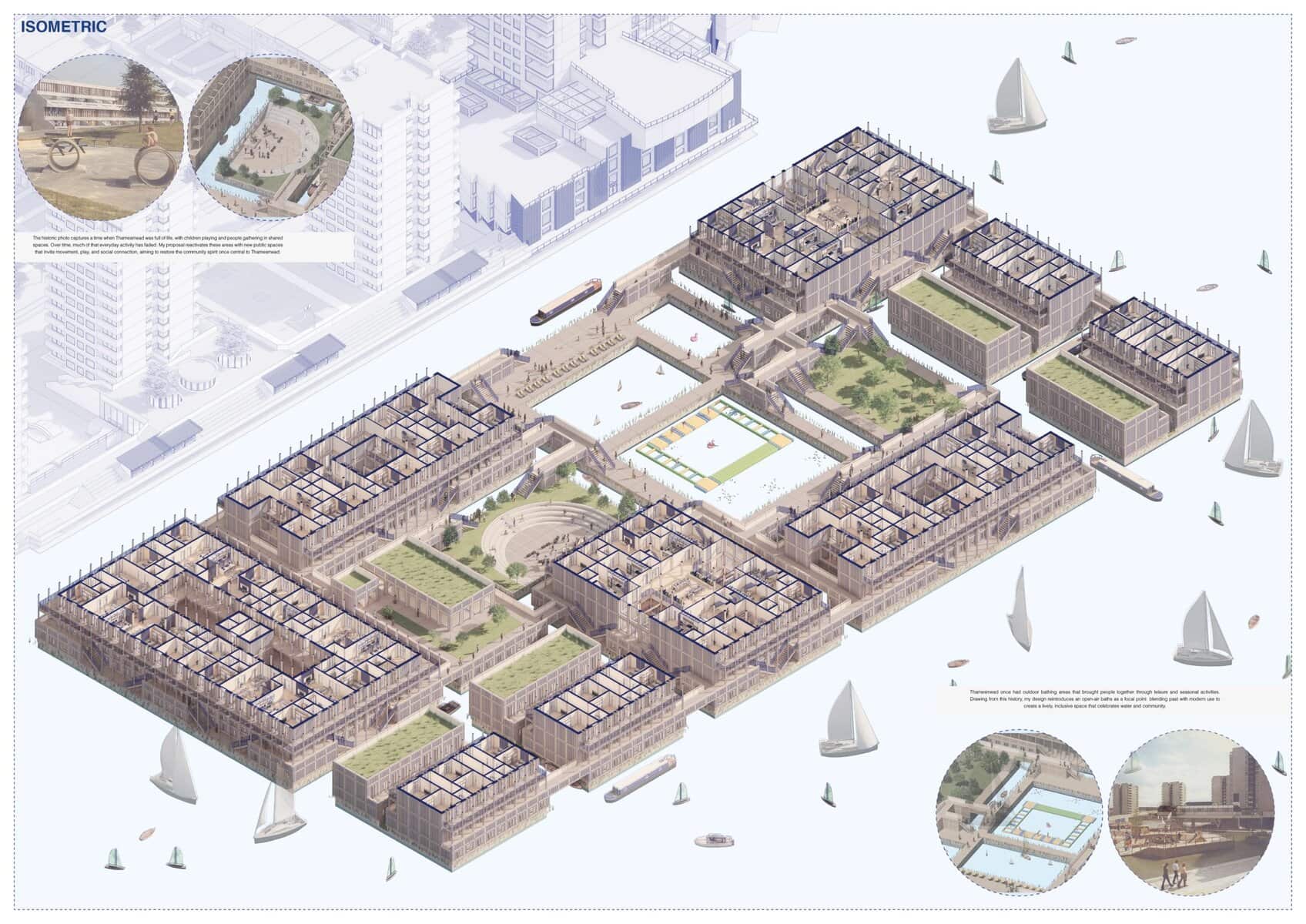


Why play is an architectural issue
The project starts from a real urban problem: children can lose access to safe, flexible and stimulating places to play. Hana responds by proposing a layered hub that supports curiosity, movement, shared making and community ownership.
- Indoor and outdoor areas work together rather than as separate zones.
- Flexible rooms can support art, performance and gathering.
- Gardens and nature trails create informal routes for exploration.
- The scheme includes parents, siblings and grandparents as part of the social fabric.
Community, not just playground
The Play Patchwork is more interesting than a simple playground proposal because it treats play as community infrastructure. It asks how shared kitchens, workshops, gardens and storytelling spaces can help people meet across generations.
Portfolio lesson
For a project like this, the portfolio needs to show the child’s experience and the neighbourhood logic together. A practice or tutor should be able to see how the building supports daily life, not only admire the concept.
Make community projects easy to read
When submitting a community or play project, show the user group, daily use and spatial sequence clearly.
- Name the age group or community the project serves.
- Explain how indoor and outdoor spaces connect.
- Use drawings that show people, movement and activities.
- Keep the social purpose grounded in architectural evidence.
Next step
Submit your community, education or public-space project to Architecture Social Showcase if it has a clear story and useful visual evidence.
If this project has made you rethink your own portfolio or next move, browse current architecture jobs or contact Architecture Social for a recruiter’s view.


Add a comment