London, United Kingdom · 2022
Paddington Elizabeth Line Station
A new Elizabeth line station uses daylight, natural ventilation and generous civic space to transform movement through historic Paddington.

EP 016726 June 2023 · 34 min
 Audio · 34:03
00:00 · Introduction to Weston Williamson + Partners7 chapters ↓
Follow the showApple PodcastsSpotifyYouTubeRSS
About this conversation
Practice culture, transport expertise, sustainability and delegation all shape what it feels like to work at an architecture studio over the long term.
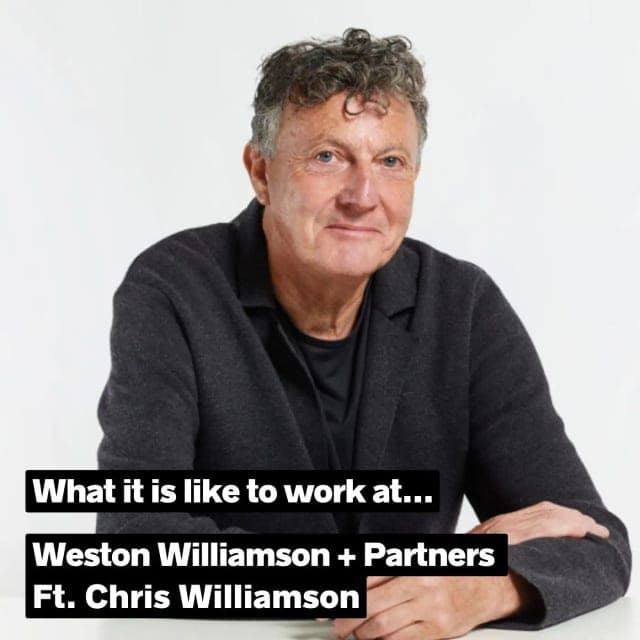
Stephen Drew speaks with Chris Williamson about Weston Williamson + Partners, transport-led design, sustainability, office culture, delegation, career advice and the importance of enthusiasm and lifelong learning.
The conversation covers:
How transport-led design contributes to better cities
Why sustainability has changed the mood of architecture over time
How inclusive office culture depends on sharing responsibility
Topics in this episode
Each topic opens its knowledge hub with jobs, people, courses and more episodes.
Transcript
Back to playerAutomatically generated. Words and speaker labels may contain mistakes. Play a passage to hear the original.
Opening of the conversation
Timestamps jump to the nearest marked moment in the audio.
Stephen Drew
Hello everyone. Put down that Revit model. We'll make a cheeky half an hour on your lunch break. I've got a treat, planes, trains or automobiles and more than that. Residential you are in for a treat. 20 seconds, 25 seconds or will be revealed
15 seconds.
Continue the conversation
An episode ends. A good conversation carries on.
View in forum →Loading the conversation…
The guest, the practice, the work
Guest · People
WW+P Architects (Weston Williamson + Partners). Guest on episode 0167.
View profile →Practice
5 projects on Architecture Social.
Open WW+P Architects (Weston Williamson + Partners) →London, United Kingdom · 2022
A new Elizabeth line station uses daylight, natural ventilation and generous civic space to transform movement through historic Paddington.
London, United Kingdom · 2022
A robust new Elizabeth line station anchors the regeneration of the Royal Arsenal and reconnects it with Woolwich town centre.
 EP 0257 · 84 minHe Started His Own Architecture Practice at 29Alex Sutton
 EP 0256 · 52 minWhy Architects Have Zero Power in the UK Right NowJay Morton
 EP 0254 · 78 minRunning an Architecture Practice Isn't What You ThinkTim O'Callaghan
 EP 0253 · 73 minHow to Future Proof Your Architecture CareerAmi Nigam
Roles in this world
The newsletter
New episodes, the companion guides and the Friday session. No spam, unsubscribe any time.