
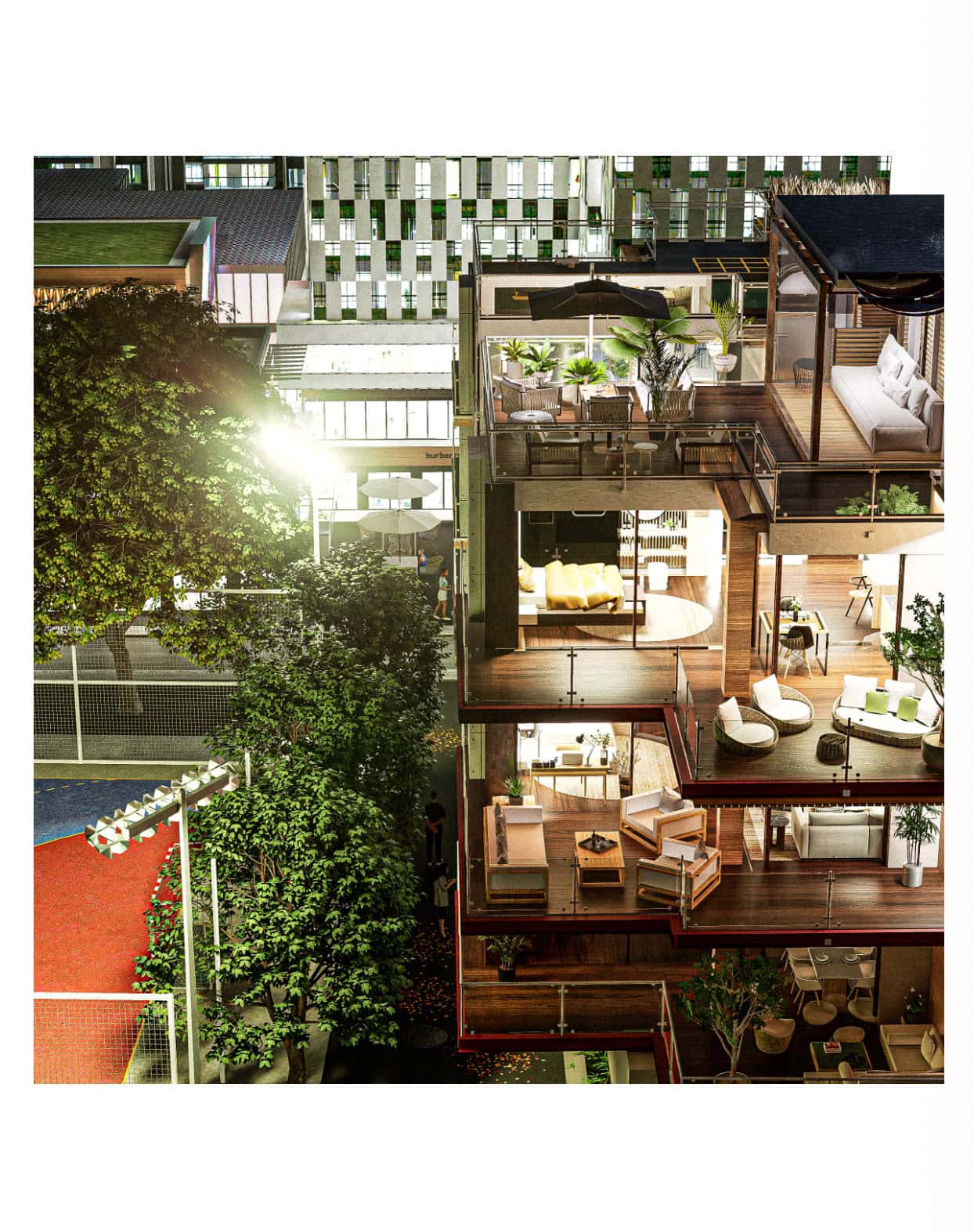
Oasis by Ivan Tam is a timber co-housing architecture proposal for professional athletes in Dublin. The project is strongest when read as a housing brief shaped by routine, recovery, privacy and shared identity, rather than as a generic apartment block.
The glulam structure gives the scheme its character. It supports the low-carbon argument, but it also creates a warmer residential atmosphere for a community whose lives move between performance, rest and public pressure.
Project images


Why the athlete brief matters
Athlete housing has a sharper user profile than most residential projects. The resident may need quiet recovery space, storage for kit, strength and mobility facilities, privacy from public attention, and a social setting that does not feel isolated.
- Private rooms need to support rest, sleep and routine.
- Shared spaces need to encourage trust without forcing constant interaction.
- Wellness areas should feel embedded in daily life, not like bolt-on amenities.
- Material choices should support the environmental story and the atmosphere of the home.
What the timber strategy adds
The glulam frame gives Oasis a visible structural rhythm. That matters because the environmental argument becomes legible in the architecture itself. Timber is not just a specification note, it helps organise space, light and atmosphere.
For a portfolio, that is useful. A viewer can see the relationship between structure, residential character and the wider sustainability claim without needing the whole project explained verbally.
Portfolio lesson from this project
The best student housing projects are rarely strong because the programme is unusual on its own. They work when the designer proves how the user group changes the plan, section, circulation, material strategy and daily experience.
- Name the user clearly.
- Show what their routine changes in the brief.
- Use drawings to explain shared and private thresholds.
- Make the environmental strategy visible in the project, not hidden in text.
- Connect the visuals back to the lived experience.
Project routes and links
If you want to look deeper into the project or connect with Ivan, use the links below.
Showcase your own architecture project
If you are a student, graduate or designer with a project that deserves to be seen, Architecture Social can help you publish it properly.
- Lead with the project idea.
- Include strong horizontal images or a working portfolio link.
- Explain the brief, response and design evidence clearly.
Next step
Explore more student and practice work in the Architecture Social Projects directory, or submit your own project for the showcase.
If this project has made you rethink your own portfolio or next move, browse current architecture jobs or contact Architecture Social for a recruiter’s view.


Add a comment