
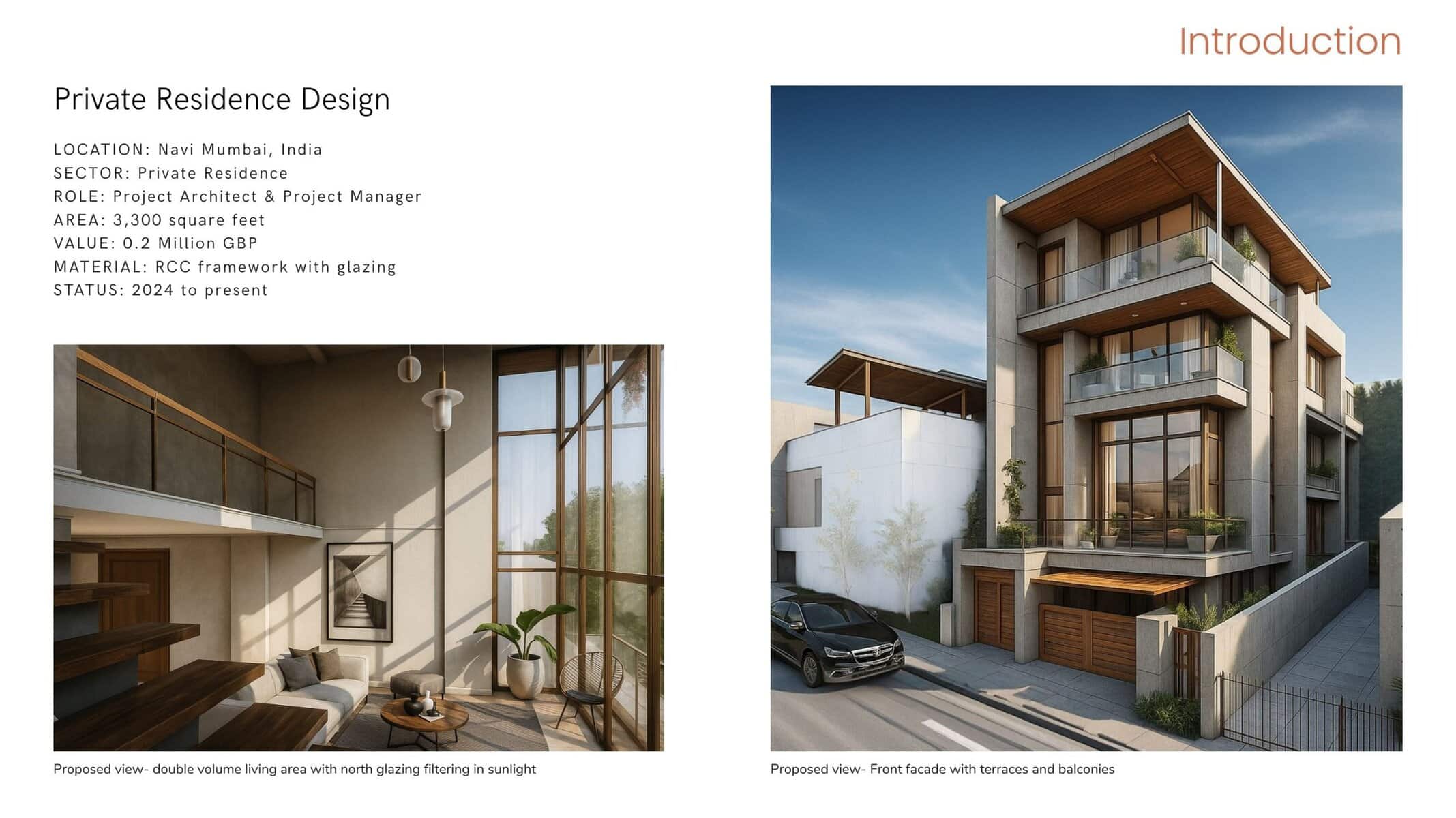
Heena Shaikh’s private residence in Navi Mumbai shows how a compact urban site can still support family life, daylight, work, parking and moments of calm.
The project is useful because it treats private home architecture as a planning problem first. The house has to work vertically, but still feel connected, generous and usable.
Watch: Architecture Social video
This Architecture Social video adds useful context before the practical guidance below.
A compact site with a vertical answer
The brief was for a family of four on a 200 sq.m site. The response is a G+3 structure where each level has a clear role and the vertical sequence becomes part of the home’s character.
- The ground floor handles parking for four cars, staff quarters and a compact office.
- The first floor becomes the family heart, with a double-height living and dining area.
- The kitchen connects to the main living space rather than being hidden away.
- The narrow north-facing frontage is used to bring light and rhythm into the facade.
- Terraces and balconies create small moments of pause above the street.
Why the staircase matters
The internal steel staircase is more than circulation. In a vertical home, movement between floors can either feel like a compromise or become the thing that holds the house together.
Here, the staircase helps organise light, air and family activity. That gives the home a stronger spatial idea than simply stacking rooms.
Follow the designer
The project has a clear residential design angle, and these source routes help readers connect with Heena’s wider work.
Architecture Social view
Stephen’s recruiter view is that residential portfolio projects should show how people live. The render matters, but the plan, section, stairs, thresholds and daylight are what explain the design judgement.
Showcase a residential architecture project
If your project deals with homes, private clients or compact sites, make the design decisions easy to read.
- Explain the site constraint in plain English.
- Show how the plan supports daily life.
- Connect stairs, light and outdoor space to the user experience.
- Use project facts such as site size and building levels where they clarify the brief.
Next step
Browse more project showcases, read the portfolio guide, or submit your own architecture project.
If this project has made you rethink your own portfolio or next move, browse current architecture jobs or contact Architecture Social for a recruiter’s view.



Add a comment