

UNEARTH by Maxwell Kemplen is an industrial heritage architecture project about Saltom Pit, memory and careful intervention.
The project is strongest because it does not try to overwrite the site. It uses a sequence of precise installations to help people read the industrial landscape again.
Project gallery
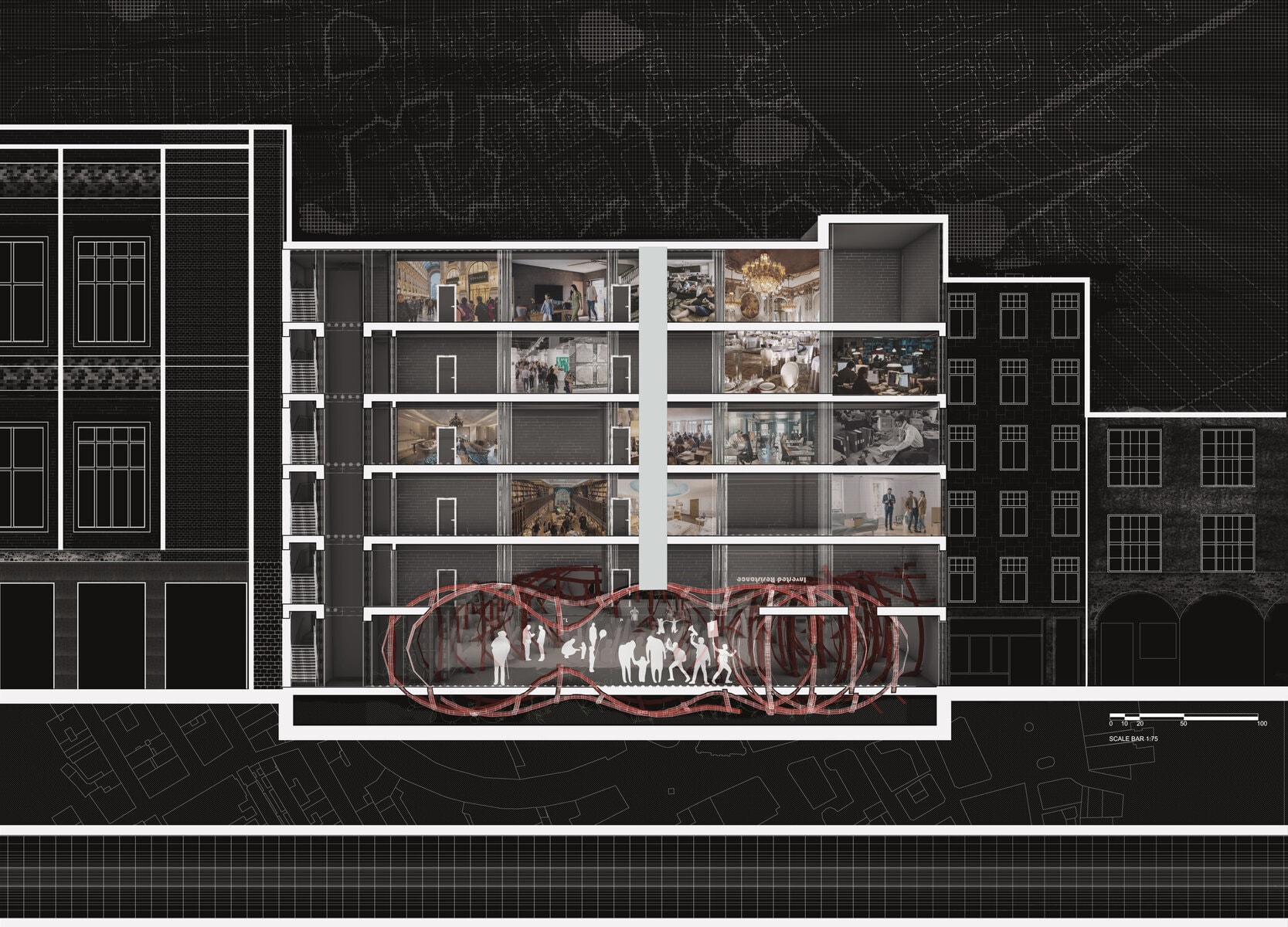
The project visuals show route, memory, historical material and architectural detail along the Whitehaven coast.


Project overview
UNEARTH began with Whitehaven’s Cumbrian coast and the fragments of Saltom Pit, an early undersea coal mine. Maxwell’s thesis asks how a community’s industrial memory can be made visible without flattening the site into a museum object.
Instead of one large building, the proposal works as a sequence of ten interventions. Each one sits along the descent from cliff top to pit, using recycled stone, route, threshold and view to layer new meaning over existing traces.
How the heritage strategy works
- The project uses a route rather than a single destination.
- Installations are calibrated to the site rather than imposed on it.
- Recycled stone gives the work a direct material link to place.
- Enclosed moments suggest the pressure of mining, while open views reconnect the site to sea and landscape.
- The palimpsest idea lets older traces remain visible beneath new interventions.
Why this is useful portfolio evidence
Heritage projects often fail when they become too nostalgic or too heavy-handed. UNEARTH is useful because it shows a designer thinking about restraint: what to reveal, what to add and what to leave alone.
Showcase a heritage or reuse project
Architecture Social can feature heritage, retrofit or reuse projects where the site evidence and design response are explained clearly.
- Show what already exists on the site.
- Explain why the intervention is the right level of change.
- Use drawings and images that make route, material and memory legible.
- Avoid treating heritage as decoration.
Architecture Social view
Stephen’s recruiter view is that heritage work can be excellent portfolio evidence because it shows judgement. A good designer knows when to be bold, but also when the right move is quieter.
Next step
- Browse more student project showcases.
- Read the Architecture Social portfolio guide.
- View Maxwell Kemplen on LinkedIn.
- Submit a heritage or reuse project.
If this project has made you rethink your own portfolio or next move, browse current architecture jobs or contact Architecture Social for a recruiter’s view.




Add a comment