

Kristin Read’s thesis proposes a scuba diving facility and pier in Northumberland, reworking a derelict fishing jetty as part of Amble’s wider social and environmental regeneration.
The value of the project is not just the unusual brief. It is the way the proposal connects coastal leisure, climate awareness, tourism and local public space into one architectural story.
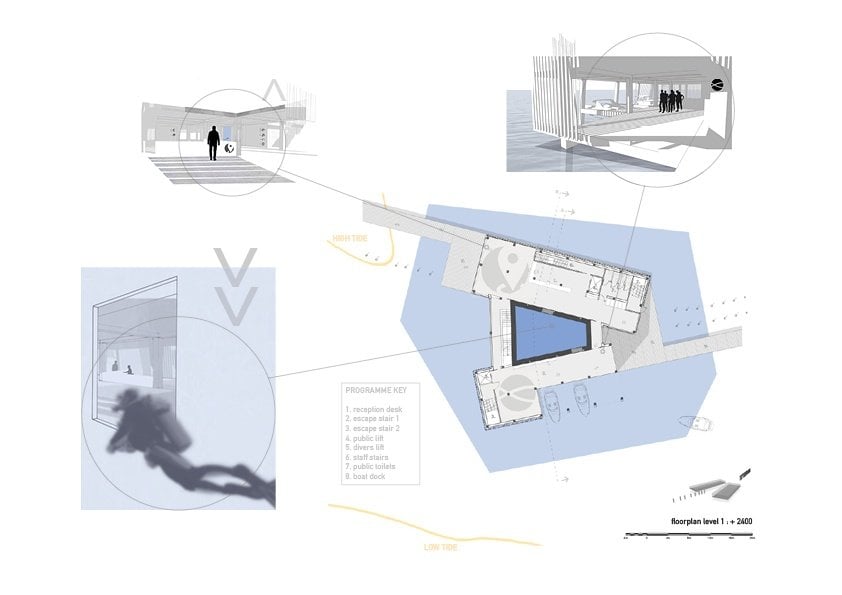
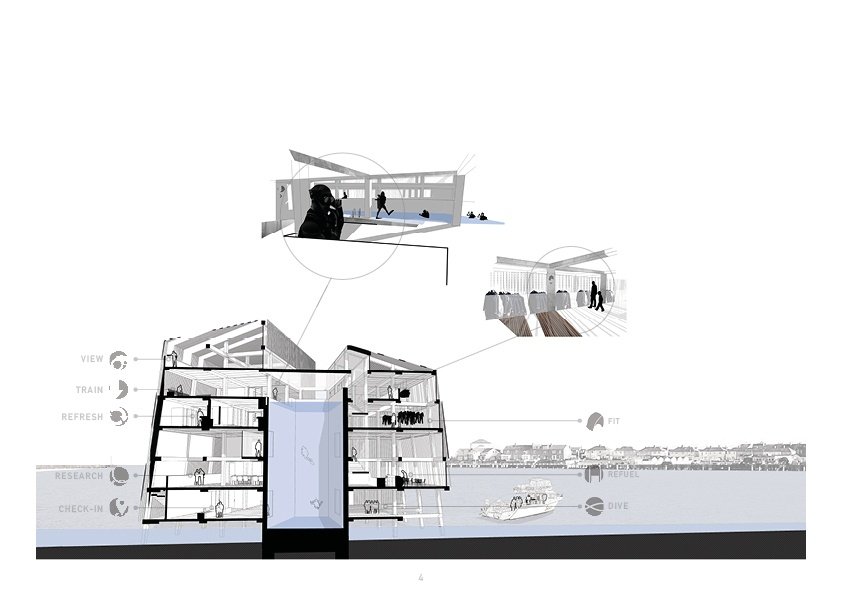
What the project explores
The proposal repurposes a redundant jetty instead of treating the coastline as a blank site. That makes the project useful as an example of adaptive reuse at a civic and landscape scale.
- A leisure brief with a clear public purpose.
- A coastal site with social and environmental constraints.
- A regenerative idea that links tourism, climate change and local identity.
- A project that needs to communicate atmosphere, structure and public access together.
Why the pier matters
A pier is not only infrastructure. In a coastal town, it can become a meeting point, a route, a viewing platform and a marker of local identity. Kristin’s scheme uses that potential to make the diving facility part of the town rather than an isolated destination.
Portfolio lesson
For students, this is the kind of project where the site story matters. A practice does not only want to see a striking drawing. It wants to understand why this place, why this programme and why this architectural response make sense together.
Showcase a project with a clear story
Strong student work is easier to understand when the brief, site, design idea and evidence are presented together. Before submitting your own project, make sure the reader can follow the logic without needing a tutorial.
- Lead with the project idea, not just your biography.
- Show the site condition and what changed.
- Use drawings that explain the decision-making, not only the final image.
- Add a short note on what the project proves about your judgement.
Next step
If you have a student, graduate or practice project worth sharing, submit it to Architecture Social Showcase so the work can be seen by the wider architecture community.
If this project has made you rethink your own portfolio or next move, browse current architecture jobs or contact Architecture Social for a recruiter’s view.



Add a comment